The Case for Reading Real Books

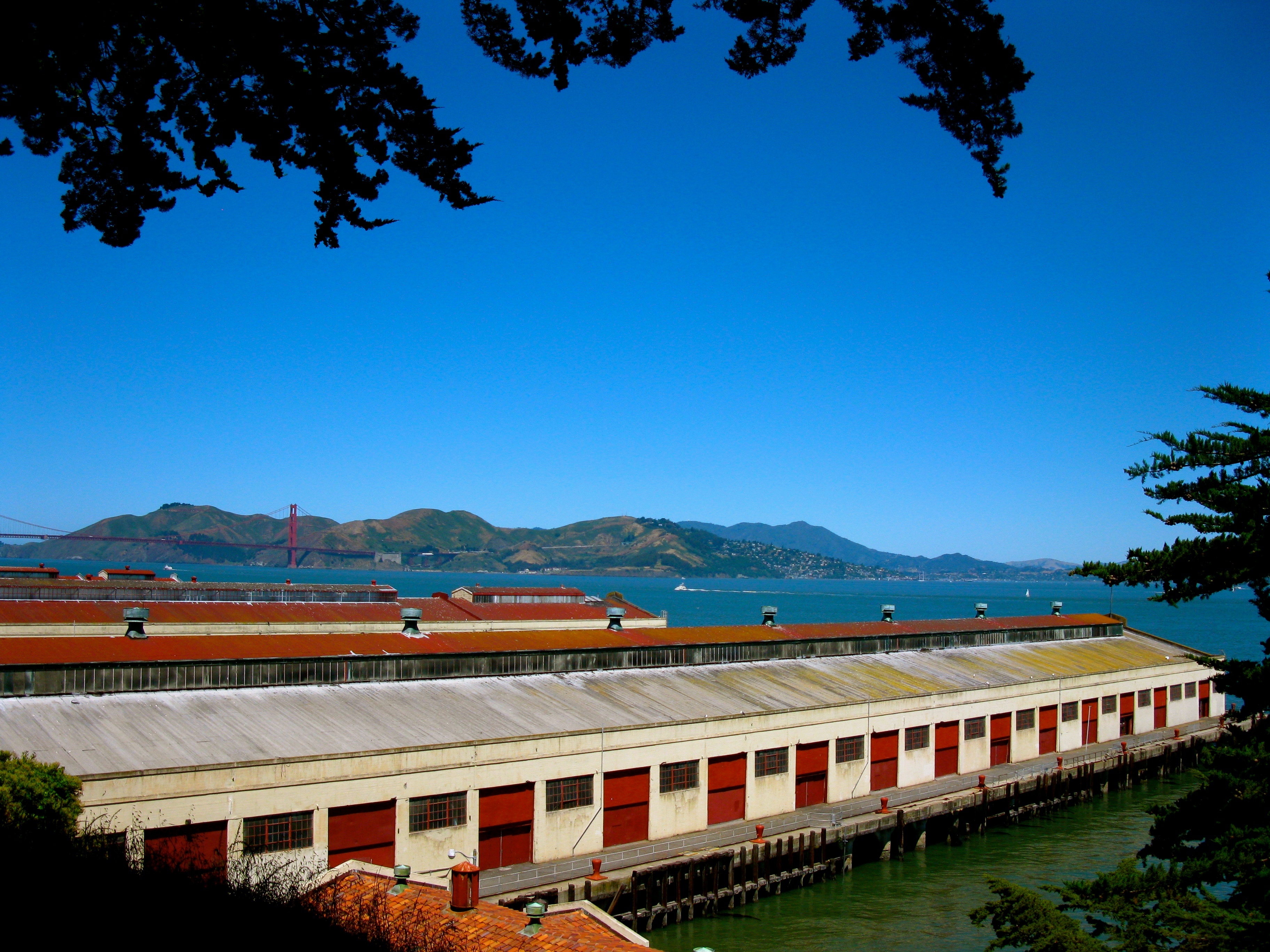
Fort Mason Center, San Francisco

Last fall, I attended the 50th Annual Big Book Sale at the Fort Mason Center, and I realized why I’ve always been drawn to libraries and bookstores more than online writing.

First, the content contained between book or magazine covers is finite. We’re a captive audience in those pages and must move through the material in the image of the author’s intent rather than hopping between hyperlinks.

Second, there’s a significant cost to producing a book. While there are good books and not-so-good ones (e.g., Hillary Clinton’s recent autobiography), we can rest assured that some thought and meticulous editing went into the pieces due to the barriers to publication. There are exceptions, but I believe that most internet content is soulless pulp designed to garner attention. And by the way, the irony of presenting this argument online isn’t lost on me.

It costs virtually nothing to broadcast one’s thoughts across the web, and even though the ease of publication can hasten the spread of important news and assist social activism, it also enables people to publish a lot of crap at very little cost. It fits what George Saunders calls the “Braindead Microphone:” the meaner, louder, better-advertised material will make it to readers, regardless of the quality. Hence the success of sensationalist click-bait and listicles. Of course, hyperbolical headlines existed before the internet, but competition for people’s 140-character attention spans has made entertainment—rather than informing people—the primary objective in today’s media climate. There are entire companies that traffic in “content creation,” employing non-experts to chew up and spit out information from other sources, finally stamping the resulting detritus with a click-worthy title. These companies value efficiency, quantity, and readability above well-researched arguments or intellectual integrity. Believe me, I’ve worked for one of these companies.

Lastly, what better fodder for conversation than a beautiful, tangible collection of ideas through the ages? When I enter someone’s house, I’m immediately drawn to their bookshelves, which often tell more about a person’s constitution than an evening of conversation.

It is with these thoughts that I enjoyed perusing the scores of used books that were once loved by people, many likely had been lying fallow in garages for decades. I bought several 19th and 20th century classics, some editions published before the birth of my parents.

One gem I picked up for $3 was “Adventures of the Mind” from 1959. It contains several essays from the Saturday Evening Post by renowned thinkers such as J. Robert Oppenheimer, Aldous Huxley, Edith Hamilton, Arthur M. Schlesinger, Jr., and Bertrand Russell. You might think that these ideas were dated, but I was struck by the timelessness of their arguments and how concepts I’d once considered to be modern phenomena were the talk of the day fifty-six years ago.

For example, anthropologist Dr. Loren Eiseley wrote an essay titled “An Evolutionist Looks at Modern Man.” He discussed people’s obsession with technological progress at the expense of our humanity:

There are times when it appears man is so occupied with the world he is now creating that he has already lost a sense for what may be missing in his society.

In the 1950s, he expressed a sentiment which pervades our current fear of the diminishing human connection that accompanies sweeping technological change, particularly in the Bay Area.

In a similar vein, people today bemoan the loss of the humanities. Dr. Eiseley, again, had already taken note (and he likely wasn’t the first):

The humane tradition—arts, letters, philosophy, the social sciences—threatens to be ignored as unrealistic in what has become a technological race for survival.

I had believed naively that the erosion of the “humane tradition” was ushered in by computers more than anything else.

I wouldn’t have stumbled across this essay if I hadn’t gone to that Annual Big Book Sale. I propose that everyone give books and print media a shot. It’s easy to succumb to the allure of digital distractions, but there’s a comfort between the covers of a tried-and-true, physical read. All indicators show that reading actual books is on the decline, but then again, we’ve always been “in crisis” according to intelligent essayists throughout the ages. It’s appropriate to close with what I considered to be Dr. Eiseley’s most profound statement:

For a society without deep historical memory, the future ceases to exist and the present becomes a meaningless cacophony.

Doesn’t that mimic the frenetic feeling of our tech-driven lives echoed throughout countless modern publications? It certainly does for me.

Life’s Little Checklist

Some People Crave the Big City and Bright Lights
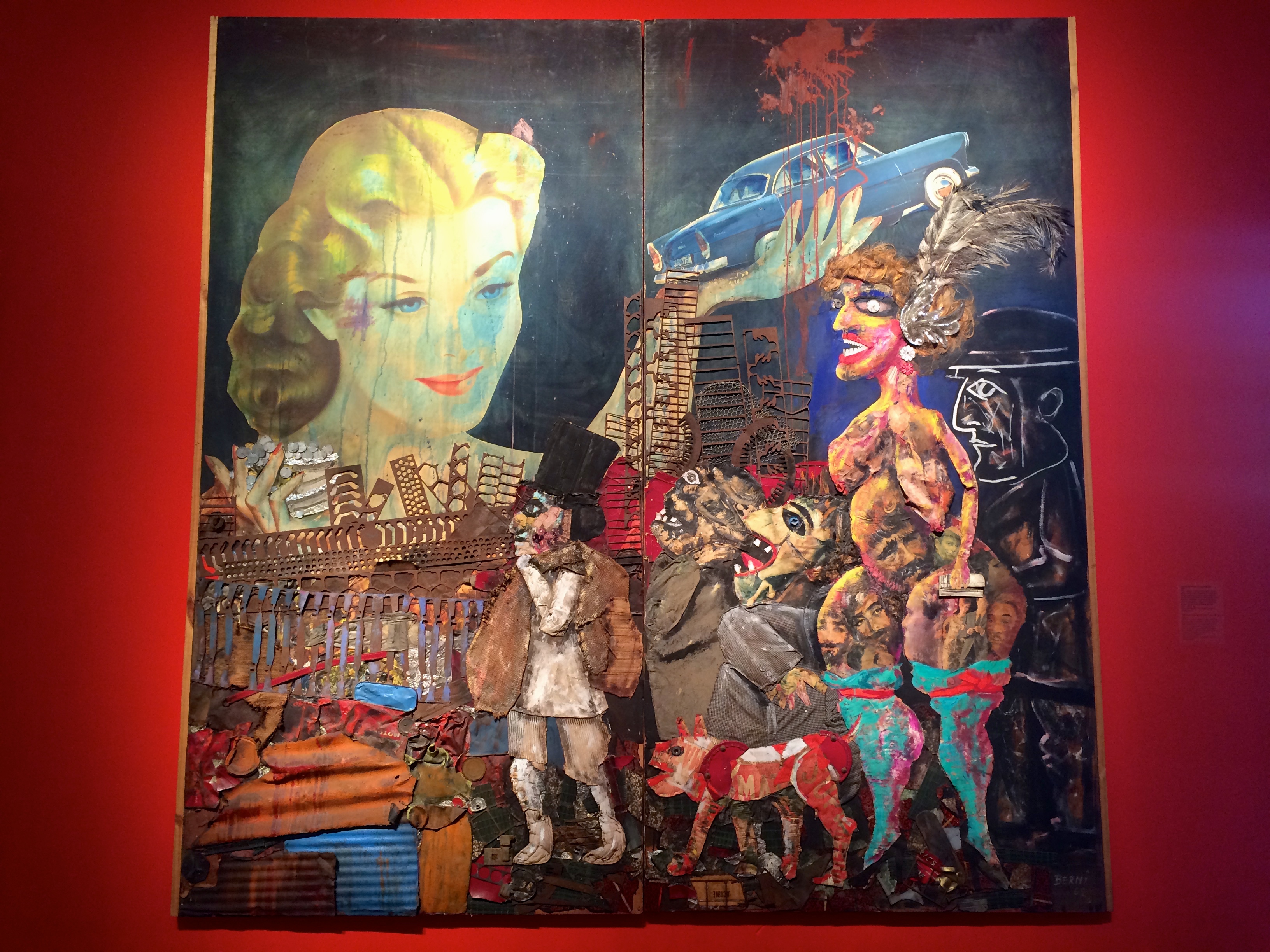
Some People Crave the Big City and Bright Lights (Antonio Berni painting, MALBA)

The day I turned 30, my wall calendar came into clearer focus. The monthly New Yorker cartoon stared back at me as always, but the angles seemed more acute and a sudden restlessness shook my soul. If I’m lucky, I thought, I might buy another 45 to 50 of these. I imagined the themes changing through the years according to my evolving tastes. I saw my wrinkled hand turning the page from October to November 2054, revealing a photo of my unborn grandchildren tossing leaves cavalierly in my unborn child’s front yard. Or perhaps by that point I’ll have turned to daily sudoku puzzles or obscure vocabulary words, to Bernese mountain puppies or gardening techniques. The point was that time suddenly seemed finite, and all the presences in my life, material or immaterial, were telling me to grow up. To chose a path. To complete Life’s Little Checklist of career, family, and property ownership obligations to ensure that my progeny could someday go through the same motions, on into perpetuity. Such is our sociobiological imperative, right? To make sure that our seed spreads and to leave some sort of legacy? Well I’m not taking the bait, and I urge others to question these assumptions as well.

What I realized is that so many of us are rushed hastily into careers, relationships, and other commitments which mean little to us. I’m a Millennial, and my generation is grappling with the disjunction between what we were taught and reality as it is. With respect to career prospects, my generation has the highest rates of student loan debt of any that preceded it. Part of that is the explosion in tuition rates, but I would argue that the greater problem is the belief that more education will necessary guarantee commensurate career opportunities. In this age of ever-increasing specialization, it’s difficult to find a perfect career for the over-educated doctoral candidate who knows everything about late 18th century spice trades or a single, obscure element of electromagnetic phenomena. There simply aren’t enough job opportunities for the most educated specialists, and many, often deeply in graduate debt, end up taking jobs only loosely related to their expertise, and many below their qualifications. A corresponding problem has risen with law school graduates, most of whom incurred tremendous debt with the promises of a handsome salary and are now wallowing in a market glut with their unemployed colleagues. The worst part is that many of my peers who attended graduate school did so in hopes of expanding their career prospects, but they weren’t necessarily in love with their disciplines.

In a similar vein, I’m witnessing the first round of divorces among my 30-something peers, many of whom entered into relationships for the wrong reasons. Some of them had been dating the same person for years and marriage simply seemed like the next logical step. Others married as a result of pressure from their families or religions who sought to make the arrangement more “stable.” Still others married for wealth or beauty, qualities that are mutable and provide shaky foundations for lifelong commitments. I’ve witnessed how some people seemed so eager to mark off this box on Life’s Little Checklist in the race against time. I know that I’ve been guilty of drawing out relationships longer than they needed to be, either out of consideration for the other person’s feelings or out of an ignorance of how much compromise is reasonable for two people to be together. Many have suffered (or are suffering) these relationships of convenience, of sex, of habit, of status, all to the detriment of individual lives and society as a whole. One day, the condom’s going to break (literally or figuratively), and I for one don’t want to be fucked.

Finally, I think there are countless dreams deferred which evaporate in the ether of time. People’s regrets on their deathbeds contain more inaction than action, more risk-aversion than risk-failure. What could be more important than living one’s life in the image of one’s dreams, removed from the confines of Life’s Little Checklist?

I was valedictorian of my high school class and graduated summa cum laude from Berkeley. Many of my peers went to graduate school or took high-paying positions in consulting or investment banking. By contrast, one week after graduation in 2006, I found myself buying a one-way ticket to London and landing a job as a waitress at Hard Rock Cafe. I later lived in Japan, Brazil, and traveled all over Southeast Asia, and I finally returned to live in San Francisco in 2010. I had very little money after traveling and living abroad for so long, so I secured yet another waitressing job, this time at a fancy restaurant, to pay my rent. Four months later, I took a pay cut to become an addiction specialist at a non-profit methadone clinic , believing this was in-line with my former aspirations and education as a double-major in psychology and sociology. After two years, I was on the brink of a mental breakdown due to the low pay, the high client caseload, and the concurrent collapse of my third failed romantic relationship since moving back to the Bay Area. I gathered my strength to make a dramatic career change: I’d wanted to become a professional writer, and the closest occupation I found was in SEO. Overnight, I doubled my salary, and for nearly two years, I was a managing editor at an online marketing company. I was relieved that I’d “caught up” to my peers who had been pursuing their careers while I’d been traveling the world, but the problem was that the life really wasn’t for me. I strayed, I resisted, I asked to work from home as many days as possible, and I was relieved to be laid off in July of this year. I’ve since relocated to Buenos Aires where I feel at peace with myself, and back on track with respect to what’s really important to me: writing, reading, and traveling.

That’s my story professionally in a paragraph. Now, whatever your spiritual predilections, we all know we’re going to be worm food someday. In the meantime, I urge everyone, young and old, to seek the space outside of social expectations so you don’t wake up one day and realize you’ve wasted your life chasing someone else’s dreams.

Little Green Man’s Guide to Human Civilization

CASENOTE #1: ENHANCEMENT OF THE FEMALE’S FEEDING VESICLES AND OTHER CURIOUS ASPECTS OF HUMAN ATTRACTION

Before establishing contact with the Humans, it is imperative that we gather as much information as possible about their social relations, leaders, recreational activities, and other characteristics we deem necessary to prepare ourselves for a range of outcomes as we strive to develop interplanetary relations and forge a peaceful exchange of knowledge, culture, and cookie recipes.

One of the most puzzling phenomena to date has been the methods by which Humans attract one another for mating purposes. The following observations are derived from a representative sample of 5 metropolises over the course of 1 Terra hour:

1A. Enhancements and reductions

The Smaller Sex (“Female”) sometimes sustains surgery to expand the size of its natural feeding vesicles (“breasts”). While the results may draw moderate attention from members of the Larger Sex (“Male”), I’m unable to determine a useful medical function for the cumbersome, dual sacks of saline solution. Some practicable purposes include:

  • To improve buoyancy in large bodies of water
  • To guarantee entry into exclusive nighttime gatherings (“clubs”)
  • To prop up objects such as gossip magazines while in a position of repose
  • To safeguard the Human from rolling off the bed in its sleep
  • To create a counterweight to titanic buttocks for balance purposes
  • To produce a convenient, fleshy slot for the safekeeping of cell phones and other valuables

Motivations notwithstanding, it is assumed that the inflation of these pendulous globules puts undue strain on the back and may impede the performance of daily activities such as driving, typing, and carrying one’s yoga mat. While further observation is needed to determine the utility of surgical procedures, other common, non-essential modifications were observed including changes to the nose (reduction), lips (enhancement), abdomen (reduction), and buttocks (results may vary).

1B. Hair

The Male displays ornamental tresses around the cheeks, upper lip, chin, neck, and chest. By contrast, the Female typically avoids growth in these areas and others, and may even trim or rip the hair from the upper lip, eyebrow, underarm, leg, and genital areas using blistering wax in established centers of torture (“beauty salons”). While redness, swelling, and discomfort are common, these practices are nearly universal for those of a breeding age. For the Male, the facial hair styles vary from wild and unkempt to a clean, naked visage.  Without proper grooming, it’s been observed that the eating process can be impeded. It is unclear which style of presentation the Female prefers, although excessive hair along the upper lip (“mustache”) tends to incite either social admiration or tacit ridicule. Generally, the Female spends a significant amount of time maintaining its head-hair and displays a dizzying array of styles and colors. It is presumed that these decorative configurations attract the Male and vary in shape from a tidy, spherical gathering atop the head (“bun”) to an untamed arrangement resembling a toxic gas cloud (“frizz”).

1C. Teeth exposure

In the presence of other Humans, it is common to draw back the lips and reveal the teeth (“smile”). The appearance ranges from a glowing assembly of polished moonrocks to a rotting cacophony of sulfurous shards, the former being deemed considerably more attractive and associated with affluence. Teeth exposure is done with differing degrees of wrinkling around the eyes, and is often accompanied by short bursts of sound (“laughter”). The Female and the youth seem to engage in these practices more frequently, while the Male is more inclined to grunt, bellow, or scratch itself when engaged. It should be noted that the Male can be rewarded for eliciting teeth exposure in the Female with further contact, both social (“dates”) and physical (“sexy time”). Furthermore, the Female may extend its lips into a nursing position to increase their prominence and the subject’s purported sex appeal (“duckface”).

1D. Clothing

Humans generally cover parts of their bodies with clothing as it is deemed legally inappropriate to go without. While the amount of coverage has a -0.721 correlation with temperature, exceptions are noted. The Female in particular may opt for tight-fitting, cylindrical garments (“dresses”) exposing the extremities to the elements, and may rely on the extra clothing of the Male in times of need. Additionally, the Female frequently wears stilted footwear (“heels”) which hinders movement, but increases height considerably. I surmise that this is done to ward off predators, or perhaps to drum out unique mating calls on hard floors. The Female possesses the greatest abundance and variety of clothing, and is more likely than the Male to seek further acquisitions (“go shopping”). The Male, by contrast, sometimes wears decorative neck objects which require some assembly and range in shape from dangling, elongated diamonds (“ties”) to neater throat arrangements which resemble the silhouettes of distant satellites (“bowties”).

1E. Coupling

For short-term mating relations, the Female takes an array of variables into account such as conspicuous wealth, musical ability, or level of intoxication at time of first meeting. For long-term relations, the Female may create a list (mental or literal) of traits it holds to be relevant to finding a partner for life. Several conversations about said lists are observed and include words such as kind, perceptive, intelligent, intuitive, funny (i.e., ability to elicit teeth exposure), tall, strong, stylish, polite, independent, handsome, caring, clean, successful, sensitive, generous, etc. The length of these lists is inversely proportional to the age of the list-maker. I am unable to find evidence for similar lists on the part of the Male, who in considering both short- and long-term mating relations, appear to be relatively indiscriminate. As part of the initial stages of courtship, it is common for Humans to engage in a series of bodily contortions to the rhythm of music (“dancing”). The styles range from delicately refined avian movements (“ballet”) to sweaty, simulated acts of sexuality (‘freaking”). While the diversity of techniques is beyond the scope of this guide, a correlation is noted between a Human’s dancing ability and alcohol intake. Also, while it seems most common for the Male to pair with the Female, this is by no means the only arrangement. Either sex can pair with one of its own, although Humans from some areas frown upon this practice for unclear reasons. Other rarer mating phenomena of note include group gatherings (“orgies”) and interspecies relations (“beast-love”), particularly in agricultural regions.

ADDENDUM: While this is by no means a comprehensive analysis of attraction and mating in human civilization, it should suffice as a useful overview in preparation for establishing first contact. The more we understand in advance of our scheduled landing, the more likely we’ll be to enjoy a fruitful, mutually respectful relationship with the inhabitants of the Blue Planet, Home of the Best Cookies in the Galaxy.

Reaching For the Impossible: My Quest to Enter a Buenos Aires Public Library

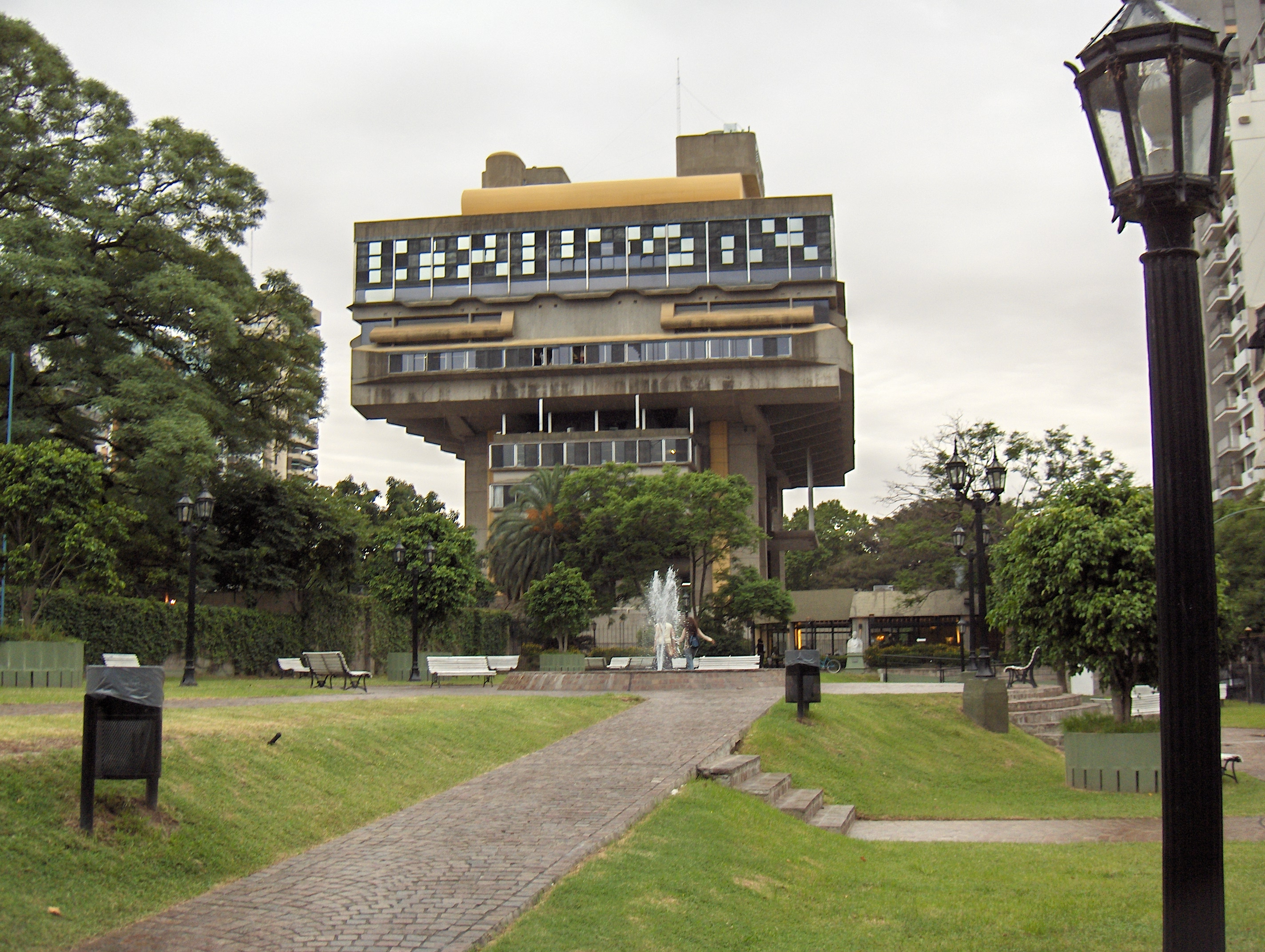
Biblioteca Nacional, Buenos Aires
Biblioteca Nacional, Recoleta, Buenos Aires

I’m staring out of a filthy window of one of the top public libraries in Buenos Aires. The surrounding buildings and parks would be lovely, if only I could see them clearly. Years of industrial development and city pollution have created a greasy haze on the glass’s exterior, and it makes me nauseous if I look at this sadly distorted skyline for too long. Here I sit, resting my weary feet atop this grimy castle, and reflecting on how bleakly difficult it was to get in here.

It’s late spring, and the air is lushly humid. Puddles of refuse commingle with the thick scent of jasmine, and riding my bike for 20 minutes from my apartment in Belgrano feels like a triathlon. I’m thankful that the cheap chain on my secondhand “bici” only unhinges once on my journey to the southeast, although smears of black lubricant cover my inner right calve after my ancient steed leans against my sweaty leg at a traffic light.

Jon and I finally arrive at a tall, seemingly top-heavy that reminds me of the Geisel library on the UCSD campus, if that building had an older, dilapidated aunt that had smoked from birth. We get into the first floor and wait for the elevator for five minutes. Although I keep mopping up the moisture from my face, I feel like it’s dripping onto the cracked tiles beneath my feet, and it makes me self-conscious among the well-dressed students and young adults who seem unmiffed by the stifling heat.

Geisel Library, UCSD

We finally get to the 6th floor and are told that it’s only for students. Unfortunately I’d left my decade-old Berkeley ID in the states, so entrance to this floor was looking unlikely. The 5th floor, we were told, is where the gen pop (I use a prison term purposely) congregates.

We try to walk in, and are told that we must show our passports and register on the 1st floor before gaining admittance into this fortress of learning. I told the woman we didn’t have our passports, but I could show them copies if they had wireless internet, a feature common to even the lowliest cafes all over the city. “No señora, lo siento. No es posible. No tenemos internet aqui.” I used my intermediate Spanish to convince the woman to let us use our passport numbers and dates of birth which I did have handy, and 20 minutes after arrival we were ready to start working. Not so fast. We needed to empty our backpacks and put them into a locker before passing through security.  We grabbed our laptops, locked up our empty backpacks, and took our registration slips to security to finally be let into the space. The guard stopped us, took our passport information, and asked for the type of computers we were using. She recorded all of this information, and finally we had gained entrance to… the library. We looked around this grim testament to the broken nature of Argentinian public facilities and noticed that there were no books, just rows and rows of students pouring over notebooks. It turns out that people can’t even check out books here. They are solely for use in the library, although Jon and I had trouble locating any books at all.

For me, this experience reflects a deep distrust of the Argentinian people on the part of the government. How can a nation expect economic, social, and other types of progress when all of the citizens are treated like children who can’t control their baser instincts? Who would want to go to the library to better oneself when the whole process is such a demeaning pain in the ass? Sure, there are a couple of thieves here and in every country across the globe, but does that fact trump the primary importance of access to an education?

This distrust of the citizens is reflected in other ways as well. It’s nearly impossible to receive packages from foreign countries. I’ve had to tell my friends and family not to send anything for Christmas because those boxes will get held up indefinitely in customs, a notoriously corrupt system where people are sometimes charged more than a package is worth in bullshit “import charges,” even for gifts.

Another example is the public statues and historical sites. There are some gorgeous fountains and other types of monuments which are surrounded by imposing, unfriendly fences, sometimes with security guards, and people are not allowed to get close to them. I can understand a fear of graffiti (and in Buenos Aires, there’s a lot of it), but letting the juvenile misgivings of a few egocentric teenagers ruin the accessibility for everyone is incomprehensible to me. Buildings can be repainted; statues can be scrubbed; sidewalks can be hosed down. A cage won’t stop the most nefarious people who have unshakable designs on defacing public property. So why make everyone else in a largely respectful, compassionate public feel like common criminals?

These systems and more are long broken in Argentina. Without an environment of stability, mutual trust, and communalism, the country will continue to sputter along in abysmal malfunction  with a frustrated, fractured population.

What I’d like to imagine is the small but important step of treating public libraries as well as other facilities such as the city-owned Museum of Decorative Arts.  It’s housed in the mansion of some early 20th century aristocrats. It’s well-kept and people are allowed to bring their backpacks inside without a prohibitive registration process, and this place houses works of art by Rodin, El Greco, Manet, Corbot, and others. If the lavish excesses of past generations are open to the public, surely we can ease up on (and even improve) the common person’s sanctuary of self-edification. I’d like to see more of these ancient, luxurious structures turned into libraries for the public. My guess is that the first asshole to pull out a can of spray paint would be stopped by citizens grateful for and protective of their beautiful bastion of learning. That’s the type of relationship we should have with our public institutions, if only the governments would give us a chance.

Letters to My Favorite Urban Stereotypes: Dear Granola Mom

Dear Granola Mom,

I saw you today.

You came into Café du S_____ around the corner from my house and I admired how well you hid the baby weight beneath your brightly patterned tunic.

I’m sorry that the twenty- and thirty-somethings looked scornfully at your son. He seemed harmless enough swaddled in that fair trade carrier and continued his slumber as you scrambled to get the bulk of your two reusable bags around the mess of chairs. By now you must be used to that chorus of exaggerated sighs that accompanies your arrival in a public place. That day in the café, however, it all seemed especially unfair since these people had warmly welcomed the “service” dogs who were busy nosing around the corners of the floor for croissant flakes.

At first I thought you’d come in for herbal tea, but I quickly realized you were there to raise awareness. You stopped at my table brandishing a bamboo clipboard with a petition reading STOP MALE GENITAL MUTILATION! and beneath it, a short description of your objective:

Millions of babies annually are subjected to a painful, barbaric and unnecessary procedure. Female circumcision is banned under Title 18, so why are we partially dismembering America’s precious boys?

You offered me some pamphlets for further reading and mentioned that you needed 9,702 signatures to get the initiative on the November ballot.

You took your clipboard to one café-goer oozing compassion, the Intoxicated Artist, who was busy stealing glances of fellow patrons to inform the scribbles in his tattered sketchbook. Your earnest pitch was cut short by a soft cry. “Oh shit,” you exclaimed. It appeared that your son Lark had wet right through his cloth diaper. The mess had penetrated his soft carrier and was pooling on the floor. This spectacle inspired no sympathy from onlookers.

Your first move was to drape a woven burp rag over the puddle. It was decorated with bands of neon patterns and wooly stripes. I imagined that you’d purchased the cloth during one of your countless international travels, perhaps from a vendor in Peru where you took pause to enjoy a flute band. I bet you even had the courtesy to lean with interest over their pile of dusty CDs and shoebox littered with coins. In my mind, you smiled and graciously pulled diez nuevos soles from your hemp handbag.

I was roused from my daydream when you asked the busser if you could purchase one of his clean kitchen rags. You even inquired as to whether or not it had been washed in detergent containing phenols, optical brighteners or any carcinogenic contaminants. The man laughed, shrugged his shoulders and uttered something in Spanish.

Before Lark’s accident, I’d overheard some snippets of your conversation with the sympathetic Intoxicated Artist that roused my curiosity. Did you really have breast feeding parties with your Occupy friends? And why did you choose red wine, garlic and fresh rosemary for your placenta marinade?

I had wanted to ask you these questions and more in person even if I was annoyed with the petition, but you realized that you were late for the toddler meditation session you’d scheduled for your older daughter Sierra. I only wonder where you get the money to pay for such extravagances. Then again, they say this City invented the rich liberal. For all I know, you may manage a wildly successful blog on the wonders of juicing, the bitches who refuse to co-sleep with their babies, the dangers of dairy, and how your children’s astrological affiliations were predestined.

That was when you walked into your sky blue Prius and out of my life.

You’re probably wondering why I’m reaching out. It’s because I’d like to tell you something: I’m grateful for your existence. If it weren’t for your ruthless environmentalism, dogmatic belief in homeopathy, and unwavering support of the Farmer’s Markets, this City would be missing an important facet. Besides, our mix of people is a little like granola, right? We have our various grains, our fruits, and of course, our nuts.

I hope all is well and your smiles are many.

With a shared love for this place we call home,

Jocelyn

Blore’s Razor Primer for the 2012 Presidential Smackdown

* On Community Organizer, Constitutional Law Professor and Author, President Barack Obama: “There’s always something suspect about an intellectual on the winning side.” (Vaclav Havel)
* On Bu$ine$$ $uper$tar, Mitt Romney: “How can wealth persuade poverty to use its political freedom to keep wealth in power?” (Aneurin Bevan)
* On Legendary Gaffe Artist, Joe Biden: “Human speech is like a cracked kettle on which we tap crude rhythms for bears to dance to, while we long to make music that will melt the stars.” (Gustave Flaubert)
* On Personal Responsibility Enthusiast, Paul Ryan: “A maximum of comfort is necessary for the practice of virtue. Poverty is earned and deserved.” (Adaptation of Patrice Lumumba)

* On Political Promises: “Honesty may be the best policy, but it’s important to remember that apparently, by elimination, dishonesty is the second best policy.” (George Carlin)
* On Political Scandals: “To knock a thing down, especially if it is cocked at an arrogant angle, is a deep delight in the blood.” (George Santayana)
* On Political Outcomes: “Before enlightenment—chop wood, carry water. After enlightenment—chop wood, carry water.” (Zen proverb)

* On Bill Murray: “You may never get to touch the Master, but you can tickle his creatures.” (Thomas Pynchon)

Japanimosity: The Battle Over the Toaster Oven

I lived in Niigata from 2007 through 2009. The Japanese separate most of their trash into 5 or 6 types, although the number of bins in any given prefecture can run in excess of 20. All of these, by the way, are collected on different days. The once-quiet Niigata community suffered a cataclysmic crisis when I tried to dispose of my broken toaster oven. Innocently, I put the appliance outside among other people’s large trash: mattresses, bookshelves, computer parts, etc.

The following day, my company received a call reporting an abomination, an unforgivable stain on the Asahi Mansions in which I resided. Yours truly had disposed of her damaged toaster; I calmly took responsibility and agreed to hold onto it until the proper “large unburnable” trash collection day. No problem, right? PROBLEM. The landlord wasn’t finished with me. I’m an easy target for the Japanese trash bureaucracy because gai-jin (“foreigners”) just don’t understand. Psh. Well, this guy tries to blame the blonde for not only the oven, but a laundry list of other appliances, including a VCR, a vacuum, a busted TV, and even some improperly sorted garbage (putting plastics with the burnables is a big no-no). I refused to take the heat for any of this other shit; my manager wanted to preserve the social harmony and suggested that I take all of the rubbish into my house anyway.

In a very polite, indirect, and essentially Japanese manner, I basically said, “No fucking way.” The next day, I found a pile of crap outside my door, all marked with stickers saying #202 (my apartment number). Apparently, the junk had been informally “registered” at my apartment. Furious, I called my manager, who spoke once more with the landlord; they told me that, apparently, all of the rubbish was mine because there were stickers on it that said #202. Wait, let me get this straight: I hadn’t had time to get a decent cell phone or my Japanese foreigner registry card, but I had adorned all of my refuse with neat little stickers? Such a crock. The rubbish war raged on. Sometimes my ears burned walking down the streets; some old women seemed to be whispering,

“Oh, that’s the girl!”

“Yeah, did you hear about that toaster oven?”

“She didn’t?!”

“Oh yes… she did.”