Do you remember your most stressful, thankless, low-paying job? The type of miserable work that felt as useless as polishing firewood and made you drink way too much cheap wine? I do. I worked as an addiction specialist in a San Francisco methadone clinic for two years.
When I first moved to the city, I was in my 20s, fresh out of four sublime years living abroad. I’d studied psychology and sociology and was interested in putting my education and international experience to good use. I had no idea that these weren’t the tools I needed to help people struggling with addictions.
I worked from 7:00 am to 3:30 pm on weekdays. Since the pay was low, the staff all clamored to work holidays and weekends for time-and-a-half. I had a caseload of over 50 clients. It was excruciating trying to get each of them to sit down for the state-mandated 90 minutes of counseling per month.
“What do you know, blondie? You aint never been no addict,” an older client barked.
“My wife is jealous that I get to talk to you every month,” another sneered, licking his lips.
Of the 50, I had about 10 who were interested in detoxing. They would ask for city resources or want to talk about their difficult childhood, their service in Vietnam, or even Carlos Castaneda books. Others were still actively using and would sometimes come into my office completely out of their minds.
One morning, my client—let’s call him Danny—came roaring into the clinic screaming obscenities and throwing whatever he could get his hands on. Other clients scattered as chairs, pamphlets, and our main bulletin board went flying. Dr. K (my boss) tried to calm Danny down. I was watching from my office doorway and could smell Danny’s soiled clothes from 15 feet away. His pupils had completely consumed his irises and his wild-eyes darted around the clinic. My knees began to shake and I avoided eye-contact.
Since we drug-tested clients regularly, I knew Danny was quite fond of speed, but it could have been any combination of drugs coursing through his veins, making him psychotic.
Dr. K and our security guard finally got Danny to leave, who bellowed his garbled intentions to exact revenge on us all. The staff and I breathed a sigh of relief and laughed uncomfortably at the lunacy of this job.
A couple of hours later, I took my lunch break and was walking north on quiet Steiner Street, trying to avoid the rush on Fillmore. Suddenly, I heard someone running up behind me with clumsy heavy steps.
Oh fuck, I thought. I know exactly who this is. Danny jogged up beside me, looking me up and down with his wild eyes. He had an open can of SpaghettiOs in his hand and was shoveling finger gouges of the thick red sauce into his mouth, which dribbled down his chin onto the front of his soiled jacket.
To my own surprise, I smiled at him and said, “Danny! Oh my God, thank you. I’m so grateful you’re here. This isn’t the best part of town. It’s kind of dangerous actually. Would you mind escorting me to the Walgreens on Fillmore?”
His eyes widened and he smiled with delight, putting down the half-empty can on the curb and licking his fingers.
He took his new security job very seriously. As we crossed Post Street, Danny sprinted out 20 feet in front of me, swiveling his head in search of cars and spreading his arms wide, shielding me from traffic.
“Come on, Jocelyn! It’s safe!”
As we got closer to our destination, he kicked some broken glass out of my footpath and indicated I should walk around it. When we got to Walgreens, I told him, “Danny, thank you so much. I was really worried about that stretch of Steiner and you made me feel safe. I’ll see you tomorrow?”
The beauty of this story is that even when we’re enraged or out of our minds, at our core, we just want to feel useful, loved, and connected to others.
This reminds me of a theory I learned in one of my psychology classes: the “Benjamin Franklin Effect.” The basic idea is that if you want your enemy or opponent to like you, ask them for a favor.
The story goes that Franklin had some political rival and wanted to thaw the relationship, so he asked the man if he could borrow a book. When the rival granted that favor, he felt a sense of usefulness and connection. Although they’d been fierce opponents, after asking for a favor, the tension melted and they became friendly.
Also, the rival’s kind behavior toward Franklin, a political enemy, produced cognitive dissonance—a mismatch between one’s behavior and emotions. The theory goes that it’s very uncomfortable to have a mismatch between one’s external and internal worlds, so we change one to fit the other. For the sake of internal harmony, the man ditched his negative emotions toward Franklin to align with his positive prosocial behavior.
Overall, when we treat people well and rely on them, they feel good about being needed and connected.
So ask a favor of that awful coworker or your judgmental mother-in-law! You might develop a closer relationship. And at the very least, you’ll give them a raging case of cognitive dissonance.
When I lived in San Francisco, I was a consumer of culture rather than a producer. I went to museums and live music shows regularly, soaking in some of the best talents in the city. Although I’d take pictures of paintings I admired or dance to funk and gypsy jazz, I was always one step removed from the artistic process—a respectful observer rather than a true participant. It never occurred to me to pick up my guitar and try to join a band, submit my own acrylic paintings to art galleries, or audition for a play; I was always more comfortable in an audience.
Eugene, OR has a much different relationship with creatives. If you have a desire to make something or perform—no matter how niche or obscure—you can find a loving supportive group of fellow enthusiasts.
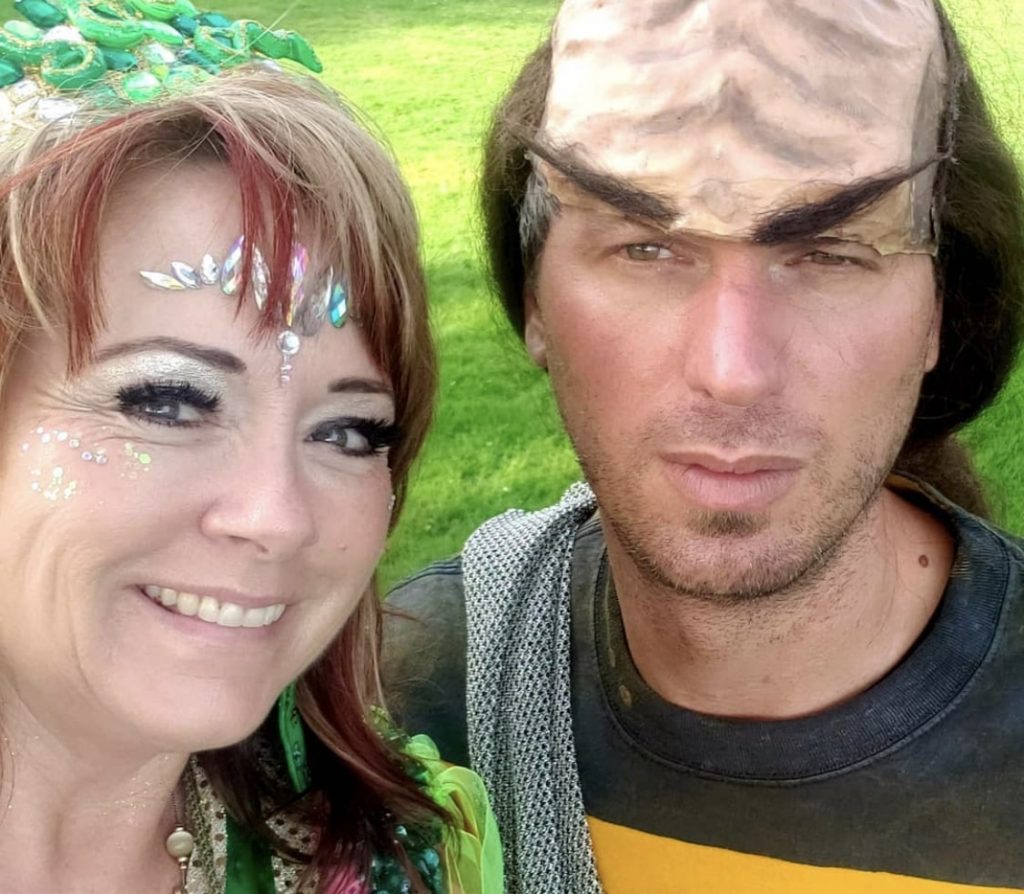
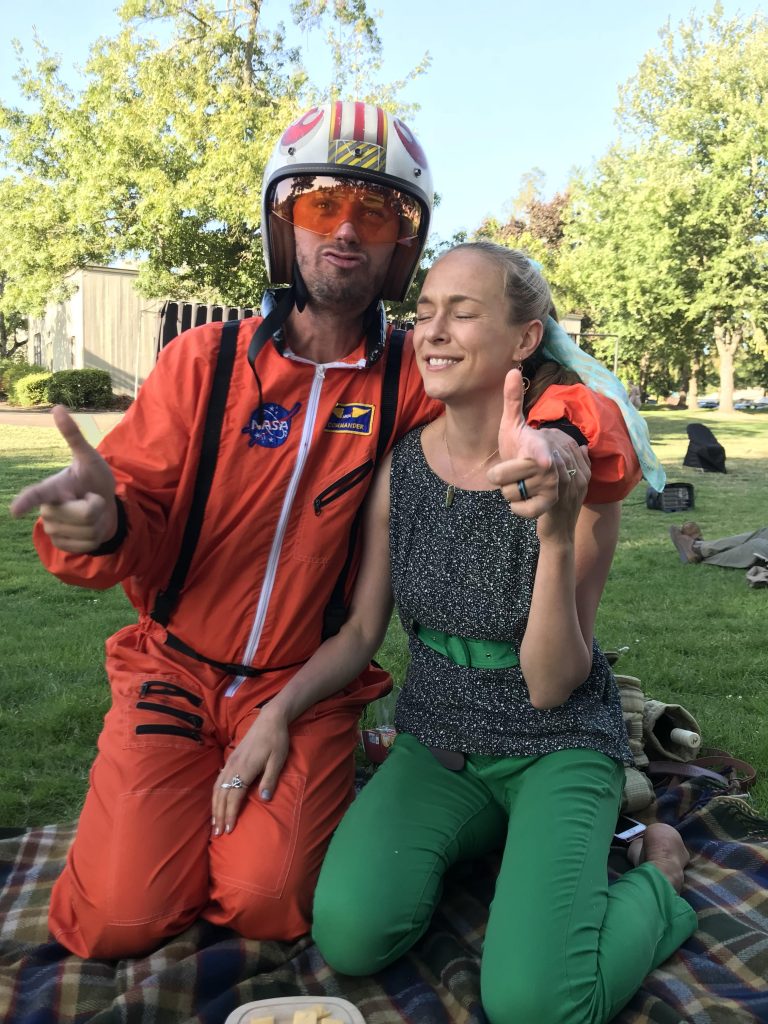
My husband, Jon, found a home in Star Trek Live Theater, a motley crew of Eugenians who looked up to the show’s trailblazing characters and utopian view of civilizations. Although I didn’t watch Star Trek growing up, the actors here bring a homespun tenderness to the stories. Since they’ve been performing together for years, it’s also a strong community of friends who see each other through life’s varied mountains and valleys—both the triumphant and the depressing moments outside of the stage.
Jon as Worf and the lovely local Slug Queen
Last Friday, on the invitation of the Star Trek Live sound engineer, Jon performed in the First Annual Edward Gorey Ball—a costumed celebration of dark art and poems. I hadn’t heard Gorey’s work until Jon would rehearse lines from “The Gashlycrumb Tinies” at home:
A is Alice, who fell down the stairs.
B is for Basil, assaulted by bears.
The ball was held at Spectrum, Eugene’s LGBTQ bar and one of the best spots for nightlife in the city. In addition to some readings and a bit of Gorey’s history, there were burlesque dancers, contortionists, and two cello players.
It was actually the juggler who inspired me to write this piece (for whom I’ll use the pronoun “they” to avoid assumptions about gender identity). Before their performance, they walked to the front row of the audience—long knives in hand—and warned the crowd that objects might come flying in their direction. The front row, bedazzled in black lace, dark sequins, and shiny leather, smiled and said it was cool.
The juggler took to the stage in a checkered harlequin costume. They began juggling three skulls to music. They dropped a skull once, twice—three times!—and every time, the spherical reminders of our mortality went bouncing into the front row as predicted. The juggler then picked up the knives and with great enthusiasm, tossed the blades into the air until one dropped and bounced into the front row. (Not to worry! Performance blades are dulled.)
What I noticed throughout this performance was how everyone cheered with loud encouragement every time the juggler made a mistake; it didn’t matter that skulls and long knives were literally bouncing into the shins of the audience. People just wanted the juggler to feel the love and keep trying.
That’s the creative lifeblood of this community—The Little Eugene That Could with her unflappable “I Think I Can” attitude. No matter your level of talent in any arena, there is a friendly audience waiting to cheer you on through your artistic process.
In addition to countless creative classes at the University of Oregon and Lane Community College, Eugene has:
Open Mic Nights for comedy, poetry, music, and performing arts
Toastmasters (a group to improve one’s public speaking)
Danceability (dance classes for differently-abled people)
Pub Science Talks (scientists lecturing at a brewery on something cool)
Multiple not-for-profit community theaters
Monday Improv (a beginning improv group that gathers weekly)
First Friday Art Walks (artists connecting with downtown businesses to put their work on display for the night)
The Saturday Market (the country’s longest-running weekly open-air market for artisans and farmers)
Sunday Learners Jam (an opportunity for beginning musicians to join a group at a local jazz club)
This list really only scratches the surface and a lot of these events are free or low-cost.
One thing I noticed about San Francisco was that the wealth had begun to stifle the local culture; not only had the city become unaffordable for teachers, social workers, and janitors, but it had pushed out a lot of musicians, painters, and performers as well. Some moved to Oakland—until that city also became out of reach—and now there’s a migration to midsize cities like Eugene, which has attracted many of Portland’s priced-out artists.
What happens to communities when culture is forced to leave? Sure, apps and tech are cool, but so is thriving artistic energy. That old art collective suddenly becomes a tapas restaurant; that dive bar with weekly open mics makes way for a swanky cocktail joint; that family-owned bookstore turns into yet another coffee shop which charges $6.50 for a pour-over.
The point is that the free market is not a good arbiter of culture. It’s designed not to expand people’s minds, but rather to play to their baser instincts: greed, status, indulgence, intoxication. There are few companies that would truly put cultural value (not to mention environmental or public health) above their bottom line. It’s not their fault; that’s just the way the system works.
Good art and culture aren’t always comfortable. They force people to stretch their presumptions and make space for a new perspective. This makes people more empathetic and generous, more galvanized in the face of injustice. The free market doesn’t have those objectives, although some companies would like to think of themselves that way and commodify culture to increase their bottom line.
Overall, when everyone is too damn busy on the endless hamster wheel of modern work, a city begins to die a little. People stop looking you in the eye and step over unconscious bodies in SoMa; tent cities of the evicted and mentally ill take over once-peaceful blocks; deaths of despair skyrocket as the city becomes both glitzier and grimier.
I’m grateful that Eugene has its heart in the right place. Many people who grow up here return after a few years living somewhere else. There’s just nowhere like it. Strong local leadership and shared values helped to steer Eugene toward embracing everything that makes life worth living: art, community, natural beauty, generosity, kindness, and simple pleasures.
Here, I won’t think twice about submitting my art to local galleries, picking up my guitar, or getting silly with an improv group. I Think I Can.
“First Comes Love, Then Comes Marriage, Then Comes…”
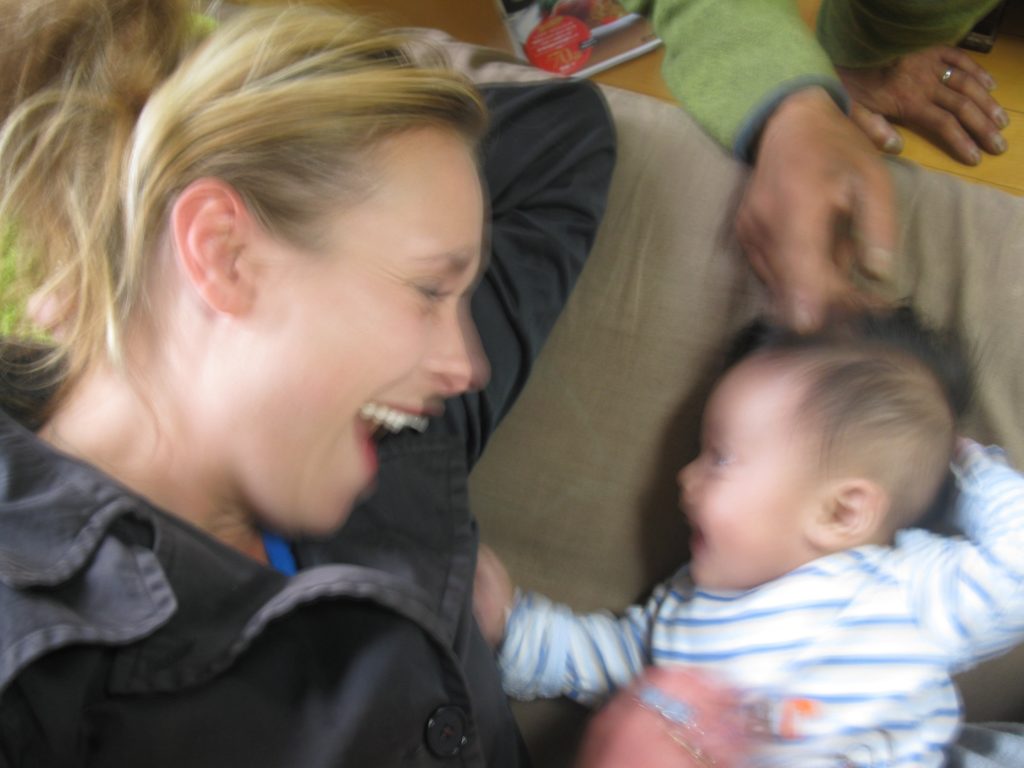
A rare photo of Jocelyn enjoying a baby. Notice how the photographer’s hands were shaking in disbelief. This was a very cute and very special baby (2011).
After getting married last year at age 34, the most common question I get is, “So, are you thinking about having kids?”
Sure, it’s a more delicate line of inquiry than in generations past, when it was assumed that every woman’s life ambition was to have children—not a matter of if but when. Back in those days, getting married and having kids was endemic to a woman’s survival when we were all but excluded from universities and the most lucrative jobs.
At 35, my answer is still maybe. Unlike some, I feel zero baby fever—in fact, call me a monster but I find babies gross, loud, boring, and frankly parasitic, especially on their mothers’ bodies, brains, and sleep patterns.
I took care of three kids (ages 14 months, three years, and five years) during the summer I was 16. Being the baby’s full-time custodian wasn’t as difficult as it was tedious—reading the same picture books, being attentive to her minute-by-minute needs, repeatedly picking up the books she’d thrown from the shelf, changing foul diapers and contemplating how many thousands of my own plastic diapers from the 80s must be still decomposing, rocking her to sleep on a pillow for naps and laying it ever so gently into her crib. (She refused to go to sleep unless she was physically in my arms.)
People say, “It’s different when it’s your own,” but I call bullshit: I think some U.S. mothers simply can’t admit how much they despise their young children. A component of postpartum depression is a mother’s realization that her old life is gone. American fathers have the luxury of being more honest about their indifference—especially toward babies—although I admit that men today are much more involved in the process than they used to be.
So what are the common reasons for wanting to have children?
One person told me it was an opportunity—maybe even a public duty—to shape a mind for the next generation, to pass on the best of my accumulated knowledge and sense of civic responsibility for the betterment of our collective future. I reject this premise. I can shape many more minds by becoming a teacher (been there), mentor (done that), or artist (working on it).
If you think about the people who have inspired you, are your parents at the top of your list? Parents in the U.S. seem to do a lot of work for very little credit. They don’t have the same respect afforded to elders in Japan, for example, or in Latin American cultures. For many, an American therapy session is just a bitch-fest about how awful a person’s parents were and how a person can overcome all of the limitations of their upbringing. I don’t want to be the subject of my unborn child’s therapy sessions.
Another person asked me who will take care of me when I get old. That’s easy: I’ll pay someone to do it, just as many elderly people—even those with large families—do. Having children and grandchildren in this individualistic youth-obsessed society doesn’t guarantee you won’t die alone. In fact, I’ll feel better about having a stranger wipe the soup from my mouth than having to reverse roles with a child I raised and compromise my dignity.
Plus, how many of us still feel truly connected to our parents? The majority of children take much more than they will ever return and many in my generation continue to do so; a third of my fellow Millennials have boomeranged back into their childhood homes to live cheaply. I wonder how many of those parents are happy to have their adult children home. And even for those who manage to live independently, the reality of American culture is that young people follow the jobs, often in places far away from their parents, only to return once or twice a year for holidays, often begrudgingly so. And many Americans consider calling their parents a chore rather than a joy. I’m fortunate that my mother is a vibrant, smart, continually evolving person and I enjoy her company, but others are not so lucky.
I actually asked my mom how she would feel if I didn’t have kids. At first, she said she would be fine with whatever decision I make, but she later revealed she’d actually be disappointed because I’d “never fully understand everything [she] had to go through.” I told her, “Actually, opting out of parenthood is precisely a recognition of everything you had to endure as a mother.” (After publishing this piece, my mom clarified what she meant. She told me that when a person becomes a parent, they truly understand unconditional love and this produces a new appreciation of one’s own parents—and a closeness that comes from that shared experience.)
A couple of weeks ago, my best friend told me about her family friends, an older childless couple, who now regret not having kids. This is the one that stumps me. There’s no guarantee that Jon and I won’t someday be reading in rocking chairs on the porch of our beachfront house and wonder, “What if? Wouldn’t it be lovely to have some grandchildren around?”
I agree. I would love to have grandchildren to spoil for a weekend and hand back to their parents. I also would love to be a modern American father—involved and loving but not leaking from my tits for a couple of years. For men, it’s a bonus if they opt into the parenting process; for women, it’s a necessity—and they’re judged mercilessly every step along the way without a shred of institutional support.
Maybe I’m just not wired for motherhood. I’m sensible and responsible to a fault, but I lack the desire to have my life—which I love—subsumed by the needs of another.
Growing up with a single mom, I also was exposed to the hardest version of motherhood, which I acknowledge is a bias. And as an only child, I’m used to lots of time alone. I love my solitude and unless I got an expensive live-in nanny, that would be gone for at least a decade.
I think about fostering or adopting older kids. Perhaps it’s just babies and toddlers I don’t care for. I simply don’t want to be a janitor for a human—I want to be a teacher. (And I’m not talking about the dull instruction of object permanence, the ABCs, and shapes.)
All of this said I’m still a maybe. I have one friend who continued to play kickball with us until she was 39 weeks pregnant and unlike many new parents, she and her husband, a pediatrician, continue to host gatherings at their home and meet up for events. This version of motherhood gives me hope. It’s so damn cool and inspirational when women don’t make a fuss and continue to have lives outside of being mothers.
My real fear is that I will end up with a needy little parasite who will deprive me of all I hold dear in this life: reading, writing, traveling, my friendships, and sleep. Above all, putting my career on hold to pay thousands of dollars to stretch and ultimately tear open my body to perpetuate my genes is too horrible to contemplate—and that’s only step one. There’s no guarantee that my kid won’t be a criminal or worse, an asshole. I don’t like that roll of the dice.
At my bridal shower, my aunt told me not to wait to have kids or I’d never do it. Perhaps she was right. I’m just grateful that the days of assuming that parenthood is part of a complete life are over.
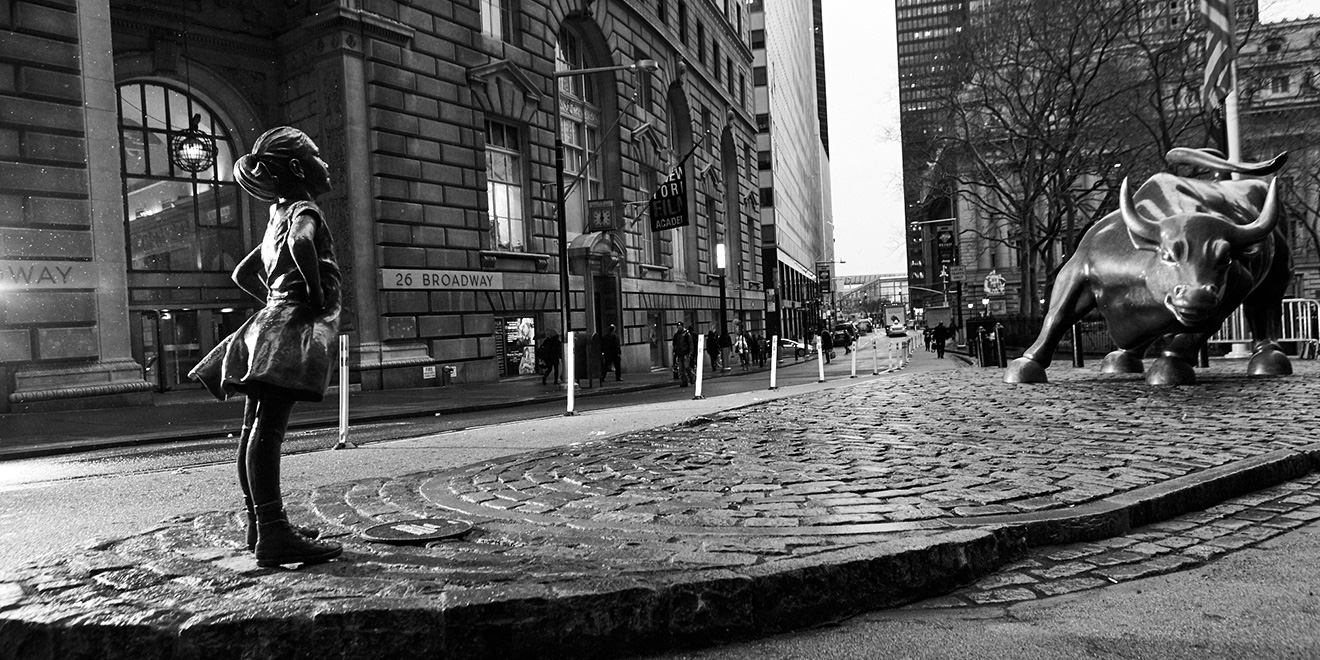
“Know the power of women in leadership. SHE makes a difference.” (New sculpture on Wall Street, 2017)
Yesterday was International Women’s Day. I participated in the “Day Without a Woman” protest by wearing red, spending money at exclusively female-owned businesses, and not working. I reflected on what it means to be a woman and how my life would be different if I’d been born a man. I’m grateful that now my female friends and I can vote and our career options aren’t limited to stenography or teaching (!!!), but as with any seismic shift in society, other less visible disadvantages of membership in Club Double X are still stifling our potential as humans.
It’s embarrassing to admit, but at my core, I resent being a woman:
I resent that being a wife and mother seems so much harder than being a husband and father.
I resent that women are led to believe their wedding day will be the “happiest day of their lives.”
I resent that unpaid domestic work—what UC Berkeley’s Arlie Hochschild called The Second Shift—still largely falls on women’s shoulders.
I resent that rich, white men are largely anti-regulation unless they have the opportunity to impose limits on women’s access to birth control or reproductive health services.
I resent that women’s and men’s ideas are treated so differently. JK Rowling’s publishers encouraged her to use her initials because they believed that boys wouldn’t be interested in a book written by a woman. In that vein, male authors don’t have the courage to publish under a female pseudonym unless they’re writing trashy romance novels. (I’d love to be proven wrong here.)
I resent that words coming out of a man’s mouth are perceived as more authoritative, persuasive, and intelligent than if they came from a woman (i.e., the Goldberg Paradigm).
I resent that female nonconformists throughout history have been seen as crazy or disobedient while many male nonconformists are left alone or celebrated.
I resent that women rarely occupy upper leadership positions in government, companies, and religious institutions.
I resent that traditionally female “caring occupations” are paid less than traditionally male “physical occupations,” especially when there’s no longer a single-income family wage (except for the richest Americans).
I resent that women pay more for health insurance, dry cleaning, toiletries, clothing, and more, all while earning lower salaries than men for the same work.
I resent that women are expected to have a “civilizing effect” on male family members. Women tolerate men’s anger, mood swings, and selfishness while men are still favorably stereotyped as the “more rational” sex. Riddle me this: a man might get angry at a bar, break a bottle, and stab someone in the neck to defend his honor. His honor. So which one is really the more rational sex?
Protesting the shooting death of Alton Sterling (2016).
I resent that if a woman is not smiling, she’s often perceived as angry or upset.
I resent that society condemns steroid use among men while not caring whether women inject toxins into their faces or get non-necessary surgeries.
I resent that women’s assertiveness is misperceived as aggression or bossiness.
Worst of all, I resent my own biology. Why should I be less physically strong than a man? Why should I have to bleed every month? And despite what some women say, being pregnant looks supremely uncomfortable and inconvenient. Ok, so I can’t really change this one, although the US could do so much more by mandating paid time off for new mothers (as nearly all developed countries do), improving women’s access to family planning and healthcare, and ensuring that if an insurance company covers Rogaine or boner pills, IT ALSO covers female necessities such as birth control.
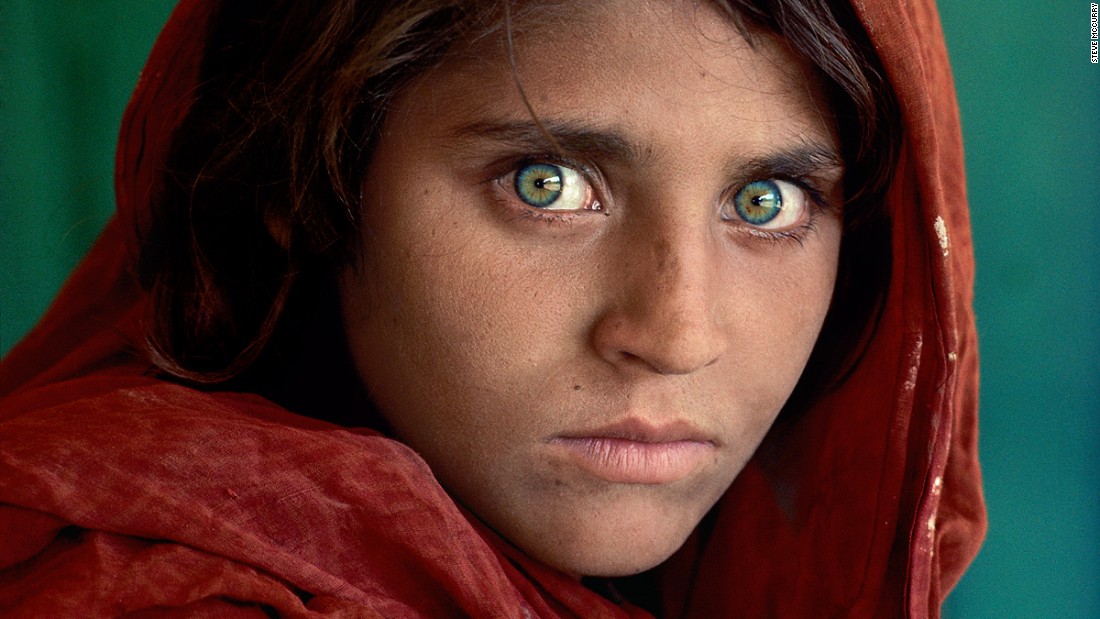
Iconic shot of Afghani Sharbat Gula, National Geographic (1985)
And I’m a privileged, white woman from the United States. My experience is just one person’s perspective and like so many women, I’ve never been able to fit the mold of the fairer sex. There’s been just enough social progress that thankfully, I don’t have to. I’m proud to be a feminist, and I hope that these disparities will someday be anachronistic, joining the same graveyard where our ancestors buried feudalism, buried Jim Crow laws, and (more recently) buried the anti-gay Defense of Marriage Act. The ghosts of longstanding discrimination still haunt us and public sentiment often changes more slowly than the law, especially as prejudice is passed down to those without the education to know better. I’m grateful for the opportunity to reflect on my own ghosts—those stomach-turning vestiges of legalized discrimination—even if the frigate of social progress is a slow-moving son-of-a-bitch.
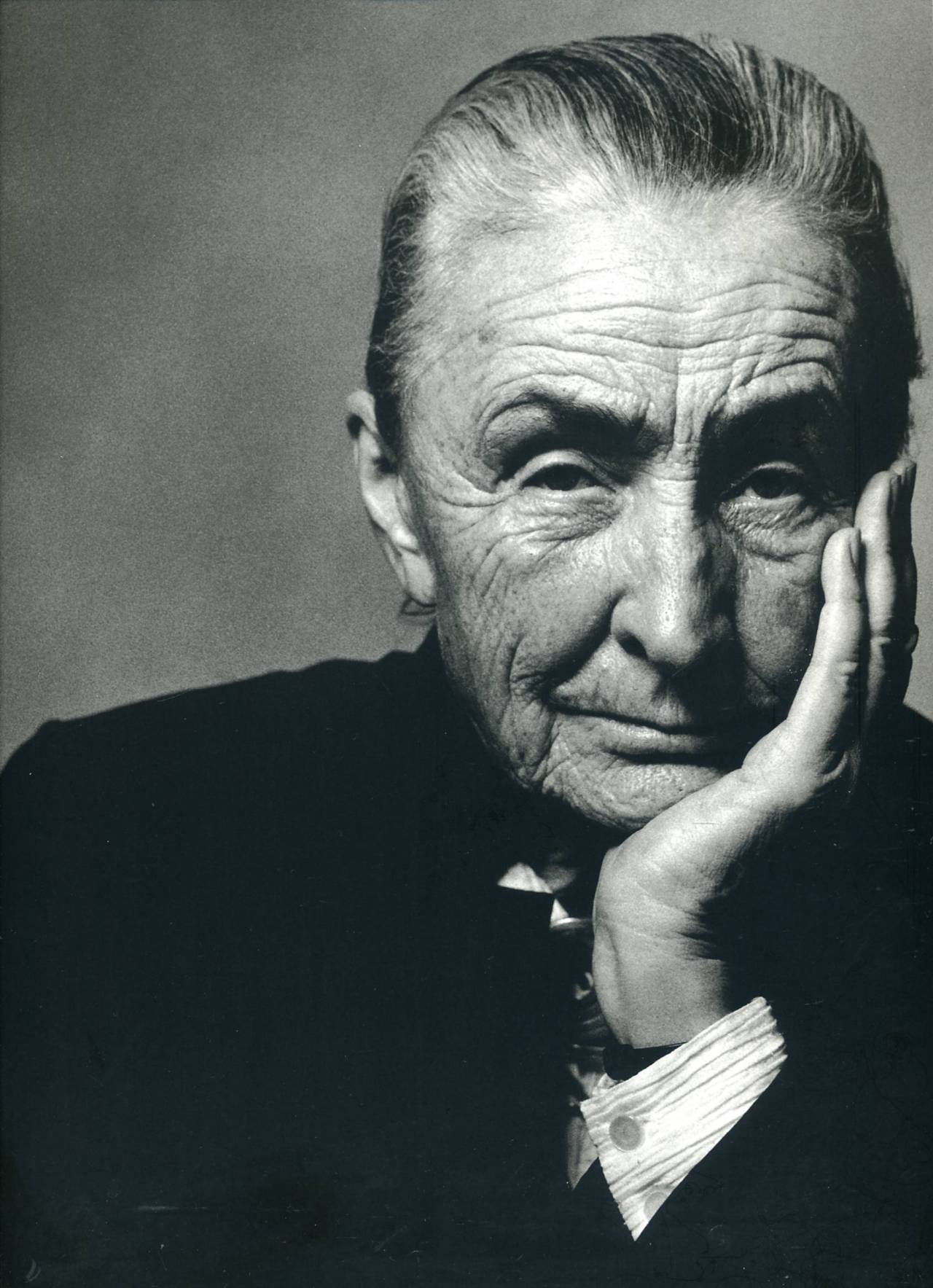
My favorite photo of Georgia O’Keeffe. She was one of the most original modern artists of her time. Her (future) husband, photographer Alfred Stieglitz, showed intimate photos of her naked body without her permission to advance his own career at an art show during the 1920s. The media picked up on the scandal and humiliated her for it. This is why her incredible paintings weren’t discussed seriously as part of the canon of modern art at the time; instead, they were often disparaged and compared to vaginas. Now you know why her work still carries that stigma.
Crack is whack! Above the influence! Use, and you lose! The echoes of childhood propaganda which tried to scare us straight.
We’re kids of the “Just Say No” generation, the abstinence-only approach to drug use trumpeted by then First Lady Nancy Reagan while her husband was busy slashing funds for vulnerable populations such as the poor and mentally ill.
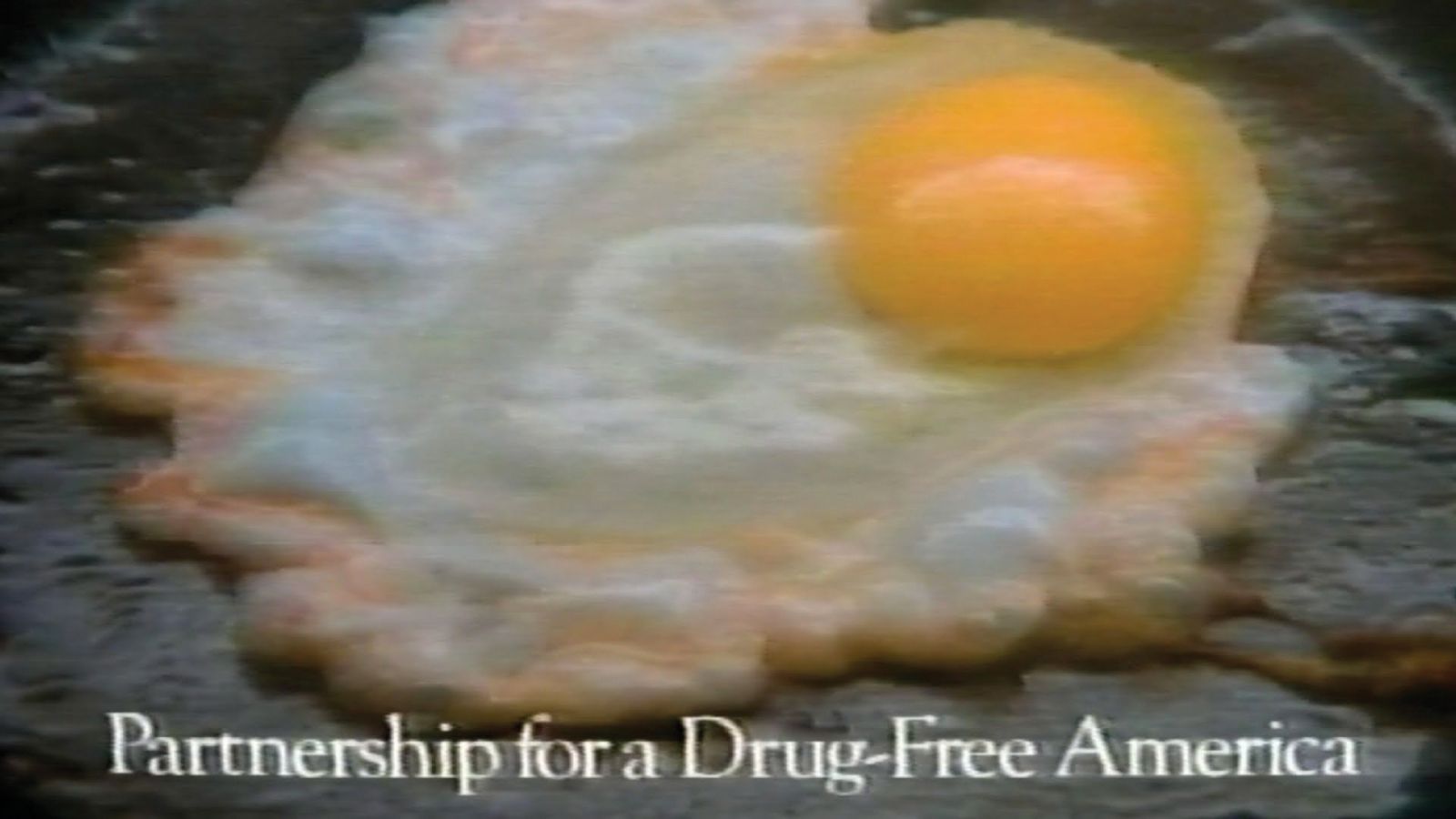
Remember the sizzle of our eggy brains in the frying pan? Or the meth addict’s terrifying house-cleaning jingle? What about the Teenage Mutant Ninja Turtles cooly reminding us, “Drug dealers are dorks!”—a cartoon ironically spawned by heavy marijuana users, or at least individuals with highly dissociative thinking. The War on Drugs even coopted our beloved cast of Saved by the Bell—“There’s no hope with dope!”—after Jessie freaked out having ingested too many caffeine pills. We were continually reminded by everyone from our parents to the lovable Scruff McGruff—D.A.R.E.’s anti-drug cartoon canine—that drugs are baaaaad and we’d inevitably be sticking syringes in our little arms if we tried one puff of Mexican skunk weed.
So I ask you: In the years since these PSAs hit the airwaves, what has happened to us Millennials?
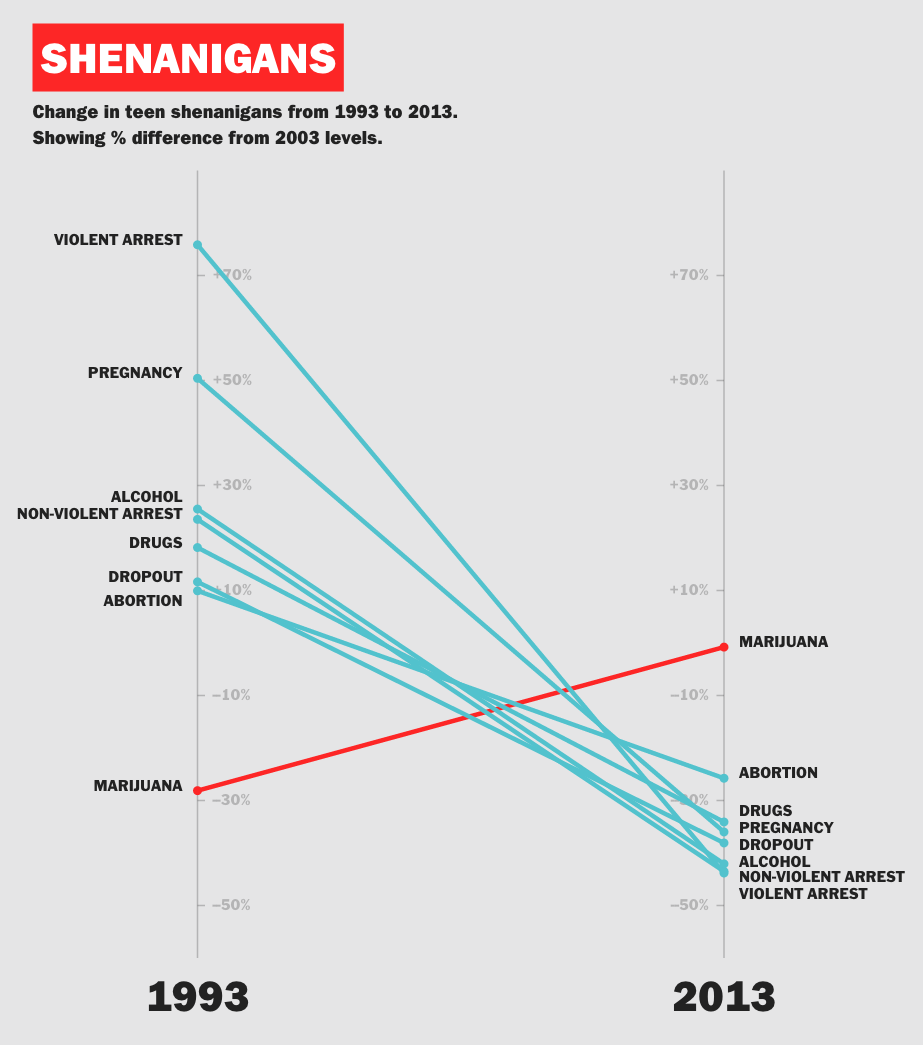
Well, the ads worked (or something did—Roe v. Wade and less unwanted babies being born, perhaps?—a discussion beyond the scope of this article). Illicit drug use, alcohol abuse, cigarette smoking, and a slew of other negative social indicators (e.g., teenage pregnancy, crime rates, dropouts, etc.) among Millennials are much lower than in previous generations. Vocativ (2015)—pulling data from the Centers for Disease Control (CDC), the National Institute on Drug Abuse, and the Department of Justice—illustrates just how well-behaved our Generation Y has been:
So what’s the problem here?
Two things, actually. First, I believe that our understanding of addiction is flat and selectively demonizes groups with less power in society. Second, I think that PSAs have been targeting the wrong perpetrators, that over the past few decades, much more insidious drug-peddlers have hooked Americans across all generations. And these pushers don’t operate from the shadows, but rather sell their dope openly, on TV even. I’m talking about something that kills more people annually than car crashes, something that kills more people than all illicit drugs combined. I’m talking about good ol’ corporate, doctor-prescribed narcotics.
I’ll begin by qualifying my position. I worked as an addiction specialist for over two years at a non-profit methadone clinic in San Francisco. I managed a caseload of roughly 50 people who had been (or still were) heroin-users. Methadone—an opioid that occupies the same brain receptors as heroin but without the same sedation or euphoria—is the pharmaceutical equivalent of kicking the can down the road. In essence, it replaces one substance with another, but most importantly it allows people to live stable, normal lives. Without the threat of withdrawals, they can maintain jobs, take care of their families, and go on about their business.
I was struck by the fact that some of my clients were just like me—young, ambitious, from loving families—and were a far cry from the grotesque “Faces of Addiction” we’ve seen pop-up in our Facebook feeds. Where were the festering blisters on their faces? Where were the signs that they were not to be trusted under any circumstances? What was heartbreaking is that my clients—mainly respectful and civic-minded individuals—had an acute awareness of society’s appalling concept of an “addict” and were self-conscious about it. Many had done time in prison for the non-violent crime of having a disease, and the shame of having been addicted to heroin dripped from their stories, as if they were trying to atone for having fallen off one of society’s most jagged edges. It reminded me that our concept of addiction is weighed heavily against lower income groups such as the homeless and minorities, groups with comparatively less power in society.
Faces of Addiction
It’s incredibly ironic that the War on Drugs and the subsequent mass incarceration of non-violent offenders—a policy that continues to disproportionately affect poor and minority people—was ignited by President Nixon, a notorious alcoholic. And I wonder how we would view addiction differently if PSAs had been created in the image of the rich and powerful addict?
Here’s what I mean:
Show us the Wall Street executive snorting lines of uncut Columbian off his mahogany desk and believing he’s invincible before rolling the dice with your grandmother’s stock portfolio.
Show us the bored, bony, Bel Air housewife who exercises for three hours a day and spends her weekly allowance from her overworked, philandering husband on a daily bottle of Veuve Clicquot while Maria or Svetlana raises her kids.
Show us the flush-faced politician who writes scathing polemics about drug-users while nursing his OxyContin addiction in a gated community. (Ahem, Rush Limbaugh.)
Show us the 22-year-old marketing manager in New York who blacks out every weekend on $15 cosmos and can no longer achieve orgasm unless she’s on mollie.
Show us the lead engineer in the Silicon Valley tech firm who pops Ritalin to code all night and keep up with the increasing demands of his employer.
Show us the millions of Americans who turn to sugary, fatty, comfort food—treats that were marketed to them on TV—to iron out life’s little speed bumps and then ask their doctors about one-pill solutions to their subsequent obesity, high cholesterol, high blood pressure, acid reflux, and heart ailments.
The point is that there’s always been an element of privilege to our concept of addiction. Poor addicts provoke contempt and disgust, while hard-partying wealthy addicts inspire TV specials and book deals. It’s all very unfair as we’re sold the bogeyman of “the marginalized other”—the dirty, disgruntled addict—to distract us from our own troubling habits nurtured by powerful forces.
This phenomena is intimately connected with my second argument. I believe that the biggest perpetrators of addiction, disease, and death are not the drugs that PSAs warned us about, but rather legally prescribed medications.
It’s no secret that the U.S. government has a cozy relationship with Big Pharma. Time (2015) writes a telling exposé on the new Deputy Commissioner of the FDA, Dr. Robert Califf, who believes that the U.S. needs less regulation in the development of new drugs, including the loosening of the approval process and a slackening of the post-market oversight. Given the number of drugs and devices that are recalled annually after causing serious injuries and death (e.g., Vioxx, Phen-fen, Propulsid, Zyprexa), and given the number of multimillion (and multibillion) dollar lawsuits annually, how can one of the top regulators of the FDA—an organization meant to safeguard the public interest—believe in less regulation?
The Centers for Disease Control (CDC) reports that since 2009, drug overdose deaths have overtaken those from motor vehicle crashes, and the trend has continued since then. In 2013, drug overdoses were the leading cause of injury death claiming 43,982 lives, nearly three times as many people as homicides. Of those drug-related deaths, 22,767 (51.8%) were from prescribed drugs, more deaths than from all illegal drugs combined.
A majority of these lives were lost due to two classes of medications: opioids, also known as painkillers (e.g., OxyContin, Vicodin), and benzodiazepines, a class of anti-anxiety drugs (e.g., Xanex, Valium, Ativan). Opioids are by far the biggest offender:
The CDC reveals that in the U.S., the cost of prescription opiate abuse was $55.7 billion, including lost workplace productivity, healthcare, and criminal justice
Opioids were involved in 71.3% of all prescription medication overdose deaths in 2013
Each day, 44 Americans die from painkiller overdoses, and in 2013, nearly two million Americans abused them
And yet, when asked about reasonable prescription limits in a PBS (2013) interview, a CDC representative reports that,
Very few states have laws requiring specific steps when exceeding daily dosage limits for all prescription painkillers…The existing limits do not place major constraints on prescribing.
Returning to the larger issue of high-volume prescriptions for all drug classes (not just painkillers), why is this happening? Two reasons: doctors are paid and patients are heavily marketed to.
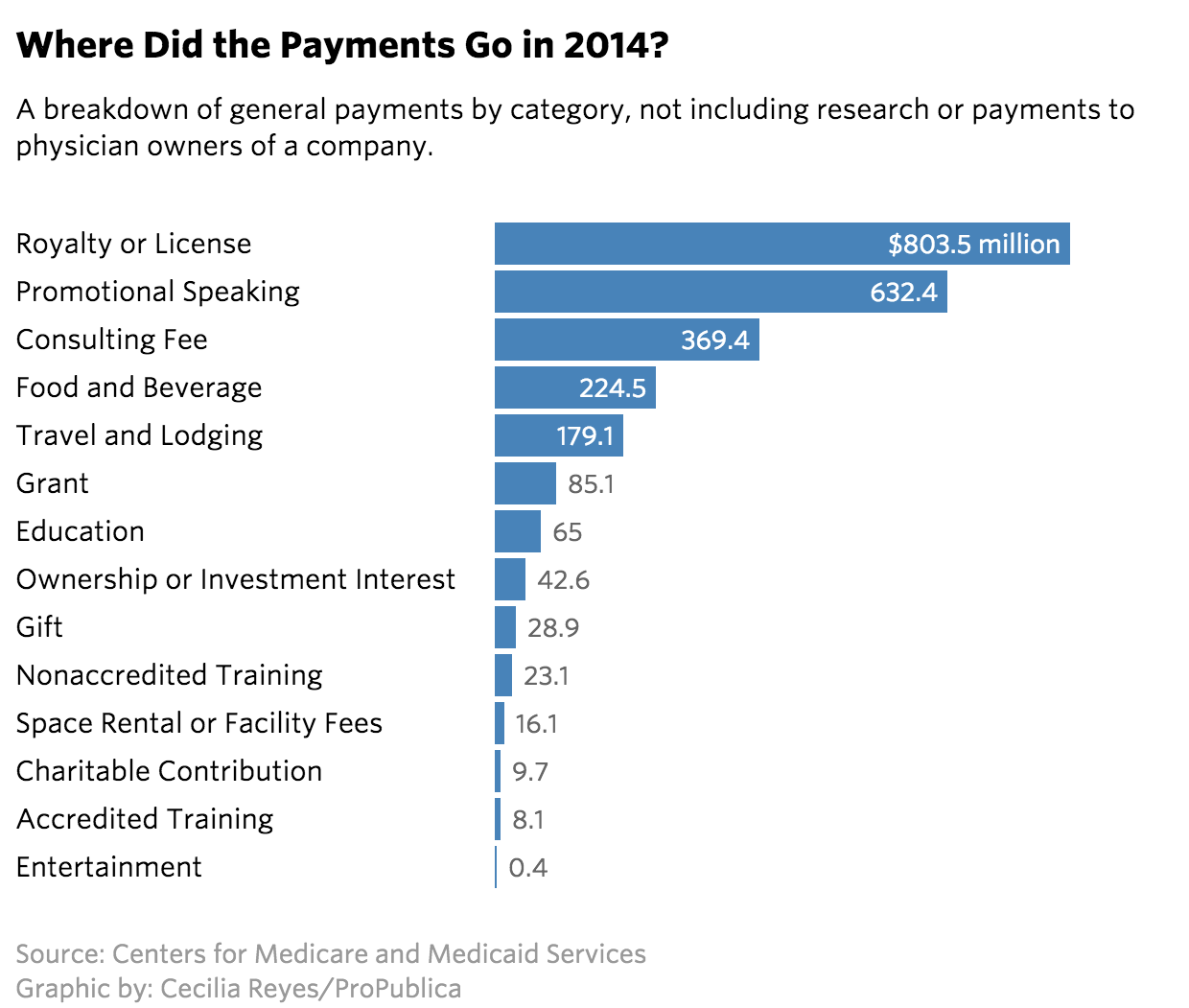
First, between August 2013 and December 2014, doctors received $3.53 billion for consulting, speeches, travel, and meals from pharmaceutical companies, and this is only in disclosed payments. ProPublica’s “Dollars for Docs” (2015) project tracks not only how much Big Pharma is spending to woo doctors, but also calls out the greatest offenders:
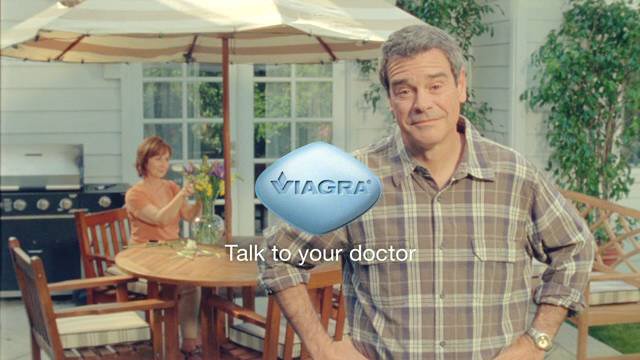
Second, it’s interesting that since 1997, pharmaceutical companies have been able to hawk antidepressants, diuretics, antipsychotics, anesthetics, muscle relaxants, corticosteroids, antihistamines, and boner pills, among others, all on television and public billboards as if they were benign deodorant or salad dressing. This isn’t the way it should be. Europe has banned this practice—also referred to as direct-to-consumer advertising—and it’s easy to see why: it’s widely abused. As the old saying goes, “Don’t make the doctor your heir.” In a similar vein, why would we let entities that profit from our sickness—real or imagined—sell drugs to us? There’s a clear conflict of interest between private enterprise and public health. Companies rely on making money, not on making people well, and it’s in their financial interest to convince people to take drugs. Plain and simple.
Every once in a while, Big Pharma receives a slap on the wrist and a small, modest bite is taken from their profits. GlaxoSmithKline had to pay $3 billion in 2012 for false advertising, paying kickbacks to doctors, and making misleading statements on the label, among other charges. Pfizer, Johnson&Johnson, Abbott Laboratories, and Eli Lilly have all had to pay settlements of over $1 billion in recent years on similar charges (Source: Wikipedia).
Despite all of this, the industry remains defiant and committed to increasing their profits. Bloomberg (2015) reports that there were 63 million prescriptions for ADHD drugs last year, with adults taking 53% of them. Shire’s Vyvanse, an amphetamine-derivative approved to treat both children and adults, celebrated an 18% uptick in sales last year and CEO Flemming Ornskov noted gleefully that in 2017, this drug will be used to treat binge-eating! Ornskov adds that,“Sweden is one of [their] fastest uptick markets, even beating the benchmarks for the U.S.” The use of drugs should not involve a desired “expansion of markets” at all. Manufacturing an ever-increasing pool of pill-ready patients is not in the interest of public health.This is the problem.
I can go on about the racial and socioeconomic biases of American drug laws; the alarming explosion of Americans taking pills; the increasing power of drug cartels in the face of punitive attitudes toward substance (ab)use; and even why a more accepting attitude toward marijuana use has been good for society. Instead I’ll close with some glimmers of hope. Here are my recommendations to ameliorate some of the damage done by the misguided War on Drugs (WoD):
Decriminalize all drugs. Let’s take illegal drugs out of the shadows to disempower cartels, to save money on non-violent crime prosecution, and to get people with addictions the help they need. The Cato Institute has countless studies on the failed WoD, including an examination of the effects of decriminalization in Portugal, where drug use overall is decreasing, the government is saving money, and most importantly, people with substance abuse problems are treated as medical patients rather than social pariahs. There are countless indicators that the libertarian position on drugs is a strong one, and my clients at the non-profit clinic in San Francisco would have benefited greatly from time in treatment rather than time in prison.
Ban direct-to-consumer advertising for Big Pharma. The only people that should be telling us what to put into our bodies are doctors and nutritionists, not marketers.
Appoint impartial doctors and scientists to lead regulatory agencies such as the FDA, not corporate insiders. This is a no-brainer. We need independent-minded experts with a commitment to safeguarding public interest, those who won’t be swayed by “old friends” or the sparkling arsenal of lobbyist treats from Pfizer, Merck, and all the others.
Take care of your own mental and physical health and avoid relying on one-pill solutions.Of course there are medical conditions which warrant medication and surgery. I’m not Amish or a Scientologist, but I do believe that if Americans took more pride in being healthy, we’d all be better off. Less addicted, less sick, less judgmental, and happier.
San Martín de Los Andes—a remote village in Patagonia and my home for the past five months—defies description. I’ve puzzled over this opening sentence for the past 10-15 minutes, trying to pin down this place’s character and even in my native language, I’m like a stuttering teenage boy in the presence of divine beauty, afraid of assigning merely secular words to such majesty. And this is from someone who has lived on four continents and traveled throughout the world for the greater part of the last 10 years. There’s no denying I have a healthy basis of comparison, and there’s something ineffably special about this Swiss-style town replete with chocolate shops, cervecerias, and artisan craftworks embraced by an amphitheater of lushly forested mountains along the eastern finger of a beckoning lake. And that’s only the beginning.
San Martín de Los Andes, Thank you Google Maps
San Martín’s most prominent feature, the Lago Lácar, flouts categories of color. Like an iris, the lake sways from raincloud gray to milky turquoise depending on the light and the wind. The town bus terminal is one block away from the beach where men sweat through 5 v 5 soccer, and today, the water is donning her finest military blues. It seems a fitting tribute to José de San Martín—the Argentinian general from whom the village derives its namesake—a demigod who liberated much of South America from the Spanish colonizers in the 19th century. The sun ricochets off the water like stray bullets off a decorative shield, and it’s as hypnotizing as watching fire. Above Lácar rises a forested skyline—a voluptuous woman of trees laying in repose on her side—and even in the dead of this July winter, people fill the lakeside benches to talk, picnic, and sip on hot yerba mate.
It hasn’t all been Malbec and roses, though. I was here during a natural disaster that made international news.On the evening of April 22nd, 2015, the Calbuco Volcano erupted casting a thick plume of ash over San Martín from over 100 miles away.
Calbuco Volcano, April 2015
At 11:00 am the next morning, it was still pitch-black outside, and it was difficult to breathe. I checked all of our timekeeping devices thinking there must be some kind of glitch in the Matrix. How could the sun still not be up when it was nearing noon? In fact, all of the sun’s rays had been blocked out by an opaque cloud of particulate matter that was steadily blanketing everything in sight. In the words of my boyfriend, “This is some biblical, Armageddon shit!” Indeed it was, and it’s been the only day in my life that I feared the sun would never rise.
Before and after the Calbuco Volcano eruption, April 2015
The community, however, faced the challenge with aplomb and immediately began clearing ash from the streets. The volcanic substance, also referred to as tephra, is supremely absorbent and becomes so heavy with water that it’s been known to collapse houses. It’s important to clear it quickly, especially from vulnerable rooftops.
All of this was explained to me by the town’s many seasoned volcano professionals. I learned that in 2011, the Puyehue Volcano—this one much closer than Calbuco—erupted and suffocated the area in meters of ash…meters…forcing the closure of the area’s largest airport in Bariloche for over a year, a devastating blow given the area’s heavy dependence on tourism. Can you imagine wading through waist-high volcanic ash? In 2015 however, the sun did rise on April 23rd, and the townspeople filled the streets donning colorful bandanas over their noses and mouths, laughing at how mild this was compared to the last eruption.
Since this was my first brush with a volcano, I had no idea what to expect. Friends on Facebook witnessed the death of technicolor in my photos during those first few days, and lamented that, “All of the birds and animals are going die!!! So sad.”
Roses dusted with volcanic ash, April 2015
Well, I didn’t really believe that, actually. This was certainly no 79 A.D. Vesuvius, and although I was worried about the airport being open in time for my best friend to visit the following month, I remembered how other volcanically active regions not only survived eruptions (e.g., Hawaii, Indonesia, Naples), but thrived in their wake. To that point, it’s been nearly two months since Calbuco blew its impressive load, and new plant growth is everywhere, nourished by the fine minerals of the tephra which will continue to cultivate new life for years to come. Nature’s not-so-subtle changing of the scenes, this time with a happy ending.
Speaking of life, did I mention that this area is a bird-watcher’s wet dream? I learned that three biogeographic regions converge here—Andean forests, high mountains, and Patagonian steppes—each with distinct avian species. In fact, S.M. de Los Andes hosts the annual South American Bird Fair in November, the premier event of its kind on the continent. If you’re like me, you can identify maybe a handful of birds including common seagulls, pigeons, and pelicans, but let me tell you: there exist citizenries of strange, feathered creatures I’d never imagined. There are spring grass parrots with fire-engine red bellies which create jubilant flash-mobs of squawking;there are tall, gray and yellow birds with footlong beaks which irrigate verdant lawns with their worm-prodding; and there are brown sparrows the size of soccer balls which dig through trashcans and shriek when startled. I am no bird-watcher, but even I took notice of the chirping, trilling, twitter of the village’s omnipresent avian choir.
Patagonian parrots, Downtown S.M. de Los Andes
Birds haven’t been the only ones to treat this area as a sanctuary. Before becoming San Martín, this area served as a winter refuge for the Puelches, an indigenous tribe that raised horses on the eastern slopes of the Andes. In 1898, it was taken over in a territorial dispute between Argentina and Chile, and various settlements and agriculture began to sprout along the lakeshore. In 1937, Lanín National Park was created, stymieing development and protecting the natural environment for generations to come. That early preservation of this region in Patagonia is the reason it still feels unadulterated more than a century after its founding.
I have yet to speak to the village’s most impressive feature: its societies. And I use the plural of the word intentionally. Sure, San Martín boasts impossibly friendly human inhabitants, but there are also roving gangs of healthy mutts and cats everywhere. It’s not uncommon to see a pack of five collarless dogs racing euphorically up and down the sandy lakeshore. I contrast this with what I witnessed in Mexico or Nepal, for instance, where ownerless animals were normally sickly, losing fur in patches, depressed, and malnourished. But not in this Patagonian Shangri La for domesticates. Here, the dogs and cats are affectionate, rock vibrant coats, and don’t live in need, even if some of the long-haired dogs have dreadlocks around their hindquarters which bob—rather adorably—as they frolic. The thing is that there’s abundant fresh water at the lake, kind people, and enough organic compost from Argentina’s legendary “asados” (barbecues) to feed them. I’d never lived in a place where salubrious dogs and cats roamed as free citizens.
Lago Lácar, one of the local canine citizens
And finally, the human society. Here’s a recent story which sums up the bonhomie of San Martín for me: a pair of Belgian filmmakers, Paulina and Damien, were here last month collecting footage of grassroots communities. They were on a budget, and decided to stay with our dear friend Daniel whom they’d found through Couchsurfer. Their first night in town, Daniel put together a dinner party and prepared “carne relleno,” a thick, tender steak wrapped around garlic and red peppers, salted and baked in a decadent red wine broth. The dinner party raged past 3:00 in the morning—as many dinner parties do here—and it slipped out that Damien’s 30th birthday was two days later. Wondering how we could make it special for our new friends, we rallied a group of 10 and hosted an epic asado to celebrate. Everyone played instruments and feasted on tender meats, fresh bread, and birthday cake from an awesome local bakery. Now that’s the type of community I want to be a part of: one where strangers can roll into town and have a barbecue thrown in their honor two days later, as if among old friends.
For me, a person who has lived wandering from country to country for years, it’s the first time I’ve really felt at home anywhere since fleeing my mother’s coop. The Argentinians have a phrase that sums up the kindness and warm cheer of the people here: “re buena onda,” or very good vibes. I’m grateful for the buena onda here and I’ll do my best to pay it forward.
Thank you, San Martín de Los Andes. You’re hard to leave and impossible to forget.