“Things are different online, where I feel like I’m fighting a constant war for your attention. I carefully script all of my videos to maximize the addictiveness of each sentence. Beyond the initial hook, I sneak in little micro-hooks to everything I say, making sure to recapture your attention if it does start to drift.”
Adam Aleksic (Gen Z content creator) in his 2025 book, Algospeak
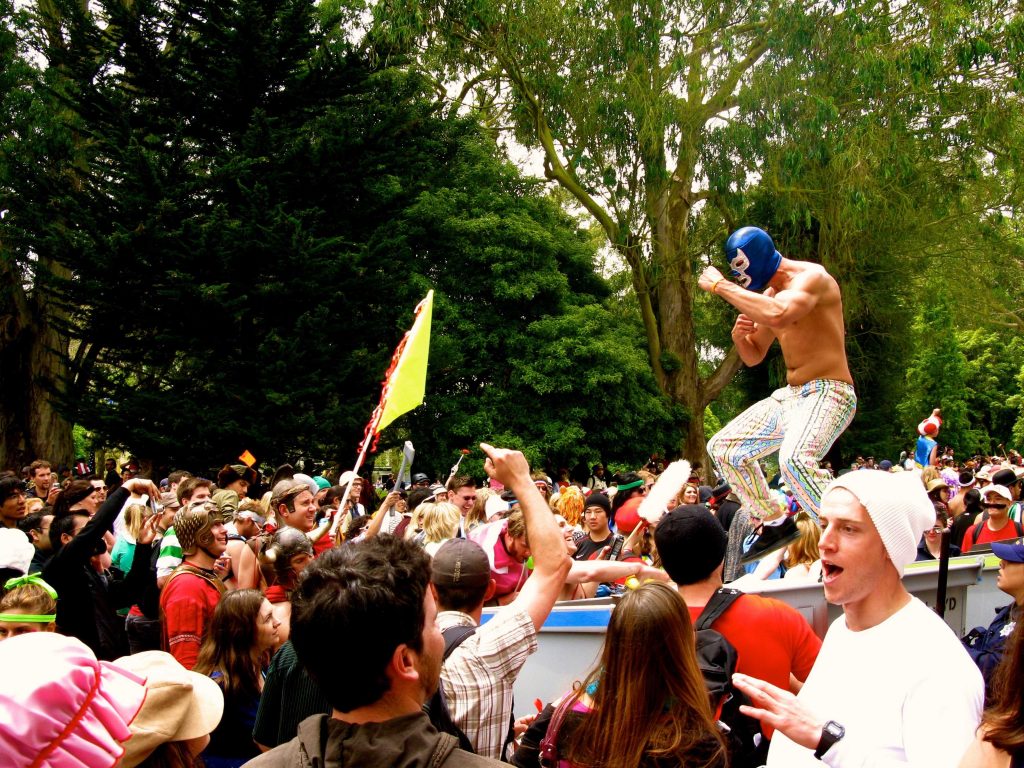
At Oregon Country Fair this year, I spotted something unusual. A young blonde in daisy dukes and a crop top was sitting on a painted carousel horse. She stuck her butt out and looked coquettishly at a professional camera while a woman snapped dozens of photos from all the angles. This thirsty ingenue seemed plucked straight from Coachella, Burning Man, or Euphoria—not our humble hippie fest in the forest! The influencers had finally invaded.
A 2023 Morning Consult Poll found that 57 percent of Gen Zers want to be influencers. I can take a charitable interpretation: perhaps a desire to be known is part of our American cultural DNA. We invented Hollywood; we’re fanatics for professional sports; we’re world-renowned for our marketing and propaganda. Even our current president is more of a twisted showman than a real leader. Fame has infiltrated all aspects of our lives.
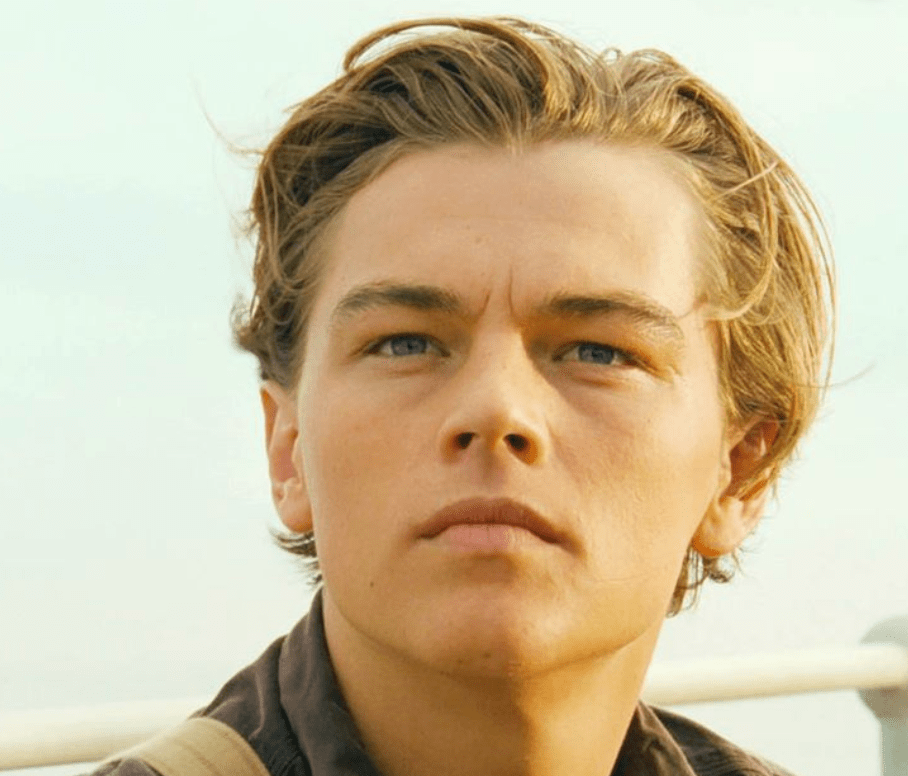
But the path to becoming a public figure is what has changed. Attention used to be a result of someone’s skillfulness. In the 90s, everyone knew who Leonardo DiCaprio, Michael Jordan, Britney Spears, and Tyra Banks were. And say what you want about their careers, but they all had immense talent. Wide recognition of a name or face would follow one’s athletic or artistic performance. It might occur with an assist from some savvy PR, but there was typically substance behind a celebrity’s stardom.
These days, why spend time developing your talents when you can simply pay for tens of thousands of Instagram followers? And why do the hard work of finding truth when sensational lies and destructive practical jokes are more likely to go viral?
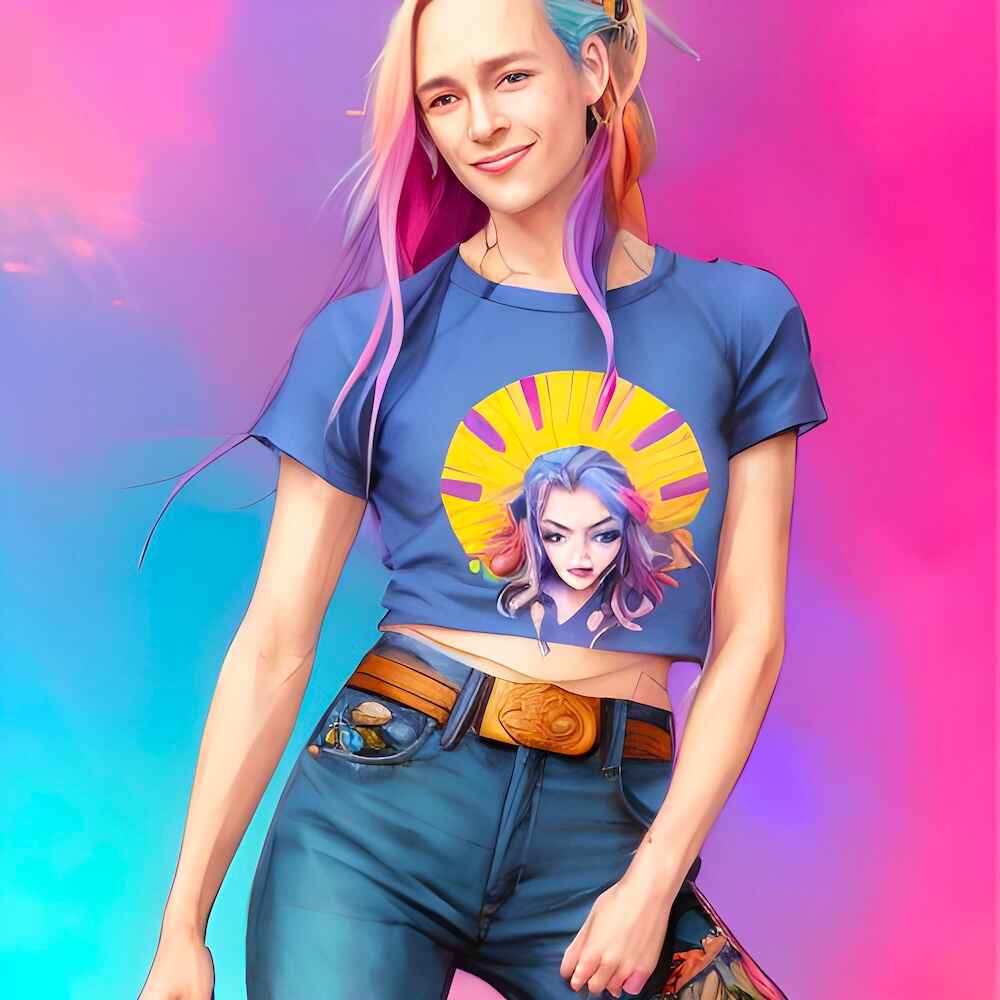
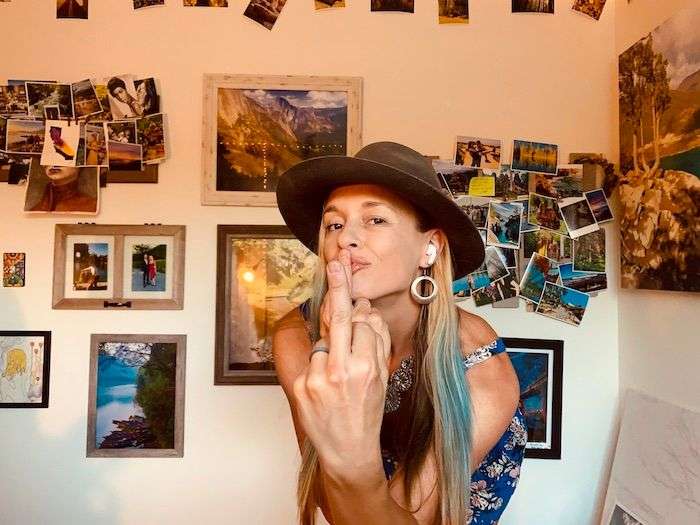
Google Photos thought this image epitomized “influencer”
The primary goal of an influencer is to get your attention. To increase engagement with their content. To amuse, excite, or enrage. To go viral. To gain followers. And to avoid breaking the platform’s rules. In fact, driving engagement is so important that a University of Oxford study found that influencers will minimize their creativity to pander to the algorithm.
Not all influencers are talentless hacks, of course, but there are quite a few desperate clout-chasers who have no skills beyond self-promotion. It’s not their fault that the algorithm rewards braindead megaphones. They’re conditioned to become thirsty loudmouths with no ears, who shout from the digital rooftops, “LOOK AT ME!!!”
And don’t get me wrong: there are many popular influencers I enjoy on Instagram—most of them serve content with cats, hiking, or painting (or some combination of the three). I spent an hour sampling videos from popular creators I’d never heard of: Charli D’Amelio, Addison Rae, Emma Chamberlain, Vinnie Hacker, Reagan Yorke, and others. I feel like I have a hangover after a lobotomy. Or perhaps it’s as if I’ve been eating cotton candy all morning: it’s light, fluffy, irresistible, and will give me serious health problems if I don’t stop. Is anyone else allergic to influencer-speak? The constant WORD EMPHASIS and unnatural intonation remind me of how folks talk to toddlers—only much faster.
I decided it would be less painful to read a book about the phenomena rather than listen to any more of them. Adam Aleksic, a 24-year-old Harvard graduate and “Etymology Nerd” TikTok star, just published an exceptional book called Algospeak. He presents thoughtful reflections on this era and an admirable self-awareness about the bizarre game of algorithmic attention-seeking: “It’s an unfortunate reality that all influencers somehow manipulate your emotions to go viral, since we’re all competing for your attention and we know that your attention is tied to your emotions.”
As Aleksic illustrates, there are still many influencers from whom we can learn skills, build community, or enjoy a laugh. But we should all be wary of whom we follow. Just as we are what we eat, our brains are what we watch and hear. A recent NYTimesopinion piece stated, “Social media platforms are designed to be addictive, and the sheer volume of material incentivizes cognitive ‘bites’ of discourse calibrated for maximum compulsiveness over nuance or thoughtful reasoning.” There’s been talk of a “post-literate” generation, which isn’t an exaggeration: fewer Americans these days are even capable of finishing a two-hour film let alone a 150-page novel. Short videos can broaden our familiarity with a range of subjects in relatively little time, but deep thinking is absent. The medium is the message, indeed.
In other words, if we spend too much time consuming content from low-rent pranksters and hollow pretty faces, we will, as a people, get much stupider. Choose your influencers wisely because you become who influences you.
Paddling a canoe through a flooded forest path, you come upon a half-submerged dragon sculpture. Its wooded scales crawl the length of a school bus through the lush vines and moss. Winter has quietly reclaimed Dragon Plaza, but the structures vibrate with the phantom joys of my favorite annual festival. Welcome to Oregon Country Fair in the off-season.
There’s no easy way to describe this 54-year-old event to the uninitiated. Sure, it’s a multiday festival of music, vaudeville, parades, art, and costumes—a midsummer celebration of tens of thousands of Pacific Northwest hippies (among others) set in a forest in Veneta, Oregon.
But to the elders, crews, camps, and Fair Families (by choice and by blood), OCF is a cherished ritual, a holiday, a reunion, an annual shaking of the dust off of one’s soul. Some folks rarely see their campmates or crew members outside of these hallowed grounds but come together year after year to set the pieces in motion.
Yes, Yes, Yes!
Oregon Country Fair feels more like a living organism than a festival, both in how it’s run and its centrality in the lives of many. An all-volunteer community of various crews ensures the land is free from winter debris, the signage is clear, the proper wristbands are distributed, the Honey Buckets are tended, the Ritz Sauna & Showers are ready to receive dusty Fairgoers, the stages have passed their soundchecks, the sculptures and other art installations are erected, the artisan and vendor booths are arranged, the event security is gentle (yet authoritative), and world-class medical professionals are on-hand 24/7 at the White Bird Medical Clinic.
At the event in July 2022, two miracles tested just how well the beautiful, diffuse all-volunteer chaos at Oregon Country Fair actually works.
On the Thursday night preceding the three-day festival, we were watching our friends perform on the Ritz Sauna & Showers stage. The Ritz is one of the most unique experiences at Fair. There are few opportunities in prudish America to gallivant around naked with fellow humans underneath gorgeous Haida-style carvings and the stars, listening to live music, where performers are often nude, too.
Jon had just finished a stint in the sauna when he had an intense urge to lie down. He knew it would be inappropriate to pass out among the multi-tiered, chanting, and swaying masses, so he exited the sauna and attempted to make it to the bench where I was seated with a friend enjoying the concert.
Suddenly, we heard a loud crack, and someone screamed, “He’s down!” The music stopped, and there was a lifeless body on the ground behind me. Our friend Jody shouted, “It’s Jon!” I rushed to his side, and there began the longest 20 seconds of my life. He was completely unconscious, bleeding profusely from a deep wound gushing blood above his left eye where his head had hit the bench. I thought he was dead. People regularly slip in the shower and lose their lives. I felt panicked and nauseous from all of the blood.
Naked Fairgoers stood around us when one man (Dr. Jeff) rushed over and began administering triage.
Jon’s eyelids began to flutter, and he awoke to Dr. Jeff holding a towel against the gash, me, and our friend Jody holding his hand. The Ritz immediately contacted the nearby White Bird Clinic. Within minutes, they had a team of medical professionals there to help transport him to the on-site clinic for evaluation.
When he was ready, Jon stood up with our assistance and was able to walk with the team. Dr. Andy, normally an ER doctor, was wearing a pink tutu, and another medical professional named Sarah accompanied us into a decent-looking surgical room. The team got to work quickly, giving Jon a complex, multilayered web of stitches that made him look nearly normal.
Since the gash was down to his cranium, I thought for sure we’d have to take an ambulance and our Fair would be over, but this all-volunteer team masterfully sewed up his face and gave us instructions for the subsequent days and weeks. Jon’s eye was swollen shut the following morning and black as a starless sky, but he could still work his security shift the next day and all days afterward. He was even in good spirits.
What was remarkable about this experience was not only the technical skill of the Fair Family volunteers but their attitudes: they expressed that they loved offering their professional gifts for free in this environment, removed from the normal hassles of billing and administration. They could practice the purest form of medicine absent these real-world constraints—they were there to take care of people.
And as a result, we received exceptional medical care in the middle of the forest at no cost. In a way, there was no better place Jon could have cracked his head open. Miracle number one.
The Iconic Chromatic Cat (2022)
The following day, I’d barely caught my breath from the night’s excitement, when another disaster struck: I bought cookies for some stilt-walking Fairgoers and dropped my wallet in the swirling dreamlike chaos of “The 8”—the infinity path along which Fair takes place.
I had $250 in cash, all of my cards, and ID—a real issue since I was leaving for Alaska the following week. I took a breath and decided not to let this misfortune ruin my Fair. Instead, I spent the next 36 hours wandering the 8, running into friends, letting my ears and eyes be drawn to parades and performances, spontaneous and scheduled.
Although Fair attracts tens of thousands of people, I remained confident that the grounds transport folks into another world where our better natures shine. In this realm beyond the mundane realities of the stock market and Twitter and taxes and wars, the loving essence of humanity reigns supreme. I treated this incident as if I’d lost my wallet in my own house. I had no doubt that it would eventually be returned to the Odyssey, the central lost-and-found station at the heart of the 8.
After a couple of days, my faith in the goodness of Fairgoers paid off: my wallet did turn up at the Odyssey, all of my cash and cards intact. Our second Fair miracle!
When I first camped at Fair in 2018, it was clear that the first weeks of every subsequent July would be dedicated to this annual event. There’s nowhere I’d rather be that time of year, probably for the rest of my life.
The joy of Fair is that for a few days, the masks come off, and a primordial joy erupts. This lush forest full of unique villages taps into parts of myself that are otherwise dormant. Xavanadu and Chela Mela vibrate with colorful art installations and themed parades. Energy Park educates us about renewable resources and the importance of conservation. The Ritz Sauna & Showers taps into our awareness that without our clothes, we’re all just animals of the same species, enjoying the pleasure of bathing after long dusty days wandering the 8.
Fairgoing Flaneurs (2022)
The labyrinthine paths connecting camps each carry their own magic. The spontaneity of connections, meeting eyes with strangers, lighting their smiles with my own, and knowing that we’re all in this moment together. I have the desire to be everywhere across the grounds all at once. The Fair spirit embodies free expression, creativity, acceptance, and love, but these words ring hollow next to the magic of walking the grounds in the thrumming hive of joyful performance. Sorrows feel drowned in an ocean of music, art, and elaborate costumes. The absence of rigid social constraints makes folks blossom, and the heaviness of worries is lifted. The ability to live in the present moment is restored, and overall, the magic of Fair is its humanity.
For me, these elements drastically outweigh many of Fair’s challenges: the messy logistics, generational politics, the ethical considerations of hosting the event on native Kalapuya lands, scattered accusations of colonialism and cultural appropriation, the overindulgence in drugs (mainly psychedelics), and the aggressive mosquitoes.
In reflection, OCF amplifies the core spirit that made Jon and I want to move to Eugene: the vibrant colors, experimental style, kindness, environmentalism, the low barrier to participation, the humble artists producing world-class work, the roughness around the edges like a beloved hardback book, the witchy and pagan vibe, and the radically inclusive community of the Pacific rainforest.
Our first Fair, embracing the whimsy (2018)
I lost my wallet in a crowd of thousands, and my partner got 7 stitches above his left eye—and it was still one of the best weeks of our lives. In the immortal exultation of one of my Fair friends: “Shit the fuck yeah!”
What is it about erotic film actor Tyler Nixon that keeps me coming (back)?
I’ve watched a good amount of porn in my life for a straight-ish woman. In high school, I was the “cool girl” who watched spit roasting, DP, and various fetish videos on a big screen with a group of dudes. At Berkeley, I was an unofficial member of the fraternity Zete. I knew the door code and would spend tons of time with the men, watching everything that young men watch.
In those days, I didn’t think too hard about what was on the screen. Most porn performances seemed contrived, and I quickly realized that the bulk of the sexual positions and scenarios were far removed from my own fantasies. Why did the women melt into ecstasy when the men ejaculated into their faces? The unhappily acquainted know that a hot load to the eye is worse than lemon juice! What was available in the pre-internet days, of course, was mainly geared to a straight male audience—and is partially to blame for why so many men are terrible at sex.
But it wasn’t just the erotic film selection that almost exclusively catered to men: sex education classes in the 1990s were downright patriarchal and puritan, centering on men seeking pleasure and women seeking to preserve their virtue. In other words, when it came to sexuality, men were taught that their urges were natural but should be controlled; women were taught to fear men’s urges and feel shame if they succumbed. We never learned that it’s natural to experience lust or what the clitoris was, let alone the idea that sex could be safe and fun for all involved.
From my young perspective, if I chose to have sex, I was giving something up—my male peers were gaining something. With all of this misogynist dishonesty about the role sexuality can play in a person’s life, no wonder it takes American women so much longer to achieve climax. And in that department, most porn does not help me because it was not filmed with my desires in mind.
In my 20s, I started with Porn Hub, and eventually graduated to Bellesa, which is female-owned and caters more to the woman’s perspective. There are fewer degrading, violent, and downright absurd relations, and a better selection of categories.
That’s where I discovered the awe-inspiring work of Tyler Nixon. The first thing I noticed about him was the way he carried himself. He’s light-hearted, full of good vibes, and genuinely interested in his partner’s pleasure. He feels approachable, sexy, and charming. Too many male porn stars come across as selfish, creepy, and dedicated to conquest—these are men whose eye contact I would judiciously avoid in a bar.
Tyler Nixon is not that guy. It helps that he’s blessed with classic So Cal good looks: tan skin, brown eyes, and a face that would turn heads on the street. He has a large tattoo of a cross on his left abdomen, just above his hip. I’m not religious—and apparently, neither is he—but something about that sacrilege really floods my garage.
Tyler Nixon is dreaming up creative ways to please women
Tyler looks like someone I’d swipe right on, someone I’d love to pick up on an exotic vacation. He’s charismatic, not predatory; confident without being entitled or domineering; sensitive without being needy; hard-bodied without seeming like a gym addict.
Most of the Tyler Nixon films I’ve seen open with a long, lovely cunnilingus scene—and he knows what he’s doing. He generally uses his tongue to pay homage to the goddess Clitoris, one hand to stimulate the partner’s G-spot (palm up, fingers beckoning in that come hither motion), and his other hand to playfully pinch a nipple or stroke other parts of his partner’s body. There are undoubtedly scores of male disciples who have learned how to go down on women from Tyler’s talents. For this, he’s a national treasure.
Most films move to a blow job scene that is generally shorter in duration than his voracious oral congress with the puss. While he seems grateful when a woman takes him into her mouth, he always looks totally stoked to get to the lovemaking! And I’m usually twice satisfied before I even get to the engulfment of his generous cock.
This is important because it’s rare for me to lose myself in the polished pantomime of porn. I’ll start thinking about how some young girl didn’t do very well in school when she’s getting drilled by a sweaty mess of a toad-man. I’ll wonder if she gets paid extra to engage in increasingly humiliating scenarios or what she likes to do in her free time. I’ll muse on what her dreams are, and hope that she’s able to achieve them. By then, I’ve totally lost my libido.
Perhaps I’m able to get sucked into a Tyler Nixon fantasy because I’ve never seen a video where he does a degrading gang-bang or a facial—those films might be out there, but it also feels against his surfer-boy-next-door brand.
He’s an erotic actor who actually caters to heterosexual female desires, centering his partner’s pleasure and the woman’s gaze. His kink is rather innocent, actually—threesomes, orgies, and some playful, consensual choking seem to be where his public repertoire finds its boundary.
Another striking thing about Tyler Nixon is that he’ll typically interrupt intercourse with yet another generous bout of oral sex for his partner! I hardly make it to the end of his videos, shutting my laptop after the third or fourth orgasm—yes, that’s one nice thing about being a woman—but the endings I have seen are all very sweet. There’s cuddling and some light conversation. Call me old-fashioned, but this is how sex should end. It feels non-exploitative and pleasurable for all involved.
Erotic stars like Tyler have the power to improve all of our sex lives. Consuming too much porn that puts women in degrading or violent positions does society a disservice. I don’t want to be thinking about how a young woman can turn her life around when she’s sucking off a circle of 7 football players. No kink-shaming if that’s your thing, but I’d rather bask in a woman’s post-coital glow. Tyler Nixon’s partner got hers—and good for her.
In sum, the dudes are gonna get off anyway, so we may as well devote a greater share of sexual media to helping women get over the finish line. At least for hetero porn, films that center women’s gaze can undo the harm of our sexual miseducation. I’ll take this point even further: if more straight men were turned on by women’s pleasure rather than feminine reluctance—were made randy by the prospect of mutual benefit rather than conquest—we’d have a healthier, more egalitarian society.
For much of my life as a writer, I’ve been a fire-and-brimstone critic. My favorite targets these days are elected Republicans, whom I consider to be existential threats to women, people of color, the LGBTQ+ community, immigrants, and non-Americans. It feels as if most conservatives want me to shut up, embrace God, wave my American flag, support the police, submit to my husband, and make lots of white babies.
There’s a lot to fight against in those assumptions! And I’m beginning to realize that this flat, simple characterization of my political opposites may be cathartic—but it’s not persuasive or useful.
Denunciations are black and white—affirmations are more nuanced (Yachats, Oregon on 9/11/2021, “Statue of Liberty”)
This toxic polarization of the U.S. is an excruciating cancer within our society. We suffer a media landscape that thrives on feelings of indignation. As Facebook’s research has shown, angry clicks are the key to engaging our attention. And with so many local networks failing or being gobbled up by conglomerates such as Gannett or Sinclair, struggling outlets are left with little choice than to go for someone’s jugular. There are no repercussions for stirring Americans into a fevered frenzy on the right or the left—and if news organizations don’t get people’s attention, they’re outperformed and they die.
None of this is conducive to civil society, which is built on discourse, empathy, honesty, compromise, and non-judgment. Our collective condemnation of leftists or right-wingers stultifies the soul of our country—and I want to change that within myself.
Here’s the thing: Every denunciation can be expressed affirmatively, painting a picture of my ideals rather than shooting down their antitheses. It’s more difficult to build a vision than it is to knock someone else’s down, but it’s much more effective.
Criticism makes folks clam up, retreat, withdraw, and prepare their defenses. Calling people out doesn’t change hearts and minds but it causes them to dig in their heels and bite back. I may think that someone’s views are reprehensible, but unless I present a positive alternative with room for discussion, we remain at a hardened impasse with mutual animosity.
The most powerful progressives throughout history have mastered this technique: Mahatma Gandhi, Ruth Bader Ginsberg, Martin Luther King Jr., Barack Obama, and others have a gift for expressing the world they’re trying to create rather than simply denouncing their opponents. They have more universal appeal than figures I also admire such as Malcolm X, Gloria Steinem, and Alexandria Ocasio Cortez—folks who are known for attacking racism and misogyny head-on.
Don’t get me wrong: I adore leaders known for their eloquent take-downs of autocrats, bigots, and liars, and I believe their statements will age well because they’re on the right side of history. But in day-to-day dealings with those with whom I disagree, embracing a firm, positive expression of my ideals is more compelling.
As an exercise, here are some of my beliefs expressed as prickly call-outs and reframed as affirmations:
My affirmation: “The economic prosperity of the United States was built on the institution of slavery. We’re only a few generations removed from that inhumanity and we still live with the noxious effects throughout our systems and society. Harvard’s School of Public Health found that Black folks are three times as likely to be killed by police than whites. Black Lives Matter is a necessary response to these inequities and injustices. It’s not an anti-white movement—it’s anti-racism, and I support that.”
My call-out: “Elected Republicans are racists. Just look at their defense of Confederate monuments.”
My affirmation: “Many Confederate statues in the United States were built during the Jim Crow era to reassert white supremacy. We don’t need public sculptures of incendiary figures to remember their place in history. The South has many people more deserving of public monuments. For example, Robert Smalls from Beaufort, SC was born into slavery. He stole the Confederate ship CSS Planter, freeing his family and crew. He eventually founded the Republican Party of SC and was elected to the U.S. House of Representatives during the Reconstruction era. He’s a hero we all should know and celebrate.”
My call-out: “Elected Republicans are cheaters. Just look at their targeted voter suppression tactics.”
My affirmation: “We need to support making voting easier because everyone’s voice is important. The International Institute of Democracy and Electoral Assistance just added the U.S. to its annual list of backsliding democracies. We need to turn that around. It’s unfair that some folks—especially in predominantly Black areas such as Union City, Georgia—have to wait in line for hours because there are too few polling places. My state Oregon has automatic voter registration at the DMV and universal vote-by-mail. As a result, we have one of the highest voter turn-outs in the nation. Implementing that model across the country would facilitate access to the ballot—a right enshrined in the American Constitution.”
My call-out: “Elected Republicans are misogynists. Just look at their anti-abortion views.”
My affirmation: “Forcing a woman to be pregnant against her will is an assault on her rights. We should all be able to determine our individual reproductive and medical choices without the intervention of any government, court, or church. Bodily autonomy is the foundation of liberty. ”
My call-out: “Elected Republicans are anti-science morons. Just look at their refusal to support any climate change legislation.”
My affirmation: “Reducing the consumption of fossil fuels will benefit our people and planet. Just as Nixon’s EPA helped to clear the smog from America’s skies and litter from her streets in the 70s, we can lay the foundation for a healthier global future. It also presents a unique economic opportunity as we transition to more sustainable forms of energy, such as wind, solar, and nuclear.”
You get the picture. It’s always easier to say “Fuck those guys,” but in talking to folks about any issue, it’s more convincing to give an impartial assessment, planting seeds in people’s minds about how to create another way. Drawing a vibrant picture of how we can improve upon the society and institutions we inherited is the way forward.
Also, we must leave the door open for folks to evolve, giving a clear path to redemption for those who have strayed. Rage hardens conflicts and polarizes opponents—dialogue helps to bridge divides and chart the best path for the future.
I’m going to do my best at softening my criticisms and sharpening my affirmations. The clearer I can express my ideals without judging others, the more persuasive I can be.
Even the most dedicated liberals have an issue that reveals to them the limits of their progressive views. For me, that issue is cultural appropriation, especially with my clothes, jewelry, and art.
Some folks believe that everyone should be free to wear what they’d like. They think that white women can wear box braids or large feathered headdresses at Coachella. Others believe that people should be more considerate with their style, especially when wearing items from cultures decimated by white colonizers, slaveholders, industrialists, and gentrifying yuppies. I’m in the second camp, but I still struggle to define what’s appropriate and what’s inappropriate in practice.
The problem is that white Americans are the apex predators in the hierarchy of capitalism. White culture vultures have gobbled up and commercialized every element of other traditions while actively killing or excluding those who don’t speak like them or look like them. Even as I decry those injustices, however, sometimes I get into trouble for my fashion.
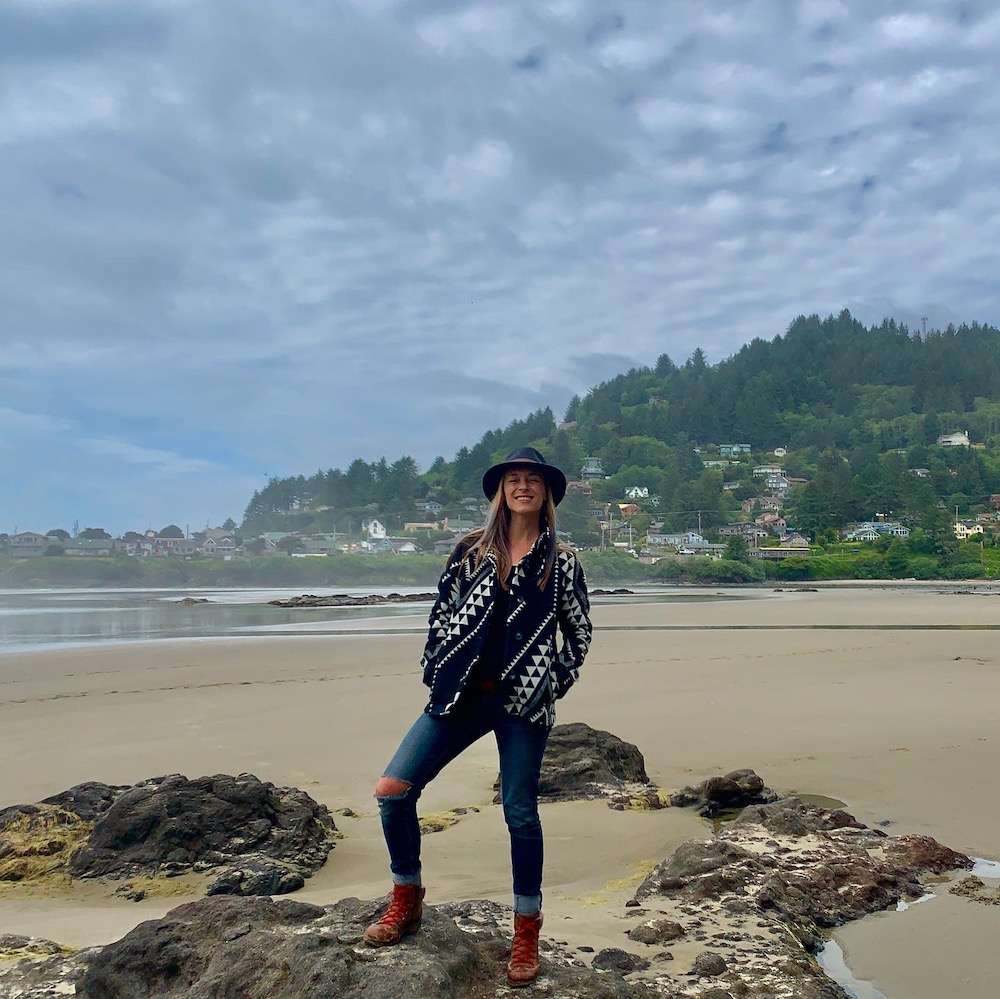
A few months ago, I was wearing my favorite jacket when a white woman approached me in downtown Eugene. She asked if the garment was Pendleton and then proceeded to berate me because the designs had been “stolen from Native Americans.” (Pendleton actually employs Native artists and supports those communities through various funds and initiatives, although it’s true the company isn’t owned by Indigenous folks and has profited immensely off of their designs.)
My beloved and notorious Pendleton garment
Even though it’s my favorite jacket, I haven’t worn it as much recently. It feels tarnished by that woman’s judgment and a reminder of this country’s ruthless persecution of non-whites.
Then again, there’s something odd about this dynamic: I’ve noticed that the most ardent gatekeepers of what’s cultural appropriation often are woke whites. I appreciate that woman’s intentions, but I consider her criticism a catharsis of her own guilt. It’s easier to perform a disparaging call-out on a stranger than it is to examine what constitutes respectful creative expression. Or, you know, to actually do something that helps marginalized folks.
The United States is unique in that we are people from all across the globe. We have different levels of remove from our ancestral lands and cultures. We’re all immigrants (or their descendants) on a long enough timeline. That aspect of our country makes me proud—at our best, we’re a microcosm of the world.
Of course, this kumbaya sentiment doesn’t make defining cultural appropriation any easier. Dr. Kelly Chong, a University of Kansas professor, was quoted in Bustle with the most succinct explanation I’ve found:“[Cultural appropriation] is the adoption, often unacknowledged or inappropriate, of the ideas, practices, customs, and cultural identity markers of one society or group by members of another group or society that typically has greater privilege or power.”
But what is the “unacknowledged” or “inappropriate” use of another culture? Sometimes it’s obvious. For example, if a behavior is reinforcing stereotypes or turning a profit for a non-member of that group, that’s inappropriate. So if a white woman travels to Mexico City to learn traditional dishes and then publishes a book of recipes, many would consider that an inappropriate use.
What if she had lived in CDMX for 15 years? Or 20? Or what about if a Filipino man did the same thing? Or a Black woman? Would it be different since they’re also members of oppressed groups? And what happens when the folks in CDMX have varying opinions about what constitutes respectful use? Who gets to be the arbiter?
There are other more cut-and-dry situations that are patently absurd. Anecdotally, I’ve heard of white women with curly or kinky hair being accused of cultural appropriation because they go to Black salons or use Black hair products. Where are they supposed to turn when white stylists don’t know how to deal with their hair or when certain products aren’t up to task? Abusing the term “cultural appropriation” in cases like this is divisive and counterproductive.
And sometimes, art gets swallowed by the flames of these disagreements. Here in Eugene, that’s what happened to the Ritz Story Pole at the Oregon Country Fair.
Here’s some background: OCF is a 52-year-old annual festival with food stalls, art installations, costumes, music, and other performances. It’s held along “the 8”—a forested infinity path in Veneta, Oregon. It’s colorful, playful, nature-inspired, and mostly a celebration of the Pacific Northwest.
The Ritz Sauna & Showers are where you can bathe nude, enjoying live music next to a large bonfire and vibrant wood carvings. Recently, they hired Pattrick Price, a Tlingit Native from Alaska, to create art for the main space. And every year, the Ritz “Flamingo Clan” builds and runs the day-and-night spa that keeps OCF folks clean and happy throughout the sweaty, dusty weekend.
Photo Credit: Pattrick Price
In 2012, Ritz director George Braddock and artist Brad Bolton were talking about how to tell the long history of the Ritz through art. Bolton had been practicing formline art for 25 years—a style created by North Coast Indigenous groups.
It took three years of back and forth, but the Ritz finally got the First Nations and the Canadian Provincial Government of British Columbia to select and ship an 8,000-lb. Alaskan Yellow Cedar log to the OCF for carving. The Ritz got the log (and approval) from our northern neighbors because the Haida—the Natives from whom the Story Pole tradition comes—are based off the northern coast of British Columbia. And for several years, hundreds (perhaps thousands) of Fairgoers assisted in the carving of the Ritz Story Pole.
Before approving the raising of the Pole, Oregon Country Fair reached out to several local tribal governments (including the Grand Ronde) but did not receive position statements from any of them.
The Pole was first mentioned in an OCF Board meeting in July 2012. There was no further mention (according to the publicly available minutes) until September 2014 when logistics were discussed. For several months, the comments about the Pole were unremarkable, apart from an archeological survey that redirected the planned location away from a “sensitive” area.
In December 2015, the OCF Diversity Task Force contacted two local tribe members about the Story Pole project: David Lewis, a cultural anthropologist and member of the Confederated Tribes of the Grand Ronde, and Esther Stutzman, a storyteller and member of the Kalapuya and Coos. Their main criticism was that the placement of the Haida-style Pole was not only cultural appropriation but it was especially offensive to place it on ancestral Kalapuya lands.
Despite these objections, the Story Pole was formally approved by the OCF Board in April 2016. One of the conditions of its future installation was the following: “An informational display addressing the issues concerning the ‘Story Pole’ as Culturally Inspired Art or Cultural Appropriation shall be developed and placed by Fair Operations in the vicinity of the ‘Story Pole’…This display shall have a component whereby people may give feedback concerning the issues pertaining to the ‘Story Pole.’”
Fairgoers Carving the Ritz Story Pole
The communal carving continued at OCF 2016, but about a year later, the public reception of the Pole had soured. In May 2017, several local Indigenous members had spoken up against the project and the Board hastily rescinded its approval. I recommend reading all of the minutes from that Board meeting, but the following statements illustrate the diverging sentiments on the matter:
Statements in support of the Story Pole:
Paul: “When does art not challenge some culture?…This Pole has stainless steel and lights on it. If we are going to respect cultural purity in art, then no Native American or any other culture should have art sold at the Oregon Country Fair.”
George Braddock (Ritz Director): “I truly apologize that people were offended by the art we have made for the last 27 years. We celebrate it for its beauty, strength, and its story…The Haida carvers of the Pacific Northwest are without question the best. Why would you not want to learn from the best carvers? Why would you not want to emulate and celebrate the art?”
Brad Bolton (Main Story Pole Artist): “I’ve been studying the formline style for the last 27 years. Both Natives and Anglos alike have said they like the art. I have [meant] no disrespect by these carvings. It tells the story of the sauna. We are not claiming we are Natives…The Fair is of the ‘60s and it was about cultural sharing. We reached across lines of race and culture and became brothers and sisters. To see this divisiveness makes me really sad.”
Statements against the Story Pole:
Erika: “I am an Indigenous woman from South America…what we see is that the Board and the family at the Fair need an emergency cultural competency class. There is the need to understand white privilege. It is not our job to come and teach you.”
NisaJo: “[White supremacy] is an institutional view that white people have by their birth some kind of privilege and rights, and experience the law differently than others. . .This time, this place, we stand on the side of our Indigenous brothers and sisters.”
Ada (Siletz Member): “I want to say thank you so much for listening to your Indigenous community members who drew a boundary and were firm about the distinction [between] creative expression and cultural appropriation.”
This story highlights the tension inherent in the space between culturally inspired art and cultural appropriation. Both sides have legitimate positions. On the one hand, the Ritz should have done more due diligence before the project had been nearly completed—especially by enlisting at least one Haida carver to lead the work.
Then again, even this wouldn’t have solved the main contention of the Pole’s local Indigenous opponents: they argued that it was an abomination to have Haida-inspired art on ancestral Kalapuya lands.
This is a difficult standard, and perhaps reveals to my readers the limits of my progressive views. Here’s the thing: there are also gas stations, shopping malls, grocery chains, sex shops, and McDonald’s on these lands. Why would the presence of other Indigenous art be a particular insult? It is important to preserve the heritage of local groups, but excluding other forms of expression isn’t a realistic requirement when the land has already been privatized and irrevocably transformed.
These are uncomfortable questions for me. Like most progressives, I want to do right by those crushed under history’s yokes of slavery, genocide, and colonialism. I also want to do the difficult work of listening and reckoning with the shame, pain, and injustices of the past. And one important part of shaping a more just future is understanding cultural appropriation. What’s the best way for us to acknowledge and celebrate another culture when we want to share in their art or customs?
Where these lines are drawn is far from a settled issue. If we try to appease the most sensitive extremists—those who believe white people can’t respectfully engage with any elements of non-white cultures—everything is subject to criticism, artistic expression becomes siloed by race, and nothing is shared. And if we take a free-market approach where folks choose and use the cultures of others, then disrespect, theft, and exploitation are inevitable.
The Pole could have served as an opportunity to explore this thorny issue, but instead, it sits in storage collecting dust and nobody is satisfied.
I’m hoping others can share their thoughts. Thanks for reading.
“So look. All I want to do is this. I just want to find 11,780 votes, which is one more than we have. Because we have won the state.”
Donald Trump urging Georgia Secretary of State Brad Raffensburger to overturn the state’s election results (January 2, 2021)
In this era of savage partisanship, an American ratfucker is born every day. Traditionally, dirty tricks to sway elections take the forms of voter suppression, gerrymandering, and batshit crazy lies about the opposition. Both political parties have participated in the past, but these days, the Republicans have enshrined these tactics as part of their survival strategy. Perhaps the most glaring offense is happening right now: 12 GOP senators have turned downright seditious in their attempt to cast doubt on the outcome of the 2020 presidential election.
Tomorrow, rather than certifying the Electoral College results, this fools’ brigade will oppose Joe Biden’s clear victory (306 electoral votes to Donald Trump’s 232). This shameful subversion of democracy isn’t limited to the Senate: two-thirds of U.S. House Republicans already petitioned the Supreme Court to prevent Pennsylvania, Georgia, Michigan, and Wisconsin from casting electoral votes for Biden.
It doesn’t matter that Biden won the popular vote by 7 million. It doesn’t matter that Trump has filed (and lost) over 50 lawsuits in 7 swing states to overturn the election—many of which were dismissed by judges he appointed! It doesn’t matter that Trump was recently caught red-handed asking the Georgia Secretary of State to commit a crime and “find 11,780 votes.”
What the fuck, GOP? You claim to be the party of patriots and Christians, but you’re shitting all over the Constitution with impunity. You are showing yourselves to be spineless lackeys who would rather burn down the country than transfer executive power.
Um, no, GOP
Who are these treasonous Trump chumps?
Ted Cruz (TX)
Ron Johnson (WI)
James Lankford (OK)
Marsha Blackburn (TN)
Mike Braun (IN)
Cynthia Lummis (WY)
Roger Marshall (KN)
Bill Hagerty (TN)
Tommy Tuberville (AL)
Josh Hawley (MO)
John Kennedy (LA)
Steve Daines (MT)
What’s strange is that most of these folks know better. Ok, Tommy Tuberville, who can’t name the three branches of government, might not know better. (One too many knocks to the head, I reckon.) But Ted Cruz, Mike Braun, and Josh Hawley, for example, graduated from Ivy League law schools. They may be despicable, but they’re not stupid.
And to anyone who thinks this is how politicians on both sides of the aisle behave, let’s examine the 2016 presidential election: President Barack Obama called Donald Trump to congratulate him on Wednesday, November 9—the day after the election. Trump had received 304 electoral votes to Hillary Clinton’s 227—less than Joe Biden’s margin of victory in 2020.
We’ve all been dragged along Trump’s bullshit sore loser crusade for months now. Perhaps if Republican congressmen hadn’t wasted so much time with Trump’s dick in their mouths, they could have articulated a robust response to Covid-19—the greatest public health crisis in generations. Or, you know, without that dick in their mouths, they could have set a good example to their constituents and worn a goddamn mask.
I’ve gotten some pushback on social media for being divisive in the wake of the 2020 election. I know that some Republicans are good people. Hell, they were the first political party to endorse the Equal Rights Amendment in 1940! I also come from a Republican family, but most of them have reasonably abandoned the GOP as it’s gotten more racist and embraced a rapist, tax fraud, and liar as its top leader. At this point in history, it’s morally repugnant, irresponsible, and anti-American to embrace the GOP.
Republicans claim to be pro-life, but they support capital punishment, assault weapon ownership, and murderers like Kyle Rittenhouse.
They claim to be Christians, but they separate young immigrant children from their families.
They claim to be supportive of “law and order,” but they say nothing to defend the lives of unarmed Black citizens who die at the hands of police officers.
They claim to not be racist, but they embrace the Proud Boys and other white supremacist groups.
They claim to be patriots, but again: a majority of the U.S. congressional Republicans are trying to overthrow the results of the 2020 presidential election and refusing a peaceful transfer of power.
There’s a reason the GOP is so old, so male, and so white. And there’s a reason they continue to cheat to win elections. Their views are unpopular. They know that they are a dying minority party. They must suppress voters of color and gerrymander their way into relevance.
Calling out the modern GOP isn’t divisive—it’s an ethical responsibility. They don’t respond to well-reasoned sober arguments. The time has passed for meeting this party halfway. They’ve spent years manufacturing a “Blue Scare”—telling their base that dangerous socialists are coming for their guns and will turn their children into sex slaves for George Soros. Trump merely took advantage of the lies FOX News and others have been telling for years—and turned the volume to 12.
Fuck you very much, Trump’s GOP
In reality, progressives like me are just trying to create a more livable society with affordable healthcare and education, strong environmental protections, and a tax structure where the wealthy pays their fair share.
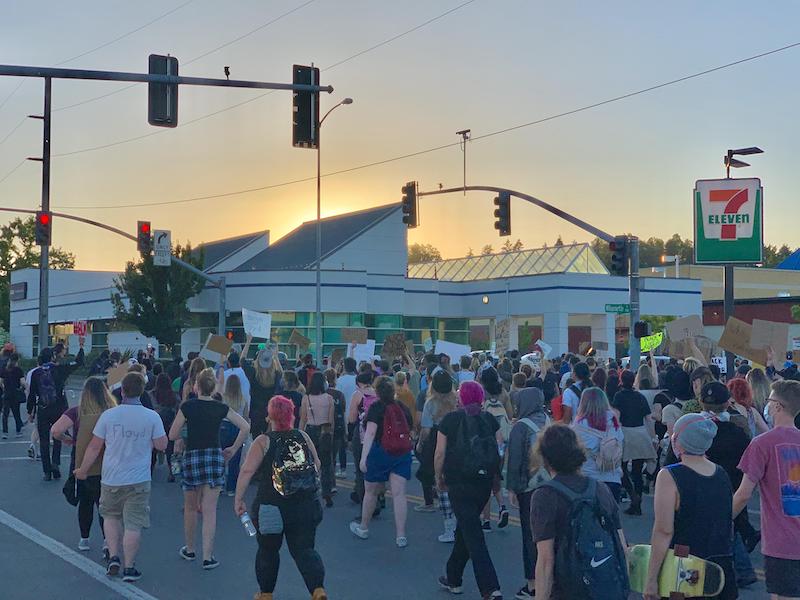
Many of us feel that this is one of the most difficult years in U.S. history—and it’s true. We are suffering from the mismanaged COVID-19 pandemic, which has now killed over 116,000 Americans, 39 times the death toll of 9/11. The murder of George Floyd in Minneapolis, among so many other black citizens, has activated massive protests against police brutality. We have a cowardly incompetent president, and the only tie that binds the public is our unmoored rage.
To the racist institutions in this country, white anger is righteous and black anger is frightening. Large white men with assault rifles can march on Michigan’s capital to intimidate the Democratic governor without a reaction from the police; on the other side of the political spectrum, peaceful protesters for racial justice have been kicked, trampled, beaten, gassed, and shot by the police all over the country. Curfews were enacted and Trump threatened to send in the military to “dominate” his own country’s cities.
When it comes to race, we have always been at war with ourselves. The devastating legacy of slavery has fed inequality in education, housing, criminal justice, and law enforcement, not to mention the daily indignities of individual prejudice. Until a white person experiences fear while jogging, playing video games at home, or walking and eating skittles, we cannot pretend to understand what it feels like to be constantly surveilled and over-policed for our skin color.
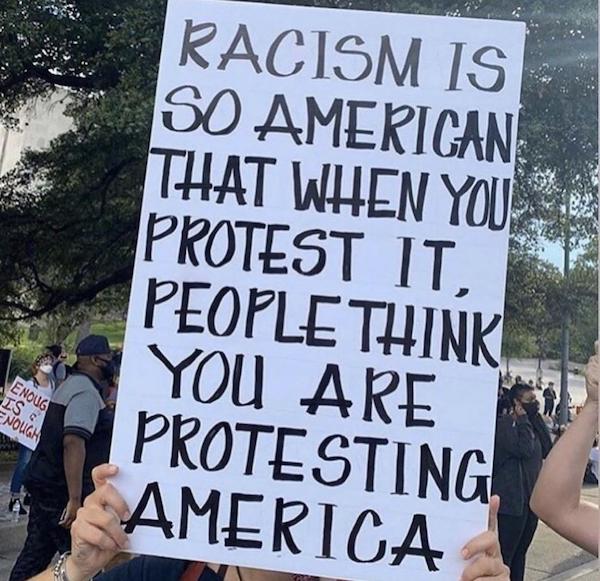
Our collective discomfort and anger over racial injustice were long-overdue in the U.S. Although the Black Lives Matter movement felt dormant to white America in between the most egregious murders, we’ve reached a tipping point: millions of us have decided that doing no harm on the basis of skin color isn’t enough. We’ve embraced a new era of anti-racism, in which bigots are rightfully outed and fired from their jobs.
A friend of mine told me that we’re living in “cool times”—an era that feels like hell on the ground but in retrospect will be considered pivotal in making progress. As uncomfortable as we all feel right now stewing in our rage and despair, I’m inclined to agree.
In fact, while the entire Trump era has been excruciating, the backlash to his lack of character has helped bring about important changes in American society. There has been a major international protest every year since he took office: the Women’s March (2017), the March for Our Lives (2018), the School Strike for Climate (2019), and the powerful resurgence of Black Lives Matter (2020).
It started with the Women’s March in 2017, the day after Trump was inaugurated. I was in Washington DC, and people protested in cities across the world in a powerful display of anti-sexist unity. The #MeToo era followed shortly, and a cascade of hideous and powerful men lost their jobs—many of them replaced by women.
While 1992 was branded the “Year of the Woman” when a four new female senators were elected to the U.S. Congress, the Blue Wave of 2018 brought 148 women into Congress, as well as six female governors.
This represents real progress.
A year later, a young man killed 17 students at Marjory Stoneman Douglas High School in Parkland, Florida. A new student-led protest against gun violence was born. Nearly two million Americans marched in 900 cities across the U.S. and there were companion events across the world. The March for Our Lives became one of the largest protests in U.S. history, and it had a lasting impact on legislation: in 2018, 67 gun safety bills were signed into law across 26 states and Washington DC.
In 2019, the School Strike for Climate took shape. What had started in Sweden with an exceptional young woman, Greta Thunberg, became an international movement to take on the fossil fuels industry and protect our planet for future generations. There were large international protests in March, May, September, and November—all of them drawing millions of people into the fight to protect our world from global warming. September’s “Global Week for Our Future” event drew more than four million protesters and is hailed as the largest climate strike in world history.
And here we are now, confronting the shameful and enduring legacy of slavery in the United States. Racism in our institutions and citizens stems from our failure to confront this country’s festering wound: our nation’s wealth was built on the backs of African American slaves, and their descendants have barely shared in that prosperity.
When the black community has accrued wealth, whites slaughtered them, as they did in the Tulsa Massacre in 1921, which devastated Black Wall Street. Most Americans hadn’t heard of this genocide until the graphic novel Watchman was turned into an HBO series. Our history books tend to gloss over white violence within our borders.
But this has begun to change. Michael Brown Jr., Philando Castille, Walter Scott, Sandra Bland, Tamir Rice, Eric Garner, and now George Floyd—among so many others—are household names. A majority of Americans are horrified by the ongoing brutality against our black citizens. And beneath the rage at the root of our American wound, we’re beginning to see some signs of healing.
The Minneapolis Police Department has been defunded in favor of more communal-minded actions, which address access to basic services. Charges are being filed against police officers across the country, and some have been arrested for their violent handling of protesters. Black Lives Matter murals are popping up on large avenues across the nation. Powerful businesses have stood up in solidarity with the BLM movement; Twitter, Nike, and the NFL have declared Juneteenth a company holiday. Even NFL Commissioner Gooddell has softened his stance on kneeling during the national anthem. This is a large step for a conservative white-owned institution, which denied activist Colin Kaepernick a job for taking a knee in a peaceful protest against police brutality.
In the same way the #MeToo movement cost countless assholes their jobs, racists are now being called out publicly. In May, Amy Cooper invoked her white privilege and threatened to lie to the NYPD about “an African American threatening her life.” Christian Cooper (no relation), the black man, is a Harvard-trained writer and editor who enjoys birding. His crime? Asking Amy to leash her dog in Central Park. For her racist lies, she lost her job as a VP of an investment firm.
In Eugene (where I live), local business owner Paula McGuigan has been called out for her racism and insensitivity. She posted an appalling photo of her kneeling on the neck of a man with the bizarre caption “Ready for my Minnesota trip…#asianlivesmatter.” Her business, Home Spray Foam and Insulation, was flooded with so many one-star reviews that Yelp had to flag the “unusual activity.” She issued an apology, but the damage is done: you can’t get away with this racist shit anymore.
Perhaps most importantly, white people across the country are opening their eyes—many of them for the first time—to the systemic racism that has plagued the United States since its founding.
Some white people have been calling their friends of color and asking how they can be better allies. While these efforts are made with good intentions, the reactions have been mixed. After receiving a deluge of messages from white people in his life, a friend of mine quipped that he was “seriously considering hiring a virtual assistant and asking white friends to pay for it.” I can appreciate this sentiment, especially since it’s not the black community’s job to educate us—we have to listen and do the difficult work ourselves.
As clumsy as white Americans’ efforts can be, I still believe that the majority of us want to overcome personal prejudice and dismantle racist institutions. The media tends to amplify examples to the contrary—the Charlottesville racists, the MAGAts, our goddamn ignorant POTUS—but that braindead megaphone can’t drown out the millions that protest today.
There’s no single handbook for becoming “woke.” It’s a daily decision to rethink our implicit biases. It’s a desire to throw our bodies on the gears of the system—our roads, our workplaces—and demand the overhaul of racist institutions such as law enforcement. It’s a recognition that our racism at home is interwoven with our imperialism abroad; without stoking the white American fear of immigrants, non-Christians, and people of color, our bloated military wouldn’t be able to invade the Middle East for oil or Vietnam and Venezuela to “defeat communism.” Considering citizens of these countries as less-than-human—that peculiar and twisted racism—drums up support for these bloody colonial injustices.
So how can white Americans confront their privilege and better understand how racism operates? Seeking out the experience of being the minority in a group is a valuable tool, whether it’s living abroad with an unfamiliar culture and language or volunteering in a different community. I lived in Niigata, Japan for two years, and the daily reminder that I was “the other” opened my eyes more than any book could. Growing up in a predominantly white city, I had a lot of blind spots that my Berkeley education in sociology and psychology couldn’t remedy. And I still have work to do.
When you are the only member of a visibly identifiable group—a person of color in a white community, a woman in a room full of men, a trans woman among those who were born with female bodies—you’re both hyper-surveilled and invisible. People might stare or get uncomfortable in your presence, but they also might ignore or exclude you, not knowing exactly what to make of you.
This lonely discomfort is useful and calls into question what we take for granted being in more homogenous groups. It helps build empathy for those unlike us—and a friendly curiosity of cultures unlike our own. Exposure to what was once foreign helps to allay deep-seated fears and can build mutual respect.
I acknowledge the limitations of my experience. I cannot change my 0.1 millimeters of white epidermis, but I know this: people are mostly good everywhere in the world. And when we approach unfamiliar groups without judgement and with an open heart, everyone benefits.
So let’s embrace the mass discomfort of 2020. We’re living in “cool times” and in retrospect, we’ll realize how instrumental this prickly awareness of sexism, gun violence, climate change, and racism has been for us to advance. The work is just beginning, but our rage, anxiety, and sadness are symptoms of outgrowing old ways of thinking and conducting ourselves.
“The American experiment, the original embodiment of the great Enlightenment idea of intellectual freedom, every individual free to believe anything she wishes, has metastasized out of control.”
Kurt Andersen, Fantasyland
As COVID-19 ravages the United States with more than 213,000 cases, there’s another disease that’s killing us—a myth born of the romantics, Ralph Waldo Emerson, cowboy lore, and life on the frontier: I’m talking about the dark side of our individualism.
This immortal lie tells us that we’re free to believe what we want and that we can save ourselves if we just try hard enough. These unchecked assumptions have severely impaired our ability to coordinate a response to this pandemic.
While individualism is useful to promote creativity and innovation, there are several features of this quintessential American trait that have undermined our institutions, leadership, and citizen behavior during this unprecedented crisis. It has made this nation a more fertile ground for COVID-19 than more collectivist or communal countries.
How Individualism Has Failed American Institutions
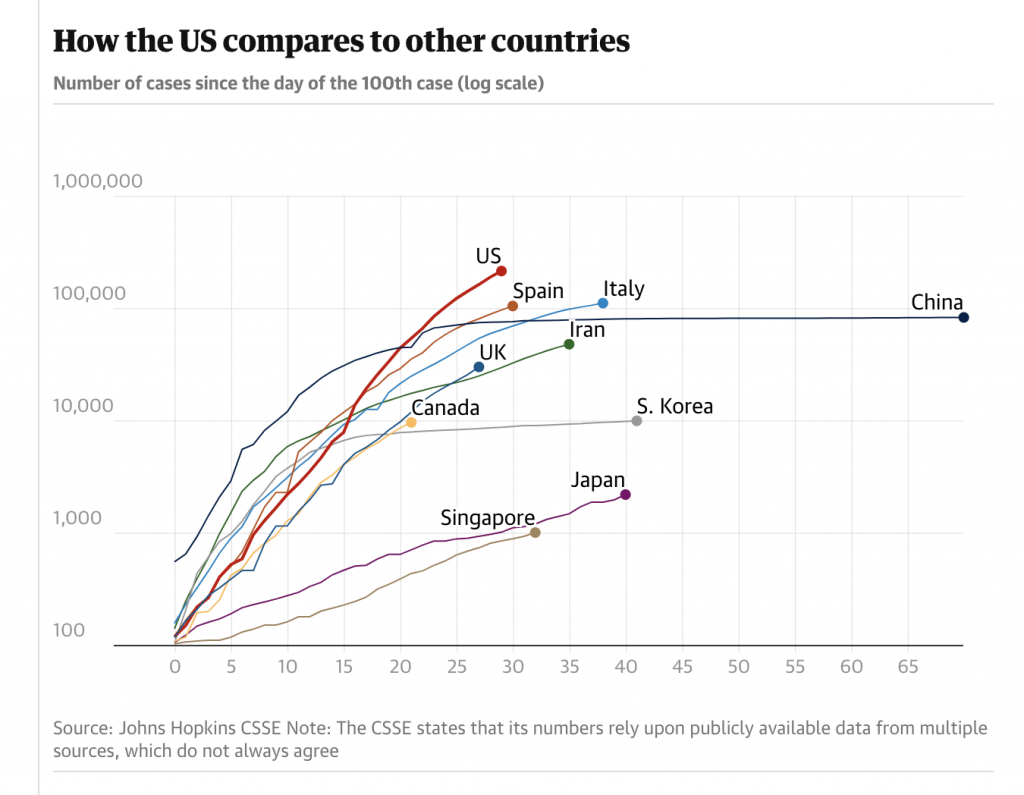
I lived abroad for five years and I’ve been tracking various governments’ responses to COVID-19 with great interest. South Korea had its first confirmed case the same day as the United States: January 20, 2020. While the Trump administration called the virus a Democratic “hoax” and panicked for several weeks that it would threaten the economy during an election year, the South Korean government initiated an aggressive testing program to identify who needed to be put into isolation.
Two months later, the South Koreans have flattened the curve and life is slowly returning to normal. In the United States, COVID-19 is overwhelming hospitals in Seattle, Detroit, New Orleans, and New York City. And it’s just getting started.
Note the differences between individualist nations like the U.S. and the more collectivist nations in Asia (April 2, 2020)
Our Healthcare System
Our decentralized healthcare system is not equipped to fight for us during a pandemic. The main goal of American for-profit insurance companies and care facilities is to make money—and that objective does not align with the public interest, especially in this crisis.
Instead of having one clear-cut entity such as the U.K.’s National Health Service (NHS), Americans are forced to navigate a complicated bureaucracy of “in-network” and “out-of-network” healthcare providers, arcane insurance billing practices, and sky-high co-pays with surprise costs. And millions of Americans remain uninsured, with millions more about to lose their employer-sponsored plans as the economy crashes.
This desultory system has created a lot of confusion and supply shortages. U.S. hospitals are running out of personal protective gear (PPE) and states have had to engage in eBay-style bidding wars to secure ventilators.
While some states such as Florida have gotten everything they asked for from the federal government within three days—N-95 masks, gowns, etc.—my state (Oregon) only received 10 percent of its request. The biggest difference between Florida and Oregon? Governor Ron DeSantis of Florida is a Republican and Governor Kate Brown is a Democrat. It’s hard not to assume that the Trump administration is picking favorites when he’s more concerned about feeling “appreciated” than getting Americans the assistance they need.
If I wanted to get a COVID-19 test, there’s nowhere in my region to go. Public health officials in Lane County have said they’re advocating at the state and federal level for widespread testing, but they are still waiting. In theory, the cost of these tests is covered under the Families First Coronavirus Response Act, but early American access seems to have been limited to government officials and celebrities.
Most American healthcare providers and leaders are telling people to simply stay home and wait out the disease, except in life-threatening situations. With refrigerated trucks serving as temporary morgues in New York City, it is clear that the for-profit American healthcare system has already been overwhelmed by this pandemic. Hospitals and states should not have to compete with one another for supplies.
Our Media
“If I think it’s true, no matter why or how I think it’s true, then it’s true, and nobody can tell me otherwise”
Kurt Andersen, Fantasyland
The first step to fighting a pandemic is getting the correct information—and this is impossible in today’s hyper-partisan “choose-your-own-reality” media landscape.
Thirty years ago, there was an agreed-upon collective truth. Journalist Walter Cronkite Jr. was called “the most trusted man in America” and citizens believed him, regardless of their political affiliation. These days, even scientific facts—climate change, the effectiveness of vaccines, the importance of social distancing to stop the spread of COVID-19—are treated as matters of opinion. By illustration, Governor Ron DeSantis (R-FL), taking his cues from the White House, asked his state’s citizens to stay home only yesterday (April 1)—appallingly late considering their high population of vulnerable elderly folks.
According to a recent poll, viewers of Fox News are especially likely to believe that the threat of COVID-19 is “exaggerated.” The network, afraid of being sued, has already fired host Trish Regan, who called coronavirus a politically motivated “scam” on her March 9 broadcast.
Dr. Anthony Fauci—a man who has led the National Institute of Allergy and Infectious Diseases since the year I was born—has been targeted by Trump loyalists. When Americans are free to select their own scientific facts—with Republicans eager to defend the economy and the president—it’s very difficult to mount a coordinated response to COVID-19.
How Our Selfish Leaders Have Failed Us
Right now, Americans have no trustworthy central authority to guide us through this pandemic. It feels as if half the country is listening to Dr. Anthony Fauci, and half the country is listening to the president.
It is no surprise that Trump has failed his first real test as president. Instead of taking COVID-19 seriously, he dawdled and called it a Democratic “hoax.” He dragged his feet for weeks, downplaying concerns, comparing the disease to the flu, dispensing false medical advice about the usefulness of chloroquine (which killed one Arizona man), and appointing gay conversion therapy czar Mike Pence as the head of the COVID-19 task force.
To Donald Trump and congressmen like Sen. Richard Burr (NC-R), who sold millions of dollars of stock in anticipation of a crash, the health of the country was not their primary concern: they acted selfishly, saving themselves with little regard for their roles as elected officials. Leadership should be more than an exercise in ego and personal enrichment.
Finally, American values praise people who “pull themselves up by their bootstraps” and by extension, often degrade people who need help—the most vulnerable among us. How many times in the past three years has the Republican Party tried to poke holes in our already-dismal social safety net by cutting food stamps, education funding, environmental protections, and Medicare? Needing help is somehow unAmerican—unless you’re a multibillion-dollar company in need of a taxpayer bailout, of course.
If individualism is serving American institutions so well, why does socialism/collectivism come around every decade or so to save our asses?
How Individualism Impairs the Behavior and Beliefs of American Citizens
Individualism can be beneficial when people choose to defy tyranny or mainstream bigotry, but there’s a dark side to assuming we are free to do and believe what we want. Consider the words of a now-infamous 21-year-old spring breaker:
“If I get corona, I get corona. At the end of the day, I’m not going to let it stop me from partying. You know, I’ve been waiting, we’ve been waiting for Miami spring break for a while, about two months, we’ve had this trip planned, two, three months, and we’re just out here having a good time. Whatever happens, happens,” said Brady Sluder in mid-March.
I lived in Japan for two years and I can’t imagine a young Japanese person saying something like this because there’s a constant awareness of how one’s own actions impact others. Many Asian nations are already in the habit of wearing masks when they’re sick to protect others from infection. In the United States, whether you’re an ignorant young man like Sluder or the Governor of Oklahoma, we do whatever the fuck we want—everyone else be damned.
To fight this pandemic, we can’t choose our facts. It’s not a simple matter of opinion to believe Fox News when it claimed that COVID-19 was an exaggerated hoax led by “panic pushers.” Those hosts dispelled dangerous misinformation and it’s downright irresponsible to believe them.
We need to heed the scientists’ advice and take other people’s wellness into consideration. Americans who are going against “shelter in place” orders may be unwitting carriers of COVID-19, putting more vulnerable folks at risk.
The Opportunity of COVID-19
This isn’t the first time in history when we’ve been forced to come together to confront a common enemy. A person can’t conquer the frontier of this disease alone—and in order to beat COVID-19, we need to outgrow the dark side of our individualism.
In a 1935 fireside chat during the Great Depression, FDR stated, “The old reliance upon the free action of individual wills appears quite inadequate. The intervention of that organized control we call ‘government’ seems necessary.” The New Deal was in full swing, pushing financial reforms, putting citizens back to work on public projects all over the country. This coordinated action helped pave the way for our economic recovery in that uncertain era.
During the COVID-19 crisis, we need centralized logistics, which take care of the collective rather than individuals.
Furthermore, this is a global threat and I see an opportunity not only for Americans to become more communally oriented but also for our country to recognize its place in the world as one nation among many.
American exceptionalism has always been a childish myth—the fact is that we’re part of a global community and we need to work with other countries on an equal footing to mount a response to this pandemic. Our arrogance and self-righteousness have no place in the world, especially right now when we need to work together.
COVID-19 does not care if you’re Brazilian or Japanese—it treats everyone the same. The first individualist thought is: how is this going to affect me? The first collectivist thought is: how can I help others and ensure this disease doesn’t spread?
Only the second approach will give us a fighting chance.
There are precious moments in life when a person’s raw happiness overwhelms them. Weddings, childbirth, and important ceremonies can have this effect. But we needn’t wait for these milestones to give those we love unforgettable feelings—a well-executed surprise party for the right person can inspire tears of unbridled joy. In December, I made my partner cry with sheer delight.
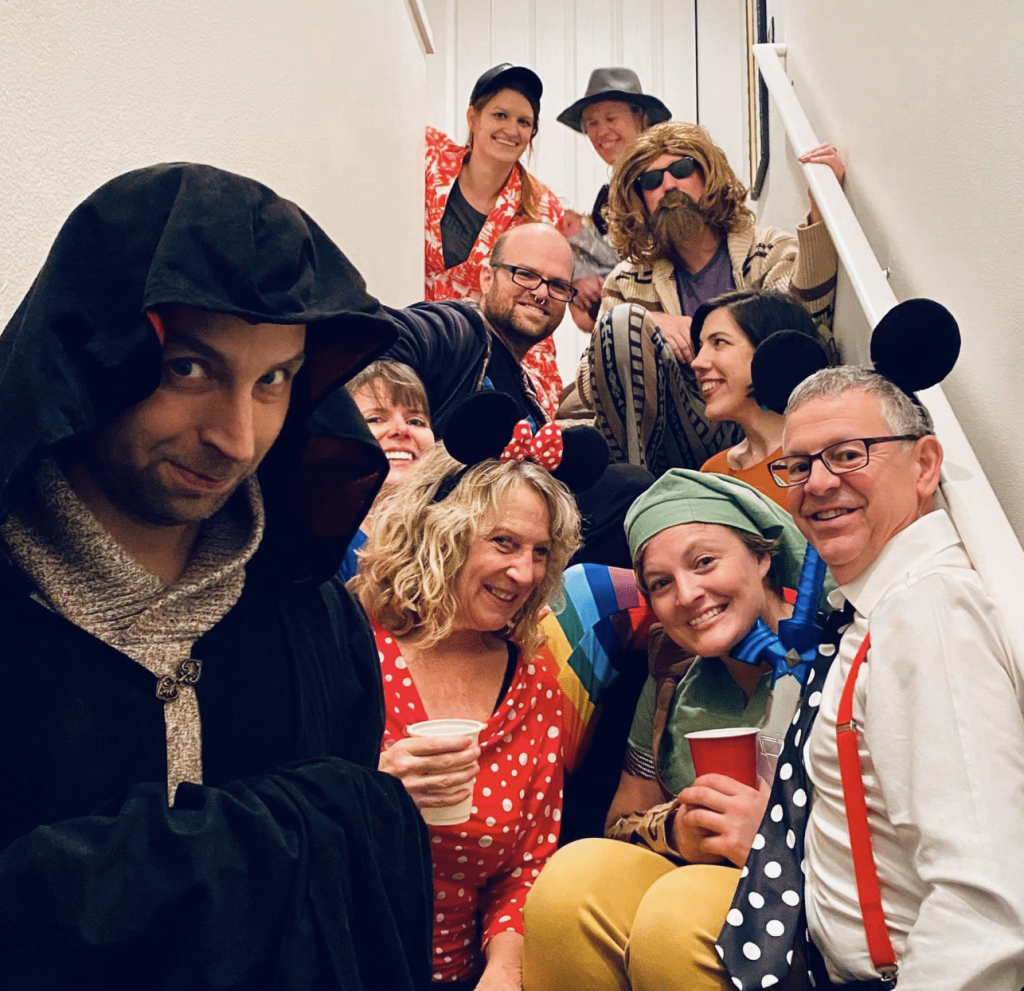
The theme was “characters” (since Jon is such a character). Moments before Jon arrived, 25 of us crowded on the stairs and in the hallway.
In his 40th trip around the sun, this was Jon’s first real birthday party in decades. As any end-of-the-year baby can attest, Jesus’ day casts a formidable shadow—especially for Jon, who was born not only a twin but also on Christmas Eve. Not even his technicolor personality can outshine billions of twinkle-lights, indulgent feasts, and presents for all.
A few months ago, I decided I wasn’t going to let this birthday pass without a celebration worthy of Jon’s big-hearted exuberance. He’s a natural-born extrovert who relishes in the company of others. I knew there would be no greater gift than an unexpected night full of the people he loves.
This was the third surprise party I’ve planned, and I’ve even had two thrown for me over the years. All five were successful in the sense that the guest of honor had no clue.
I cried on my 23rd birthday when my boyfriend and friends in Japan got me good. My student Yuri had decorated the facade of her apartment like a hole-in-the-wall restaurant. As a newbie to Niigata City, I legitimately thought it was an izakaya, complete with a cute “Open” sign and a full menu, until I saw the large table full of familiar faces and heard their cheers.
I was overcome with love for several days and couldn’t believe everyone had gone to such lengths to create something special for me. It hits in layers when you realize everything that people do in order to orchestrate that perfect moment for you.
Years later after I’d moved to San Francisco, I decided to throw a surprise party for my best friend and future bridesman Murray, who was turning 30. He was definitely surprised—but I wouldn’t say he was delighted. He took a full 45 minutes to recover from the shock of having everyone gathered for him at our friend Pat’s apartment. At one point, I thought Murray was going to throw up from astonishment. He had to step outside several times to get some air (and to text his future wife, Jamie, whom he’d just started dating).
I learned that there is a certain type of personality that responds well to a surprise party: a person who doesn’t mind being the center of attention. Although Murray eventually settled into it, we didn’t get the “unbridled joy” we were going for. Jon, on the other hand, enjoys the spotlight and was the perfect candidate for my schemings.
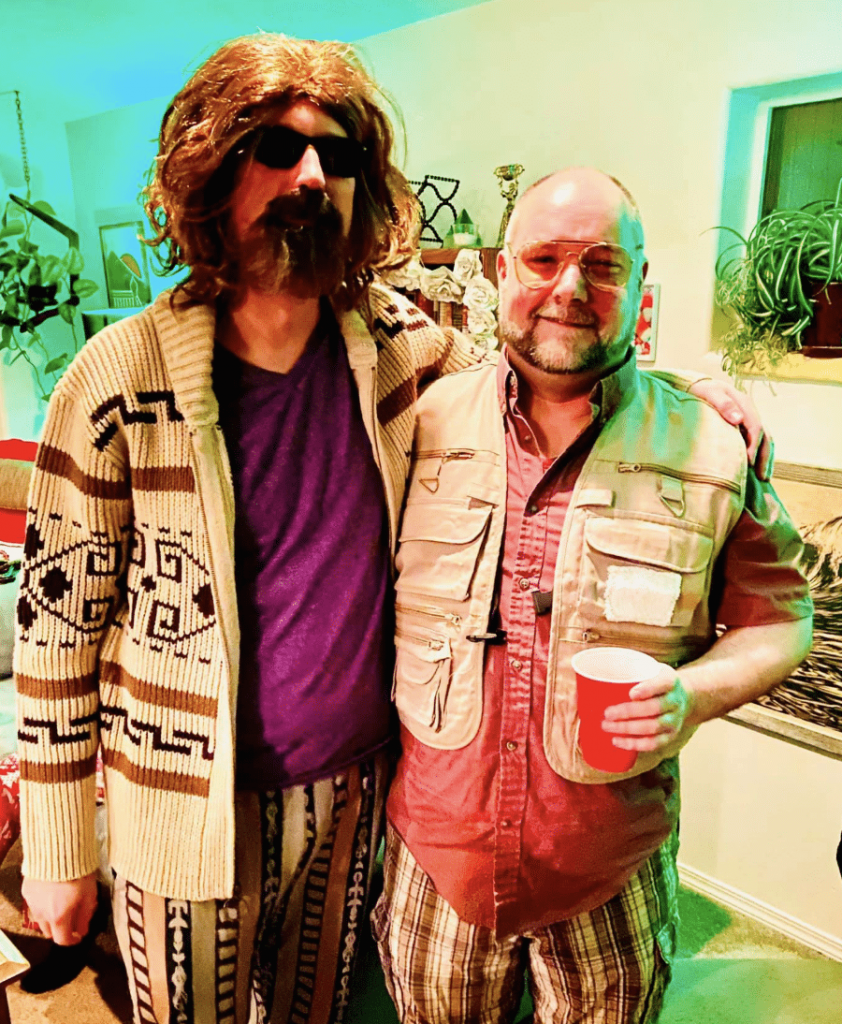
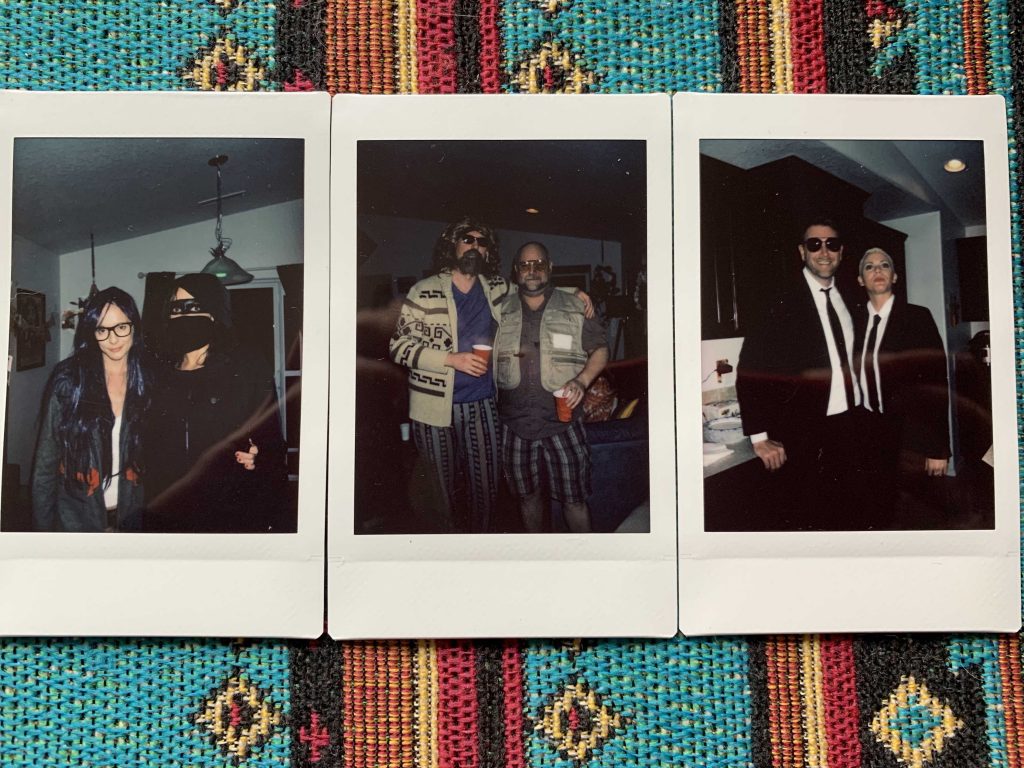
Although it was a costume party, this fan-favorite duo wasn’t planned.
In addition to selecting an appropriate target, here are a few things to keep in mind:
Capitalize SURPRISE in all communications—and give all of your guests a ready-made ruse if they fuck up. Many a surprise party has been ruined by someone’s slip of the tongue, so you have to plan for it. Not only should “SURPRISE” be written in all-caps for any invitations, texts, and other messages about the event, but also ask guests to generate a ready-made ruse if they do accidentally mention the day (e.g., “Oh, I’m talking about your work/friend’s/family party.”) This ploy should be tailored to their level of intel since the target’s social or professional circles won’t totally overlap. A target might be confused, for example, if a distant acquaintance knew about a pre-planned work celebration which happens to fall close to the date of the surprise.
Plan more than a month in advance. People are busy, so if you want them to show up, plan accordingly. I started a month before the event, which is appropriate to people’s social calendars in Eugene. The bigger the city, the busier your guests—and the further in advance you need to send your invitations.
The day-of maneuver: know your target. One of the trickiest parts of planning a surprise is getting your target to be at the right location within the timeframe your guests expect. If the person is a planner, it’s best to have that time blocked out with a specific occasion close to your party’s location (dinner with neighbors, attending a play, etc).
Jon is not a planner, so I left this part up to the end. Fortunately, I had the help of his childhood friends (Phil and Jenna) who had flown in from the Bay Area for the occasion. They claimed they were here to visit an aunt and to work in Portland the following week. Over lunch, Jenna mentioned casually she was interested in seeing the movie “Knives Out.” Later, after exploring Eugene’s Holiday Market—movie seed planted—we started looking at showtimes.
I also asked Phil and Jenna (within earshot of Jon) if they’d rather go out for dinner or come over to our house later. When they intentionally stated the latter, I offered to “make everyone dinner” while they enjoyed the movie. I had bought myself a few hours to decorate our house and prepare.
Ask for help. People love to be in on a surprise party and a guest’s experience will be even more special if they contribute in some way. (You’ll notice everyone sharing their perspectives later with the target and each other.)
I had a lot of help. My friend Olivia picked up the catering; Jody and Kyle brought a keg; Kathie and Eric picked up the pies and offered to help decorate; and of course, we couldn’t have pulled this off without Phil and Jenna visiting from out of state.
Expect that things will go wrong. Like a wedding, not everything goes smoothly. For example, on the day of the party, Jon was insisting (rather aggressively) that we ride bikes to meet Phil and Jenna at their hotel. This would have made it more difficult to coordinate for the Holiday Market and movie later. (We’d loosely planned for Jon, Phil, and Jenna to arrive in a Lyft.)
Jenna reached out to Jon and mentioned she was interested in Christmas shopping and might have several bags, which made Jon back off his insistence we ride bikes.
If your target is being an asshole, keep the long game in mind. When my mom planned a surprise party for me when I was a teenager, I’d been especially nasty the week before because I thought we weren’t doing anything for my birthday. She thought about ruining (or canceling) the surprise, but I’m so happy she didn’t. Everything becomes clear to targets later, so have patience if they’re being difficult. Chances are they’re just feeling ignored because you’re busy behind the scenes.
Details, details, details. In the weeks leading up to the party, I stored decorations, beverages, snacks, and other celebratory accoutrements in our empty suitcases in the garage. I threw money at roadblocks and ordered catering since cooking for 30+ people was a tall order in a few short hours. I found that I was so prepared the day of and had asked for so much help that it took me less than 45 minutes to set up.
Extra photos from the birthday book: Diane Nguyen (Me) & Sister Night, The Dude & Walter, The Eurythmics
Enjoy the drumroll toward the moment. On the day of Jon’s party, I woke up and told myself I was as prepared as I was ever going to be. I decided to relax and relish in the unfolding day, not worrying about how much more I could have done. Being on-edge would have been suspicious and I credit Phil and Jenna for also keeping their cool.
I’ve learned that there’s a special kind of community that emerges from a well-executed surprise party. You get a front-row seat to a lightening-strike moment in a person’s life where they realize just how adored they are. Overall, the big-hearted deception takes more energy to plan than a normal party, but it’s absolutely worth it.
When I was in seventh grade, every girl I knew (and probably some boys) swooned over Leonardo DiCaprio in Titanic. It wasn’t enough to see the movie just once in theaters: most of us had seen it three or four or seven times. From magazines and TV interviews to bedrooms and locker collages, it wasn’t possible to escape the Leo Mania of 1997. It was ubiquitous and all-consuming—a collective crush that transcended even the most rigid middle school social hierarchies.
90s swoon-fest
Shared experiences and celebrity obsessions can unite generations, especially decades later in amused reflection. For people who grew up in the 90s, Britney Spears, Dr. Dre, Saved By the Bell, Dawson’s Creek, and Fresh Prince of Bel-Air had near-universal recognition. Our attention could still be held within the confines of a book, television set, movie screen, or magazine. There was little customization beyond the act of changing a channel, and little interactivity beyond writing a fan letter.
Today, people’s consumption of culture is personalized, controllable, and virtually limitless. I often wonder how this new God-like access to information—especially entertainment—has shaped Gen Z.
For example, can they can be considered a generational cohort at all? Do they really have enough in common with one another? And what are those characteristics?
And has the internet created a wider awareness of cultural icons (because information spreads so quickly and easily)? Or since cultural consumption is on-demand and individualized, are there multiple Gen Zs with non-overlapping preferences and qualities? In other words, does having absolute power over cultural exposure increase or decrease what’s universally shared? And how has the ever-greater menu of entertainment shaped young people’s cultural identities?
While video game consoles were widespread among my peers in the 90s, smartphones, Instagram, and internet porn were not. I reflect on how self-conscious and impressionable I was as an adolescent. Attending Thurston Middle School and later Laguna Beach High School offered plenty of painful opportunities for upward social comparisons; it would have been devastating to not have a break from “thinspiration” at home. Girls today compare themselves to Facetuned influencers at all hours, which seems like its own special hell.
Internet porn also has created its own problems. In Peggy Orenstein’s book “Girls and Sex,” she reveals that many young men today—including middle-schoolers—expect blowjobs. Not just receive them … expect them. What’s sad is that many girls she interviewed complied in efforts to earn “social currency” among their peers. One girl even compared a blowjob to “a very special handshake.” I assume this new expectation is shaped by increased access to porn—much of which warps men’s pleasure and perspective on sex.
Of course, there is one commonality with the pre-internet days: discussions of women’s pleasure have always been missing from the American narrative, whether it’s porn or sex ed.
But maybe I’m thinking about this all the wrong way. Cultural and generational identity is about so much more than sexuality, awareness of a TV show, or a shared celebrity crush. It’s a privilege that to me, the 90s felt so comfortable and carefree; if I could do it all over again, I would have spent less time pining after Leo and more time protesting the abuse of Rodney King, standing up for Monica Lewinsky, or questioning the spread of U.S. military bases all over the world. In a life untethered to smartphones, computers—and in my upbringing, even TV—ignorance was bliss.
There has been one hopeful trend in this boundless media landscape for all generations: the rise in activism. The March for Our Lives, the Global Climate Strike, Standing Rock, Black Lives Matter, the Women’s March, and #MeToo have played prominent roles in our lives, wherever we fall on the issues.
Women’s March 2017. The New York Times captured me and my man in DC.
Maybe these are the cultural touchstones which really count—the efforts to expose and uproot the shameful parts of our American identity: our racism, our sexism, our violence, our wasteful consumerism.As much as we bemoan our shortened attention spans and indulgent TV binges, technology has unshackled long-overdue social movements.
The question is: are enough young people engaged in these mass cultural shifts or are they choosing the easy indulgences? The sheer volume of mindless entertainment available can make us comfortably numb. Entrenched power is counting on us tuning out the growing drumbeat of progress.
I always idealized the 60s for its raw revolutionary power. I thought it was all flowers, free love, defeating “isms,” and being kumbaya as fuck. I realize now that pushing for real social change was—and is—actually uncomfortable and violent. Fifty years ago, high-profile assassinations were rampant: MLK, Malcolm X, JFK, Bobby Kennedy, and others. Both then and today are eras marked by deep divisions within our citizenry and primal rage.
I might even thank Donald Trump—the exquisite embodiment of our worst traits—for making our path forward as clear as cubic zirconia. It’s a lot easier to fight bigotry and other fuckwittages when they’re out in the open. Consider how Trump’s overt racism and sexism have helped renew calls for reparations and the Equal Rights Amendment; look at how his greed-fueled denial of climate change has sparked a greater awareness of the issue. He also ushered in the most diverse Congress in U.S. history. This blue backlash could be considered a tribute to his perfect awfulness.
Do I look forward to a more boring 90s-like era of comfort? The return of mutual respect between liberals and conservatives? Absolutely. Life is hard enough without having a rapist and a liar as the most powerful man in the world.
But I take comfort in one thing: this moment of history feels excruciating because it should—it’s the dizzying anxiety of justice deferred and now demanded.
I remain hopeful that much-needed changes to American culture and legislation—strides in gun laws, climate action, sexism, racism, LGBTQ rights, and corruption—will rise from the ashes of this modern chaos.
A few years from now, we’ll see how integral this turbulence has been for our society’s progress.