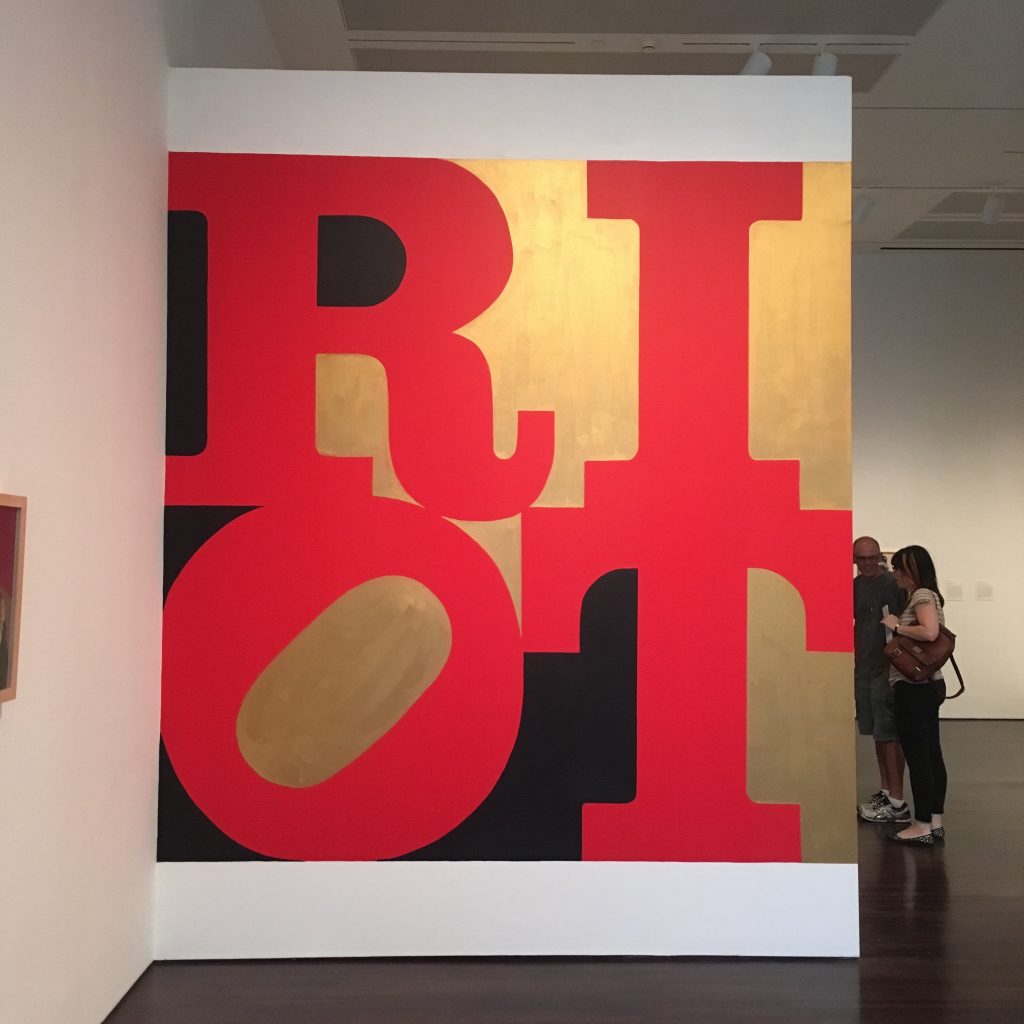
As the turbulent Trump era draws to a close, the ties that bind this nation are frayed beyond recognition. Conservatives and progressives have locked horns in an exhausting battle for the future of our country, each side convinced that the victory of the opposition would destroy us from within.
Our Arc of Progress
The Republican Party warns of the rise of the “radical left” with antifa at the helm, seizing the hard-earned cash of everyday Americans and burning down the suburbs. The Democratic Party paints the GOP with the broad brushes of racism and misogyny while arrogantly touting its superior academic pedigree and command of scientific facts.
Both of these approaches betray an American zest for exaggeration and self-righteousness, but we aren’t completely to blame for this divide. From behind our computers and cell phones, 2020’s Virtual Civil War has Facebook, Twitter, and YouTube stirring us all into a frothy indignation. They feed us alarmist headlines that fuel our mutual suspicion and animosity. Social media companies understand that there’s no motivation to consume information in the middle—there’s no profit in the compromises.
To keep us scrolling, we must feel the minute-by-minute existential dread of an enemy. Big tech has mastered this and they dance on our nerves to extract our attention.
We are so much more than our tech-manufactured hate, and there is still common ground among us. The United States was founded on the principle that all people are created equal. While non-whites and women were excluded from this historic covenant, its modern application can provide a salve for our wounds and help reweave the fabric of our nation:
We must recognize and respect the differences among individuals, evaluating each person on their actions—malicious or benevolent—and not their skin color, gender, physical ability, wealth, education, political affiliation, culture, religion, or whom they love. We cannot impose our own rigid ideas about how individuals should live their lives.
Accepting diversity as the bedrock of our country is much easier than fighting to bend others to our image of society. Even ideas that disgust us deserve their day in our marketplace of free speech. We cannot take it personally because our Constitution protects it.
Accepting human diversity in all of its forms will also diffuse our fear of others. When we approach individuals on a platform of mutual recognition and respect, we can stop wasting energy on anxiety and discomfort.
We must understand that a majority of people in the United States and around the world are good and have similar desires for activity and connection. We share much more than differentiates us.
We’ve lost sight of what unites us because conflict is more lucrative. Conflict not only keeps us scrolling maniacally through our phones, but it also serves to justify the seizure of power and resources, both within this country and internationally. We cannot feel honorable about suppressing peaceful dissent at home or invading nations abroad unless we feel tension with a group of outsiders. The manufacture of conflict and the othering of strife’s victims are intentional acts by those seeking control.
We also gravitate toward simple explanations for complex phenomena. It’s easier to make assumptions based on someone’s appearance than it is to grasp a complicated and messy reality. This weakness is not difficult to exploit. It’s been used to drum up fear against immigrants, people of color, and women. And yes, it’s even been used against white men, when they’re assumed to all be a part of the same privileged tribe.
No individual should be reduced to one observable trait. We are all so much more than the way we present to others. You can’t tell someone’s story or beliefs by looking at them—you just have to ask.
Think about your own individuality. Would it be fair for someone to reduce you to your skin color or gender, or is there more to you? Just as you’d like to be received with an open heart and an open mind, extend this respectful curiosity to others, who crave connection just as you do.
We’re all destined to remain in near-total ignorance of unique individuals in our short lifetimes. There’s unity in accepting that.
Republicans are lashing out with the ruthlessness of an army defending a falling empire. They fear that a majority of Americans hold values inconsistent with theirs—and they’re right. Most of us believe in climate change, want to make college tuition-free, support increasing taxes on the wealthiest people, and want to protect women’s rights to control their own bodies.
Republicans look over a sea of nearly all white, all male faces and can feel the encroachment of a broader coalition. They’ve hitched their wagon to a racist demagogue who will never achieve majority support in this country.
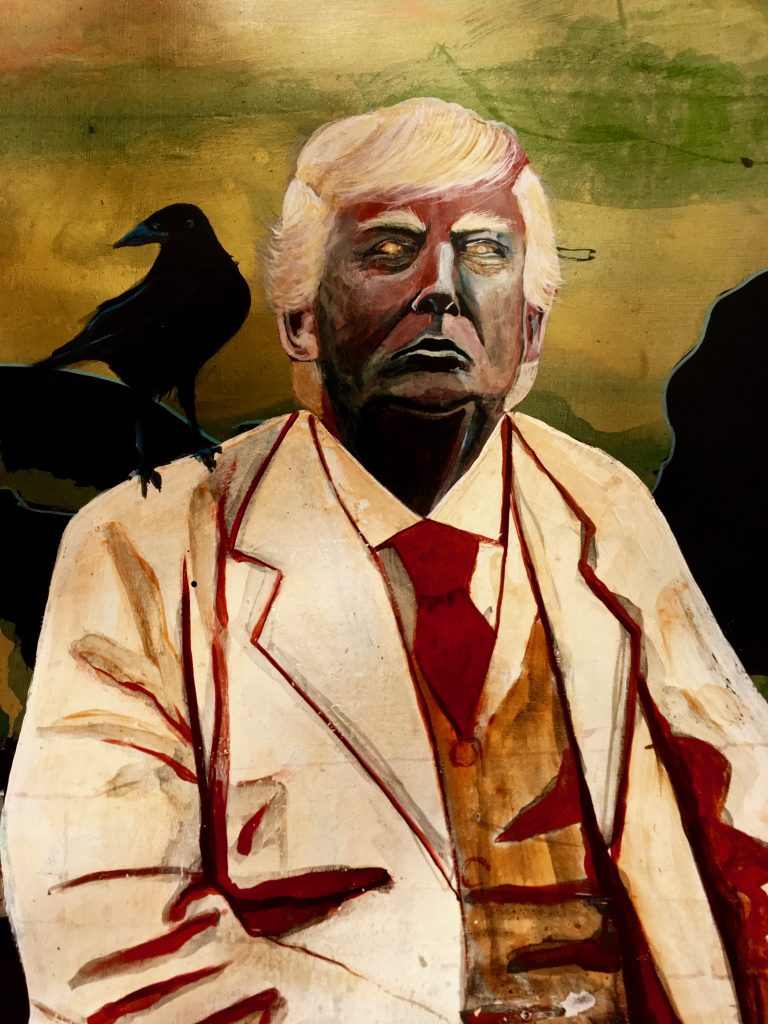
Artist Unknown
Most people in the U.S. and abroad are rightly disgusted by Trump—he’s a liar, a divisive tyrant, and an accused rapist. His Reign of Error has done irreparable damage to our country’s reputation. He has started trade wars, pulled us out of the Paris Climate Accords, and withdrawn us from the World Health Organization in the midst of a global pandemic. He’s responsible for the deaths of more than 200,000 Americans due to Covid-19—a crisis that was contained in the more capable hands of Germany’s Angela Merkel, South Korea’s Moon Jae-in, New Zealand’s Jacinda Ardern, and China’s Xi Jinping, and so many others. We already lead the world in Covid-19 deaths—and we may double that figure by the end of the year.
Trump’s failures aside, Republicans have cheated to maintain power for decades. They purge voter rolls, reduce the number of polling locations in urban areas, and intimidate voters—and now, the GOP’s shameless voter suppression tactics are more blatant than ever.
Perhaps most alarmingly, the Republicans have threatened to overturn election results within swing states. The GOP chairman in Pennsylvania stated that he could bypass his state’s popular vote and allow the Republican-dominated legislature to choose Trump-friendly presidential electors. The GOP has floated this idea in other swing states as well. A Trump campaign legal advisor admitted this possibility: “The state legislatures will say, ‘All right, we’ve been given this constitutional power. We don’t think the results of our own state are accurate, so here’s our slate of electors that we think properly reflect the results of our state.”
In another blow to democracy, Trump has appointed campaign donor Louis DeJoy as the postmaster of the United States. DeJoy has systematically slowed down the mail by dismantling sorting machines, removing post office boxes from cities, and enacting other destructive and baseless measures. We’re in the midst of a pandemic and mailing in ballots is much safer than reporting to a polling place. These transparent efforts to thwart mail-in voting are criminal.
And even if Democrats do win the election, Trump has made it clear he won’t concede peacefully. When asked if he would step down after losing, he told the press, “Get rid of the ballots, and you’ll have a very…you’ll have a very peaceful…there won’t be a transfer, frankly, there’ll be a continuation.”
One of Trump’s top appointed officials, Michael Caputo, is now on leave for a bizarre rant where he stated, “And when Donald Trump refuses to stand down at the inauguration, the shooting will begin.”
Voter suppression.
Corruption and lying.
Violent insurrection.
Are Republicans proud of what their party represents? They are breaking the most basic rules of decency to maintain power—rules that we all learned as children about the importance of fairness, respect, justice, and truth. While the old Republican Party may have embraced these principles, they have abandoned them in their lust for power.
Republicans try to drum up fear of immigrants with narratives about “violent caravans.” The truth is that on Trump’s watch, ICE has locked up Latino children in cages and forcibly sterilized their mothers.
Republicans try to drum up fear of the Black community with images of urban riots and looting. The truth is that white supremacists present a much graver threat to the peace of the country, according to the FBI.
Most Americans are too intelligent to believe Trump’s bullshit, but we fear that even when we show up to vote, Republicans will still rob us of this election. It’s already happened once in my lifetime when tens of thousands of votes from Florida’s Black community were wrongly disqualified to hand the election to Bush. The GOP pretends to be this country’s greatest defender and yet they lie, cheat, and steal under the cover of their flags.
It’s not enough just to call them out. They will happily take the low road to maintain power in bad faith. When we win the election, we need to use every tool at our disposal to implement a liberal agenda.
Let’s add Washington DC, Puerto Rico, and other U.S. territories as states to increase our number of Senators.
Let’s pack the Supreme Court with a progressive majority.
Let’s increase taxes on the wealthiest Americans.
Let’s pass the Green New Deal to create clean energy jobs and help curb carbon emissions.
Let’s ratify the ERA.
Let’s strengthen legal protections for LGBTQ+ folks.
Let’s fire racist cops and reform police departments to use community-based alternatives to brutal law enforcement.
And let’s throw Trump in jail for tax fraud, the obstruction of justice, soliciting campaign funds from foreign nationals, rape, or any of his other numerous crimes.
Democrats need to stand for something to heal this country—it’s not enough to simply be anti-Trump. We should lean into progressivism without compromise because that has always been the future of our country, what Martin Luther King, Jr. referred to as “the arc of the moral universe” which “bends toward justice.”
Progressivism at its finest represents justice for the climate and for the American people, regardless of our gender, whom we love, our culture, how much money we have, or the color of our skin.
Let’s stop despairing and fearing one another. Let’s seize our future from this minority group of cheaters and liars. They don’t deserve a say in our lives.
“Simplicity rarely loses to complexity in battles in the public square” – Jeffrey Toobin (Painting: Carlos Estévez)
Childish Republicans love to salt their food with liberal tears. With Trump at the helm, it’s no surprise that the modern GOP drummed up support for its base in 2016 with messages like “Hillary Sucks…But not like Monica!” Growing up, I believed that taking pleasure in a decent person’s pain was something only kids and ruthless dictators did, but here we are.
Progressives do not generally snipe at one another with malice. Recently, however, the left has had a bad habit of eating their own. For example, Elizabeth Warren and Bernie Sanders represent similar values and platforms. But during the primaries, the media (and the candidates’ followers) spent too much energy igniting mutual suspicion and animosity. And the divide is even more stark between the Democrats’ moderate and liberal wings, with moderates fearing a Squad takeover and liberals fearing a GOP-light administration.
There are valid debates—don’t get me wrong—but now that our two-party system has chosen a Democratic ticket, we need to take a page from the Republican playbook: we need to compromise and unite. Division and constant infighting is only strengthening the GOP.
I get it: Kamala Harris was a punitive prosecutor and made some bad calls. While she’s a fierce debater, she also has a difficult time expressing exactly what she stands for in interviews. She wasn’t my first choice, but I am going to set my criticisms aside in service to the larger fight in November. My favorite candidates, Warren and Sanders, have urged everyone to do.
So why is the modern left obsessed with these purity tests? A friend reminded me recently that “an apostate is worse than a heretic.” We’re more likely to judge those who are nearly in our camp than those outside of it. We see this playing out in cancel culture, which stems from the zealous application of progressive values such as anti-racism, anti-misogyny, and anti-homophobia. “Canceling someone” can be justified for the worst among us, but it can also leech energy from more important fights.
We can’t continually call out Trump’s racism, lying, and corruption—much less, unite folks behind a set of progressive ideals and policies—when we’re too busy bemoaning Joe Biden for being a gaffe-prone centrist. There’s only so much gas in our tank of indignation. While we should hold our own in check, but we also need to come together in November to close this devastating chapter of American history.
As journalists such as Matt Taibbi have pointed out, the left’s Puritanical obsession with enforcing what’s “woke” is antithetical to its traditional values of open-mindedness, tolerance, and acceptance. Furthermore, ruining lives has become a spectator sport. The ultra-woke air grievances on Twitter and some folks such as David Shor have lost their jobs. Many of these discussions should have been more civilly resolved. Walking the new razor’s edge of progressivism has alienated people. It’s also threatening to shrink our coalition. The perfect cannot become the enemy of the good.
One major problem is that there’s no clear path to redemption once someone fucks up. It’s crucial to create space for people to admit when they’re wrong and to act like adults. When we have a coworker, friend, or family member who says something offensive, there needs to be a loving way to bring them back into the tribe without shame or recrimination.
I’m reminded of Arthur Miller’s iconic play The Crucible, an allegory of McCarthyism and the communist witch-hunt of the 1950s. In defense of his life and good name, John Proctor cries out, “We are what we always were in Salem, but now the crazy little children are jangling the keys of the kingdom, and common vengeance writes the law.” The keys to the kingdom are Twitter campaigns calling for people’s heads; common vengeance is the online mob.
Take Christian Cooper: the Black Harvard grad and bird-watcher, who had the cops called on him by Amy Cooper (no relation). He did not press charges and did notthink that she should lose her job. Even though I had delighted in the public destruction of her life—she is, after all, a liar and a racist who weaponized her status as a white woman—I admire Christian Cooper’s forgiveness and grace in handling this incident.
In short, there must be a better way than the endless shame and condemnation. Nobody should be remembered for the worst thing they have even done. And within our progressive coalition—as large and multivariate as it is—cancel culture plays right into the hands of Republicans. While most of us mean well, constantly throwing mud at fellow lefties for being insufficiently woke or radically out-of-touch takes the spotlight off of our real opponents.
As a general rule, the GOP respects what Reagan called the Eleventh Commandment: Thou shalt not speak ill of a fellow Republican. When they do, it’s hardly ever for egregious racism, misogyny, or destroying the environment. It’s typically for being a RINO (a Republican in Name Only), a person who does not vote with the party on a specific issue. They enforce their own unity through shaming their fellows for one sin only: that of non-compliance with the GOP’s agenda.
Although the GOP’s leadership consists of mainly white men, they have welcomed an array of interests under that red umbrella: Tea Partiers, anti-government gun enthusiasts, tax-cut junkies, QAnon conspiracy theorists, evangelical Christians, anti-mask “patriots,” and white nationalists all tend to be pro-MAGA. They are skilled at circling their wagons, playing offense, and doing what it takes to maintain power, even though they comprise a minority party.
A majority of Americans actually hold left-leaning views on all of the major issues, but we still struggle to garner the votes we need. With such a diverse array of agendas (pro-choice, pro-environment, pro-Medicare-For-All, anti-racism) and demographics (men, women, LGBTQ+, BIPOC), it’s no wonder we struggle to achieve a consensus. Also, voter suppression and gerrymandering have disproportionately affected the left, especially people of color.
To win the White House and a Senate majority, we need to lift a page from the Republican playbook and create an alliance among these diverse factions of our party. Part of the problem is that progressives do not have a simple overarching message, a list of non-negotiable values that unite us.
The closest I’ve seen to this list was detailed in Robert Reich’s exceptional book The Common Good. He describes this value system as “the norms we voluntarily abide by, and the ideals we seek to achieve.”
He elegantly summarizes a foundation for what a majority of Americans already believe. I’ve changed the formatting for emphasis:
“The good we have had in common has been a commitment to:
Respecting the rule of law, including its intent and spirit
Protecting our democratic institutions
Discovering and spreading the truth
Being open to change and tolerant of our differences
Ensuring equal political rights and equal opportunity
Participating in our civic life together
Sacrificing for that life together”
This list isn’t perfect or complete, but it’s a solid start in rebuilding the civic trust within this country. We can’t forget that a majority of Americans are good people and are on our side. And the first step to combatting wealth inequality and fear-based scourges such as racism is to reclaim the presidency and Congress. Only then can we transform the country in the image of our shared ideals. Progressivism is a big messy umbrella of interests—and we have to embrace that to win in November.
“It stings. It’s hard to breathe. And I can tell you with 100 percent honesty, I saw nothing which provoked this response. It’s nasty stuff. I’m not afraid, but I am pissed off…This is an egregious overreaction on the part of the federal officers.”
Portland Mayor Ted Wheeler, After Being Tear-Gassed in a Crowd of Protesters
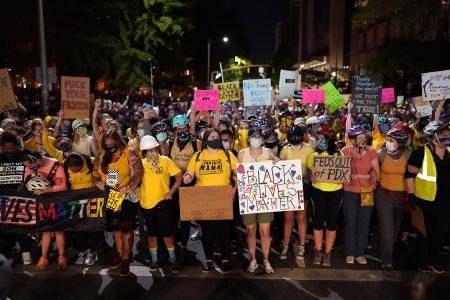
Over the past couple of weeks, the world has witnessed Drumpf’s dangerous descent into domestic terrorism. In early July, he sent a viciousparamilitaryforce to Portland. They have blindfolded protesters and carried them away in unmarked vehicles, broken people’s bones, and tear-gassed a Wall of Moms. What had been a handful of remaining Black Lives Matter protesters outside of Portland’s Federal Courthouse has now swelled into the thousands. The people are standing up against this brutal occupying force.
The Feds Tear-Gassing Protesters, AP Image Credit Noah Berger (Portland, Oregon)
I don’t use the term “fascism” lightly, but Trump has earned it by the expression of a few key elements:
Having a dictator or authoritarian leader
Supporting extreme nationalism (often with a racial or ethnic component)
Suppressing opposition
After several excruciating years of the Trump presidency, we can safely say his administration meets all of the above criteria.
And Trump’s motives for this federal invasion are transparent: he’s trying to win reelection by instigating violence within our most progressive cities. Sending his DHS thugs in riot gear is provocative and city-dwellers are rightfully enraged. Nobody invited them to be here.
Protester Shot by the Feds, Donovan LaBella, Image From The Oregonian (Portland, Oregon)
Over this past week, I’ve had several spirited debates on social media with folks who live far away from Portland. People in Texas, California, and rural Washington claim to know what’s best for my state’s largest city. Although conservatives and rural voters are usually concerned about state’s rights, many are applauding Trump’s federal overreach in the occupation of liberal cities. They shared these thoughts:
“So you mean to say, with all of the violent rioters out there, these feds rolled up and took out the peaceful protestors?”
“And why when black people are getting killed by other black people are you not protesting that?”
“Do you really believe that these protestors are all innocent and the big bad police are causing the riots! My God … All to take down Trump! Disgusting!!!!”
These misperceptions of the Black Lives Matter Movement are fed by a myopic and sensationalist media. Although Oregon Public Broadcasting has done an exceptional job covering BLM in my state, most major networks have flattened the narrative and focus on incidents of destruction. Media executives know that Americans will tune into content that’s disturbing or savage—but they are doing the public a dangerous disservice by amplifying isolated atrocities and ignoring the mission of the Movement. When FOX, CNN, and other companies only follow the smoke, graffiti, and broken windows—“if it bleeds, its leads”—Trump hopes that suburban and rural Americans will be frightened into voting for his law and order agenda.
There’s a historical precedent for Trump’s campaign tactics. In 1968, Richard Nixon ran on a law and order platform. When he accepted the GOP nomination, he stated, “As we look at America, we see cities enveloped in smoke and flame. We hear sirens in the night.” This is the image Trump is trying to sell us: a country being attacked from within by the radical Left.
This is manipulative and absurd. How are we attacking the country? Are we ravaging the nation with our anti-racism, Medicare for All, Green New Deal, and Farmers’ Markets? Are we really destroying the country by trying to make education, healthcare, and housing more affordable for all Americans?
Progressives don’t support the violence; we’re protesting against racism and police brutality—and isn’t it ironic how our movement is met with indelible proof to our point.
July 2020: The Wall of Moms, Getty Images, Published in The Rolling Stone, (Portland, Oregon)
In an earlier era, there were Americans who stood up for the rights of property, and those who defended the rights of people; those who supported slaveowners, and abolitionists who fought for the humanity of our Black citizens.
The GOP and Trump prefer to not discuss the lethal racism of law enforcement and the death of George Floyd. They prefer not to acknowledge the dozens of peaceful protesters and journalists who have been critically injured by aggressive crowd dispersion tactics: rubber bullets, batons, tear gas, steel-toed boots, and fists. They prefer, instead, to stand up for the rights of lifeless buildings with insurance policies. They are more concerned about property than the blood of our Black citizens on the hands of police officers.
I feel for the small business owners who have to rebuild—but my heart shatters for the families of Eric Garner, Tamir Rice, Sandra Bland, Philando Castille, and Ahmaud Arbery, among so many others.
I also fear what will happen in Chicago, Albuquerque, and other progressive cities Trump plans to occupy with his goons in army fatigues. He’s flexing the military in places he knows won’t vote for him. I’d like to ask Americans in the suburbs and rural heartland: if an aggressive federal force descended on your town without permission or invitation, how would you react?
Many of us feel that this is one of the most difficult years in U.S. history—and it’s true. We are suffering from the mismanaged COVID-19 pandemic, which has now killed over 116,000 Americans, 39 times the death toll of 9/11. The murder of George Floyd in Minneapolis, among so many other black citizens, has activated massive protests against police brutality. We have a cowardly incompetent president, and the only tie that binds the public is our unmoored rage.
To the racist institutions in this country, white anger is righteous and black anger is frightening. Large white men with assault rifles can march on Michigan’s capital to intimidate the Democratic governor without a reaction from the police; on the other side of the political spectrum, peaceful protesters for racial justice have been kicked, trampled, beaten, gassed, and shot by the police all over the country. Curfews were enacted and Trump threatened to send in the military to “dominate” his own country’s cities.
When it comes to race, we have always been at war with ourselves. The devastating legacy of slavery has fed inequality in education, housing, criminal justice, and law enforcement, not to mention the daily indignities of individual prejudice. Until a white person experiences fear while jogging, playing video games at home, or walking and eating skittles, we cannot pretend to understand what it feels like to be constantly surveilled and over-policed for our skin color.
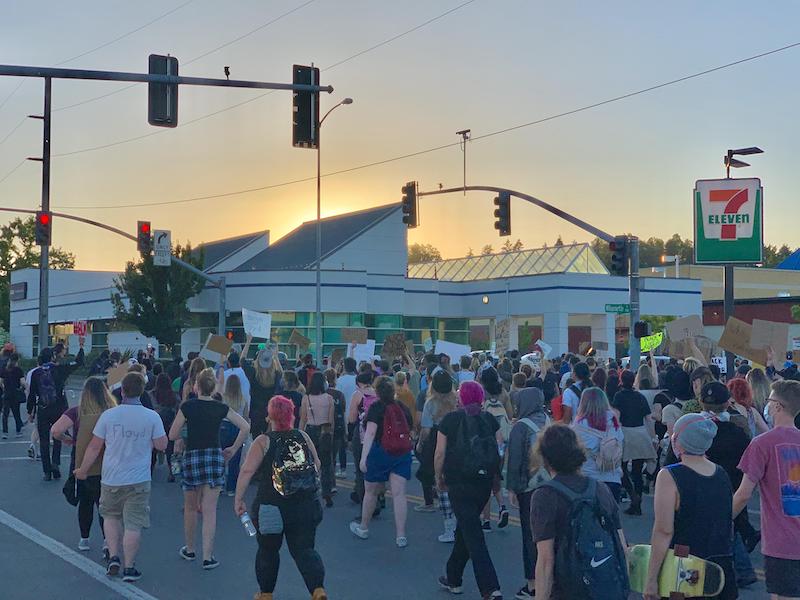
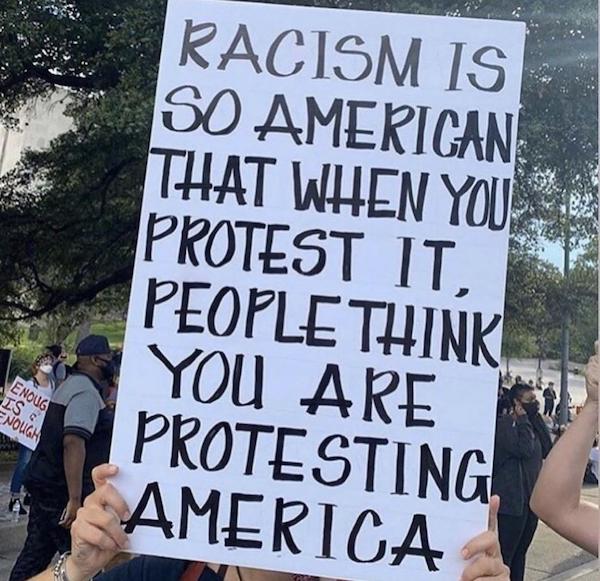
Our collective discomfort and anger over racial injustice were long-overdue in the U.S. Although the Black Lives Matter movement felt dormant to white America in between the most egregious murders, we’ve reached a tipping point: millions of us have decided that doing no harm on the basis of skin color isn’t enough. We’ve embraced a new era of anti-racism, in which bigots are rightfully outed and fired from their jobs.
A friend of mine told me that we’re living in “cool times”—an era that feels like hell on the ground but in retrospect will be considered pivotal in making progress. As uncomfortable as we all feel right now stewing in our rage and despair, I’m inclined to agree.
In fact, while the entire Trump era has been excruciating, the backlash to his lack of character has helped bring about important changes in American society. There has been a major international protest every year since he took office: the Women’s March (2017), the March for Our Lives (2018), the School Strike for Climate (2019), and the powerful resurgence of Black Lives Matter (2020).
It started with the Women’s March in 2017, the day after Trump was inaugurated. I was in Washington DC, and people protested in cities across the world in a powerful display of anti-sexist unity. The #MeToo era followed shortly, and a cascade of hideous and powerful men lost their jobs—many of them replaced by women.
While 1992 was branded the “Year of the Woman” when a four new female senators were elected to the U.S. Congress, the Blue Wave of 2018 brought 148 women into Congress, as well as six female governors.
This represents real progress.
A year later, a young man killed 17 students at Marjory Stoneman Douglas High School in Parkland, Florida. A new student-led protest against gun violence was born. Nearly two million Americans marched in 900 cities across the U.S. and there were companion events across the world. The March for Our Lives became one of the largest protests in U.S. history, and it had a lasting impact on legislation: in 2018, 67 gun safety bills were signed into law across 26 states and Washington DC.
In 2019, the School Strike for Climate took shape. What had started in Sweden with an exceptional young woman, Greta Thunberg, became an international movement to take on the fossil fuels industry and protect our planet for future generations. There were large international protests in March, May, September, and November—all of them drawing millions of people into the fight to protect our world from global warming. September’s “Global Week for Our Future” event drew more than four million protesters and is hailed as the largest climate strike in world history.
And here we are now, confronting the shameful and enduring legacy of slavery in the United States. Racism in our institutions and citizens stems from our failure to confront this country’s festering wound: our nation’s wealth was built on the backs of African American slaves, and their descendants have barely shared in that prosperity.
When the black community has accrued wealth, whites slaughtered them, as they did in the Tulsa Massacre in 1921, which devastated Black Wall Street. Most Americans hadn’t heard of this genocide until the graphic novel Watchman was turned into an HBO series. Our history books tend to gloss over white violence within our borders.
But this has begun to change. Michael Brown Jr., Philando Castille, Walter Scott, Sandra Bland, Tamir Rice, Eric Garner, and now George Floyd—among so many others—are household names. A majority of Americans are horrified by the ongoing brutality against our black citizens. And beneath the rage at the root of our American wound, we’re beginning to see some signs of healing.
The Minneapolis Police Department has been defunded in favor of more communal-minded actions, which address access to basic services. Charges are being filed against police officers across the country, and some have been arrested for their violent handling of protesters. Black Lives Matter murals are popping up on large avenues across the nation. Powerful businesses have stood up in solidarity with the BLM movement; Twitter, Nike, and the NFL have declared Juneteenth a company holiday. Even NFL Commissioner Gooddell has softened his stance on kneeling during the national anthem. This is a large step for a conservative white-owned institution, which denied activist Colin Kaepernick a job for taking a knee in a peaceful protest against police brutality.
In the same way the #MeToo movement cost countless assholes their jobs, racists are now being called out publicly. In May, Amy Cooper invoked her white privilege and threatened to lie to the NYPD about “an African American threatening her life.” Christian Cooper (no relation), the black man, is a Harvard-trained writer and editor who enjoys birding. His crime? Asking Amy to leash her dog in Central Park. For her racist lies, she lost her job as a VP of an investment firm.
In Eugene (where I live), local business owner Paula McGuigan has been called out for her racism and insensitivity. She posted an appalling photo of her kneeling on the neck of a man with the bizarre caption “Ready for my Minnesota trip…#asianlivesmatter.” Her business, Home Spray Foam and Insulation, was flooded with so many one-star reviews that Yelp had to flag the “unusual activity.” She issued an apology, but the damage is done: you can’t get away with this racist shit anymore.
Perhaps most importantly, white people across the country are opening their eyes—many of them for the first time—to the systemic racism that has plagued the United States since its founding.
Some white people have been calling their friends of color and asking how they can be better allies. While these efforts are made with good intentions, the reactions have been mixed. After receiving a deluge of messages from white people in his life, a friend of mine quipped that he was “seriously considering hiring a virtual assistant and asking white friends to pay for it.” I can appreciate this sentiment, especially since it’s not the black community’s job to educate us—we have to listen and do the difficult work ourselves.
As clumsy as white Americans’ efforts can be, I still believe that the majority of us want to overcome personal prejudice and dismantle racist institutions. The media tends to amplify examples to the contrary—the Charlottesville racists, the MAGAts, our goddamn ignorant POTUS—but that braindead megaphone can’t drown out the millions that protest today.
There’s no single handbook for becoming “woke.” It’s a daily decision to rethink our implicit biases. It’s a desire to throw our bodies on the gears of the system—our roads, our workplaces—and demand the overhaul of racist institutions such as law enforcement. It’s a recognition that our racism at home is interwoven with our imperialism abroad; without stoking the white American fear of immigrants, non-Christians, and people of color, our bloated military wouldn’t be able to invade the Middle East for oil or Vietnam and Venezuela to “defeat communism.” Considering citizens of these countries as less-than-human—that peculiar and twisted racism—drums up support for these bloody colonial injustices.
So how can white Americans confront their privilege and better understand how racism operates? Seeking out the experience of being the minority in a group is a valuable tool, whether it’s living abroad with an unfamiliar culture and language or volunteering in a different community. I lived in Niigata, Japan for two years, and the daily reminder that I was “the other” opened my eyes more than any book could. Growing up in a predominantly white city, I had a lot of blind spots that my Berkeley education in sociology and psychology couldn’t remedy. And I still have work to do.
When you are the only member of a visibly identifiable group—a person of color in a white community, a woman in a room full of men, a trans woman among those who were born with female bodies—you’re both hyper-surveilled and invisible. People might stare or get uncomfortable in your presence, but they also might ignore or exclude you, not knowing exactly what to make of you.
This lonely discomfort is useful and calls into question what we take for granted being in more homogenous groups. It helps build empathy for those unlike us—and a friendly curiosity of cultures unlike our own. Exposure to what was once foreign helps to allay deep-seated fears and can build mutual respect.
I acknowledge the limitations of my experience. I cannot change my 0.1 millimeters of white epidermis, but I know this: people are mostly good everywhere in the world. And when we approach unfamiliar groups without judgement and with an open heart, everyone benefits.
So let’s embrace the mass discomfort of 2020. We’re living in “cool times” and in retrospect, we’ll realize how instrumental this prickly awareness of sexism, gun violence, climate change, and racism has been for us to advance. The work is just beginning, but our rage, anxiety, and sadness are symptoms of outgrowing old ways of thinking and conducting ourselves.
“The American experiment, the original embodiment of the great Enlightenment idea of intellectual freedom, every individual free to believe anything she wishes, has metastasized out of control.”
Kurt Andersen, Fantasyland
As COVID-19 ravages the United States with more than 213,000 cases, there’s another disease that’s killing us—a myth born of the romantics, Ralph Waldo Emerson, cowboy lore, and life on the frontier: I’m talking about the dark side of our individualism.
This immortal lie tells us that we’re free to believe what we want and that we can save ourselves if we just try hard enough. These unchecked assumptions have severely impaired our ability to coordinate a response to this pandemic.
While individualism is useful to promote creativity and innovation, there are several features of this quintessential American trait that have undermined our institutions, leadership, and citizen behavior during this unprecedented crisis. It has made this nation a more fertile ground for COVID-19 than more collectivist or communal countries.
How Individualism Has Failed American Institutions
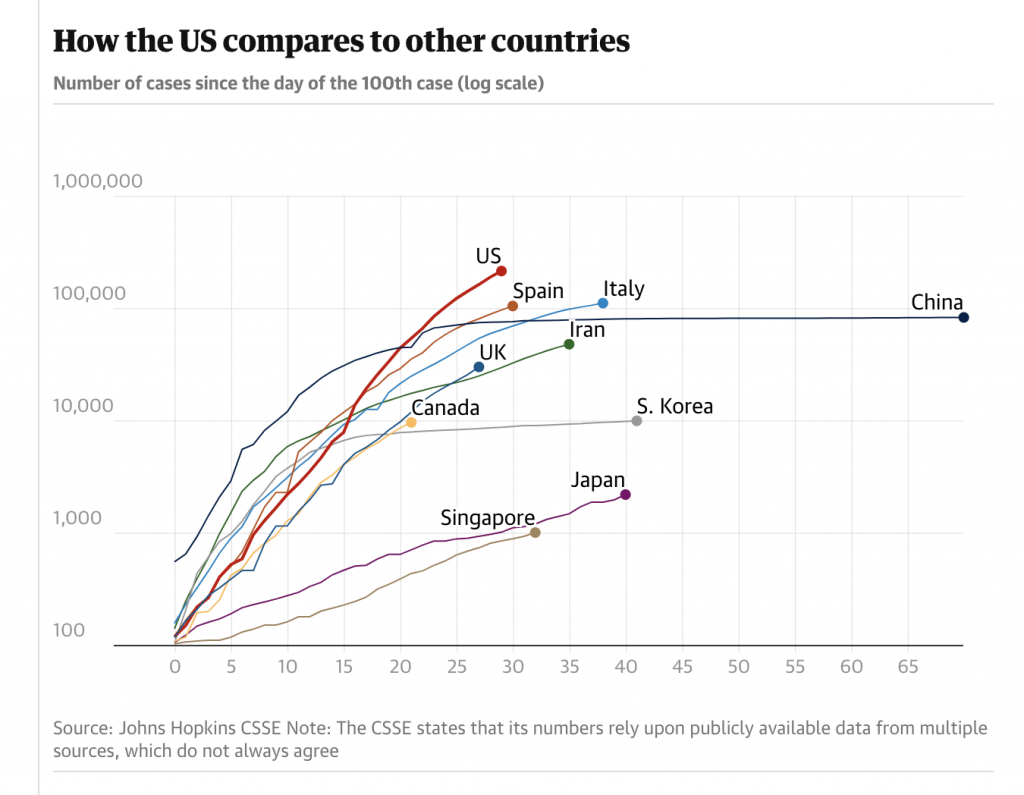
I lived abroad for five years and I’ve been tracking various governments’ responses to COVID-19 with great interest. South Korea had its first confirmed case the same day as the United States: January 20, 2020. While the Trump administration called the virus a Democratic “hoax” and panicked for several weeks that it would threaten the economy during an election year, the South Korean government initiated an aggressive testing program to identify who needed to be put into isolation.
Two months later, the South Koreans have flattened the curve and life is slowly returning to normal. In the United States, COVID-19 is overwhelming hospitals in Seattle, Detroit, New Orleans, and New York City. And it’s just getting started.
Note the differences between individualist nations like the U.S. and the more collectivist nations in Asia (April 2, 2020)
Our Healthcare System
Our decentralized healthcare system is not equipped to fight for us during a pandemic. The main goal of American for-profit insurance companies and care facilities is to make money—and that objective does not align with the public interest, especially in this crisis.
Instead of having one clear-cut entity such as the U.K.’s National Health Service (NHS), Americans are forced to navigate a complicated bureaucracy of “in-network” and “out-of-network” healthcare providers, arcane insurance billing practices, and sky-high co-pays with surprise costs. And millions of Americans remain uninsured, with millions more about to lose their employer-sponsored plans as the economy crashes.
This desultory system has created a lot of confusion and supply shortages. U.S. hospitals are running out of personal protective gear (PPE) and states have had to engage in eBay-style bidding wars to secure ventilators.
While some states such as Florida have gotten everything they asked for from the federal government within three days—N-95 masks, gowns, etc.—my state (Oregon) only received 10 percent of its request. The biggest difference between Florida and Oregon? Governor Ron DeSantis of Florida is a Republican and Governor Kate Brown is a Democrat. It’s hard not to assume that the Trump administration is picking favorites when he’s more concerned about feeling “appreciated” than getting Americans the assistance they need.
If I wanted to get a COVID-19 test, there’s nowhere in my region to go. Public health officials in Lane County have said they’re advocating at the state and federal level for widespread testing, but they are still waiting. In theory, the cost of these tests is covered under the Families First Coronavirus Response Act, but early American access seems to have been limited to government officials and celebrities.
Most American healthcare providers and leaders are telling people to simply stay home and wait out the disease, except in life-threatening situations. With refrigerated trucks serving as temporary morgues in New York City, it is clear that the for-profit American healthcare system has already been overwhelmed by this pandemic. Hospitals and states should not have to compete with one another for supplies.
Our Media
“If I think it’s true, no matter why or how I think it’s true, then it’s true, and nobody can tell me otherwise”
Kurt Andersen, Fantasyland
The first step to fighting a pandemic is getting the correct information—and this is impossible in today’s hyper-partisan “choose-your-own-reality” media landscape.
Thirty years ago, there was an agreed-upon collective truth. Journalist Walter Cronkite Jr. was called “the most trusted man in America” and citizens believed him, regardless of their political affiliation. These days, even scientific facts—climate change, the effectiveness of vaccines, the importance of social distancing to stop the spread of COVID-19—are treated as matters of opinion. By illustration, Governor Ron DeSantis (R-FL), taking his cues from the White House, asked his state’s citizens to stay home only yesterday (April 1)—appallingly late considering their high population of vulnerable elderly folks.
According to a recent poll, viewers of Fox News are especially likely to believe that the threat of COVID-19 is “exaggerated.” The network, afraid of being sued, has already fired host Trish Regan, who called coronavirus a politically motivated “scam” on her March 9 broadcast.
Dr. Anthony Fauci—a man who has led the National Institute of Allergy and Infectious Diseases since the year I was born—has been targeted by Trump loyalists. When Americans are free to select their own scientific facts—with Republicans eager to defend the economy and the president—it’s very difficult to mount a coordinated response to COVID-19.
How Our Selfish Leaders Have Failed Us
Right now, Americans have no trustworthy central authority to guide us through this pandemic. It feels as if half the country is listening to Dr. Anthony Fauci, and half the country is listening to the president.
It is no surprise that Trump has failed his first real test as president. Instead of taking COVID-19 seriously, he dawdled and called it a Democratic “hoax.” He dragged his feet for weeks, downplaying concerns, comparing the disease to the flu, dispensing false medical advice about the usefulness of chloroquine (which killed one Arizona man), and appointing gay conversion therapy czar Mike Pence as the head of the COVID-19 task force.
To Donald Trump and congressmen like Sen. Richard Burr (NC-R), who sold millions of dollars of stock in anticipation of a crash, the health of the country was not their primary concern: they acted selfishly, saving themselves with little regard for their roles as elected officials. Leadership should be more than an exercise in ego and personal enrichment.
Finally, American values praise people who “pull themselves up by their bootstraps” and by extension, often degrade people who need help—the most vulnerable among us. How many times in the past three years has the Republican Party tried to poke holes in our already-dismal social safety net by cutting food stamps, education funding, environmental protections, and Medicare? Needing help is somehow unAmerican—unless you’re a multibillion-dollar company in need of a taxpayer bailout, of course.
If individualism is serving American institutions so well, why does socialism/collectivism come around every decade or so to save our asses?
How Individualism Impairs the Behavior and Beliefs of American Citizens
Individualism can be beneficial when people choose to defy tyranny or mainstream bigotry, but there’s a dark side to assuming we are free to do and believe what we want. Consider the words of a now-infamous 21-year-old spring breaker:
“If I get corona, I get corona. At the end of the day, I’m not going to let it stop me from partying. You know, I’ve been waiting, we’ve been waiting for Miami spring break for a while, about two months, we’ve had this trip planned, two, three months, and we’re just out here having a good time. Whatever happens, happens,” said Brady Sluder in mid-March.
I lived in Japan for two years and I can’t imagine a young Japanese person saying something like this because there’s a constant awareness of how one’s own actions impact others. Many Asian nations are already in the habit of wearing masks when they’re sick to protect others from infection. In the United States, whether you’re an ignorant young man like Sluder or the Governor of Oklahoma, we do whatever the fuck we want—everyone else be damned.
To fight this pandemic, we can’t choose our facts. It’s not a simple matter of opinion to believe Fox News when it claimed that COVID-19 was an exaggerated hoax led by “panic pushers.” Those hosts dispelled dangerous misinformation and it’s downright irresponsible to believe them.
We need to heed the scientists’ advice and take other people’s wellness into consideration. Americans who are going against “shelter in place” orders may be unwitting carriers of COVID-19, putting more vulnerable folks at risk.
The Opportunity of COVID-19
This isn’t the first time in history when we’ve been forced to come together to confront a common enemy. A person can’t conquer the frontier of this disease alone—and in order to beat COVID-19, we need to outgrow the dark side of our individualism.
In a 1935 fireside chat during the Great Depression, FDR stated, “The old reliance upon the free action of individual wills appears quite inadequate. The intervention of that organized control we call ‘government’ seems necessary.” The New Deal was in full swing, pushing financial reforms, putting citizens back to work on public projects all over the country. This coordinated action helped pave the way for our economic recovery in that uncertain era.
During the COVID-19 crisis, we need centralized logistics, which take care of the collective rather than individuals.
Furthermore, this is a global threat and I see an opportunity not only for Americans to become more communally oriented but also for our country to recognize its place in the world as one nation among many.
American exceptionalism has always been a childish myth—the fact is that we’re part of a global community and we need to work with other countries on an equal footing to mount a response to this pandemic. Our arrogance and self-righteousness have no place in the world, especially right now when we need to work together.
COVID-19 does not care if you’re Brazilian or Japanese—it treats everyone the same. The first individualist thought is: how is this going to affect me? The first collectivist thought is: how can I help others and ensure this disease doesn’t spread?
Only the second approach will give us a fighting chance.
Living in Oregon, I’m a pampered voter. Ballots are lovingly gift-wrapped and placed on our doorsteps by county bell-hops with little hats. The foil-embossed voting card comes with an artisan cake: voter vanilla swirl, ballot buttercream caramel, or “choice is yours” chocolate. Later, friendly creatures of the forest retrieve the ballots and do a little dance for democracy when we submit our votes.
For real, though: not only do Oregonians have automatic voter registration at the DMV, but every state resident mails in their ballot and avoids the Election Day hullabaloo. Not surprisingly, we have one of the best voter turnouts in the country. Roughly 61.5 percent of eligible voters in Oregon came out in the 2018 midterms—the fifth-highest percentage of any state. And by extension, our elected leaders better reflect the interests of our people.
If I were a non-voter, it actually would be difficult to avoid exercising my constitutional right in Oregon. The ballots arrive weeks in advance; if I don’t have a postage stamp, there are drop boxes everywhere; and our 2016 “Motor Voter Act” made it so we must opt out of automatic registration at the DMV.
Sounds ideal, right? Like that type of responsive democracy we all learned about in grade school?
Call me old-fashioned, but I believe that strong, widely supported ideas should have power in determining our future. When voters show up, political candidates are forced to pay attention to their constituents’ demands.
There are several features of our nation’s “democracy” that have perverted the process. Recently—perhaps more than ever in the wake of the disastrous Citizens United decision—our policy-making has reflected the interests of a few greedy, mean-spirited donors.
Here are examples of several recent changes which have been unpopular with a majority of Americans:
The immigrant internment camps, which have separated thousands of desperate children from their parents
The erosion of EPA measures protecting our clean air and water
The shrinking of national monuments to open them up to private development
The decision to make wildlife hunting trophies (e.g., lions, elephants) legal again
The watered-down “gun control” bill, which didn’t do anything about assault weapons
The gutting of ethics rules in the House of Representatives
The closing of women’s health clinics across the country
Garbage bills become law when wealthy political donors with cruel and unusual tastes are allowed to become kingmakers.
Instead, let’s return our democracy to its purest form—one in which every eligible person gets a say so that the most widely supported ideas inform policies.
I can already hear groans from my cynical friends:
But Jocelyn, there’s too much entrenched power!
Why would politicians willingly adopt these policies when the broken system is already working for them?
You’re so naive. Don’t you know how politics works, darling? Nothing will ever change.
Tell that to my great-great-grandmother who couldn’t vote. Tell that to my grandmother who had to get her husband to co-sign a credit card even though she was a working nurse. Tell that to my close friend Derek who married his husband in 2014.
Everything changes.
Oregon isn’t perfect, but it’s a great template for increasing the number of eligible people who vote—the first step to strengthening our democracy. The second step is ensuring that our leaders are responsive to the needs of their constituents, which is difficult but not impossible.
I’ve given this a lot of thought and here’s a casual roadmap to making those two changes:
The Pampered Voter’s Guide to American Democracy
Make voter registration automatic when you receive a license or ID card from the DMV. Similar to Oregon, this should be an opt-out system rather than opt-in.
Have everyone vote by mail and all states should offer same-day registration. Having mail-in ballots is another policy that has made Oregon such a strong voting state. It makes it easier, especially for people who live in more rural areas, have to work on Election Day, or have other commitments which make visiting a polling place cumbersome. For those without home addresses, there would be alternative arrangements. Having same-day registration is another policy that increased the 2018 voter turnout in seven of the top ten states. Also, cheers to Colorado, which enjoys both voting by mail and same-day registration. It had the second-highest voter turnout (63 percent) in 2018, just behind Minnesota (64 percent), which has SDR. Notably, none of the worst ten states for voter turnout have VBM or SDR.
Ensure that political districts are drawn by bipartisan committees—not the people currently in power. This is obvious and helps prevent partisan gerrymandering. (We’re looking at you North Carolina, Texas, Kentucky, Louisiana, West Virginia…)
Shorten the campaign cycle to twelve weeks. If it takes longer than twelve weeks for a candidate to tell people what they stand for, they probably won’t be an effective policymaker. Also, this allows our current leaders to actuallygovern rather than constantly worry about wooing enough campaign donors to get elected—not to mention the stress it removes from American citizens’ lives who are tired of the interminable election season.
Limit overall political contributions and limit the overall amount of money a candidate can spend. There are several countries with commonsense limits on how much money a candidate can receive and spend. These include Belgium, Canada, Chile, France, Japan, and South Korea. As it stands, wealth continues to dictate who runs for office and wins American elections. This does not lead to the best policies or to a democracy that provides what Americans need and want from their government.
Centralize all political campaign information by creating the “BetterBallot.” We have algorithms that match us with the people we marry. Why can’t we have a centralized system match Americans with local, state, and national politicians in the same way?
I propose making a website (BetterBallot.gov) with an easy-to-follow questionnaire that takes 15 minutes to fill out. Each question would have two parts. For example:
Do you believe in banning assault weapons such as AR-15s and AK-47s?
O Yes
O No
How important is this issue to you?
O Extremely important
O Very important
O Important
O Not that important
O Unimportant
Depending on a person’s responses to questions and the value they assign to each issue, they would be matched up with percentage scores with various candidates. There would be both an overall percentage match, as well as percentage matches with candidates on various issues, such as:
Public Healthcare
Environmental Protection
Public Education
Taxes
Gun Control
This data-driven method has been used on the dating website OkCupid with great success.
Having this information about political candidates also would help eliminate wasteful campaign spending and interminable fundraising—freeing up our country’s leaders to actually work rather than worry about raising enough money to get reelected.
Furthermore, it would help cut down on negative campaigns. We should be voting according to how well our beliefs match with a prospective legislator—not how much we hate the other candidate.
I suspect some might see these proposals as too simple and unrealistic—that I’m waving my flimsy pen at a tidal wave of political tradition. But why can’t it be simple? And at earlier stages in history, weren’t many of the freedoms we now take for granted also “unrealistic?”
When I was in seventh grade, every girl I knew (and probably some boys) swooned over Leonardo DiCaprio in Titanic. It wasn’t enough to see the movie just once in theaters: most of us had seen it three or four or seven times. From magazines and TV interviews to bedrooms and locker collages, it wasn’t possible to escape the Leo Mania of 1997. It was ubiquitous and all-consuming—a collective crush that transcended even the most rigid middle school social hierarchies.
90s swoon-fest
Shared experiences and celebrity obsessions can unite generations, especially decades later in amused reflection. For people who grew up in the 90s, Britney Spears, Dr. Dre, Saved By the Bell, Dawson’s Creek, and Fresh Prince of Bel-Air had near-universal recognition. Our attention could still be held within the confines of a book, television set, movie screen, or magazine. There was little customization beyond the act of changing a channel, and little interactivity beyond writing a fan letter.
Today, people’s consumption of culture is personalized, controllable, and virtually limitless. I often wonder how this new God-like access to information—especially entertainment—has shaped Gen Z.
For example, can they can be considered a generational cohort at all? Do they really have enough in common with one another? And what are those characteristics?
And has the internet created a wider awareness of cultural icons (because information spreads so quickly and easily)? Or since cultural consumption is on-demand and individualized, are there multiple Gen Zs with non-overlapping preferences and qualities? In other words, does having absolute power over cultural exposure increase or decrease what’s universally shared? And how has the ever-greater menu of entertainment shaped young people’s cultural identities?
While video game consoles were widespread among my peers in the 90s, smartphones, Instagram, and internet porn were not. I reflect on how self-conscious and impressionable I was as an adolescent. Attending Thurston Middle School and later Laguna Beach High School offered plenty of painful opportunities for upward social comparisons; it would have been devastating to not have a break from “thinspiration” at home. Girls today compare themselves to Facetuned influencers at all hours, which seems like its own special hell.
Internet porn also has created its own problems. In Peggy Orenstein’s book “Girls and Sex,” she reveals that many young men today—including middle-schoolers—expect blowjobs. Not just receive them … expect them. What’s sad is that many girls she interviewed complied in efforts to earn “social currency” among their peers. One girl even compared a blowjob to “a very special handshake.” I assume this new expectation is shaped by increased access to porn—much of which warps men’s pleasure and perspective on sex.
Of course, there is one commonality with the pre-internet days: discussions of women’s pleasure have always been missing from the American narrative, whether it’s porn or sex ed.
But maybe I’m thinking about this all the wrong way. Cultural and generational identity is about so much more than sexuality, awareness of a TV show, or a shared celebrity crush. It’s a privilege that to me, the 90s felt so comfortable and carefree; if I could do it all over again, I would have spent less time pining after Leo and more time protesting the abuse of Rodney King, standing up for Monica Lewinsky, or questioning the spread of U.S. military bases all over the world. In a life untethered to smartphones, computers—and in my upbringing, even TV—ignorance was bliss.
There has been one hopeful trend in this boundless media landscape for all generations: the rise in activism. The March for Our Lives, the Global Climate Strike, Standing Rock, Black Lives Matter, the Women’s March, and #MeToo have played prominent roles in our lives, wherever we fall on the issues.
Women’s March 2017. The New York Times captured me and my man in DC.
Maybe these are the cultural touchstones which really count—the efforts to expose and uproot the shameful parts of our American identity: our racism, our sexism, our violence, our wasteful consumerism.As much as we bemoan our shortened attention spans and indulgent TV binges, technology has unshackled long-overdue social movements.
The question is: are enough young people engaged in these mass cultural shifts or are they choosing the easy indulgences? The sheer volume of mindless entertainment available can make us comfortably numb. Entrenched power is counting on us tuning out the growing drumbeat of progress.
I always idealized the 60s for its raw revolutionary power. I thought it was all flowers, free love, defeating “isms,” and being kumbaya as fuck. I realize now that pushing for real social change was—and is—actually uncomfortable and violent. Fifty years ago, high-profile assassinations were rampant: MLK, Malcolm X, JFK, Bobby Kennedy, and others. Both then and today are eras marked by deep divisions within our citizenry and primal rage.
I might even thank Donald Trump—the exquisite embodiment of our worst traits—for making our path forward as clear as cubic zirconia. It’s a lot easier to fight bigotry and other fuckwittages when they’re out in the open. Consider how Trump’s overt racism and sexism have helped renew calls for reparations and the Equal Rights Amendment; look at how his greed-fueled denial of climate change has sparked a greater awareness of the issue. He also ushered in the most diverse Congress in U.S. history. This blue backlash could be considered a tribute to his perfect awfulness.
Do I look forward to a more boring 90s-like era of comfort? The return of mutual respect between liberals and conservatives? Absolutely. Life is hard enough without having a rapist and a liar as the most powerful man in the world.
But I take comfort in one thing: this moment of history feels excruciating because it should—it’s the dizzying anxiety of justice deferred and now demanded.
I remain hopeful that much-needed changes to American culture and legislation—strides in gun laws, climate action, sexism, racism, LGBTQ rights, and corruption—will rise from the ashes of this modern chaos.
A few years from now, we’ll see how integral this turbulence has been for our society’s progress.
During the 1966 gubernatorial race in California, Ronald Reagan crafted the Eleventh Commandment: Thou shalt not speak ill of any fellow Republican.
Can you imagine being part of a team—one that’s supposed to set a good example for the whole country—and not being able to hold anyone accountable for lying, cheating, violence, or bigotry? To have a loyalty so blind that you stand for nothing but winning?
This bad faith is the rot at the center of the modern Republican Party. By illustration, today’s GOP stands united with:
Rapists (Donald “Pussy Grabber” Trump)
Liars (Mitch “GOP Tax Cut Won’t Cost a Penny” McConnell)
Shameless racists (Steve “Calves Like Melons” King)
Tax cheats (Steve “Offshore Accounts” Mnuchin)
Drug addicts leading the War on Drugs (Newt “I Like Pills” Gingrich)
Sexists (Todd “Legitimate Rape” Akin)
Morons (Michelle “Lion King is Gay Propaganda” Bachmann)
Vote suppressors (Wilbur “Census Swindler” Ross)
Domestic abusers (Rob “Fist-Goes-Boom” Porter)
Religious looneys (Mike “Period-Tracking” Pence)
Xenophobic assholes and nefarious Disney villains (Stephen “I Hate Immigrants Because Nobody Will Sleep With Me” Miller)
We all know whom he votes for.
To stand silently with this party is to condone its toxic behavior. The very few conservatives who have spoken up either have defected from the party (Justin Amash, Andy McKean) or are continually harassed by Trump (Mitt Romney). Also, the countless GOP incumbents who aren’t seeking reelection in 2020 are shamefully quiet, even though they have nothing to lose.
Modern Democrats are better at enforcing codes of conduct—and certainly don’t tolerate criminal behavior within their ranks. Remember all of the times former Senator Al Franken played grab-ass during photo ops and was forced to resign? He was beloved, but he was held accountable for unacceptable behavior.
It gives me hope that Democrats take sexual misconduct more seriously than they did 20 or 30 years ago. Bill Clinton, for example, would be unelectable in today’s post-#MeToo society.
Of course, there is one appalling behavior that southern politicians on both sides of the aisle seem to get away with: dressing up in blackface. Look at governors Ralph Northam (D-VA) and Kay Ivey (R-AL). This just shows how deeply American racism runs and how far we have to go to take it seriously.
I wonder: are Republicans so cowardly because MAGAts consume Fox News and live with “alternate facts?” Are they afraid that the wealth gap, climate change, a more diverse citizenry, and the skyrocketing costs of college and healthcare are politically inconvenient for the GOP?
Decades ago, at least Americans had an agreed-upon reality. There were a couple of news channels, but it was understood that you would be more-or-less informed after watching any of them.
Screenshot from November 13, 2019: the first day of the impeachment hearings. The reason there is a picture of kittens is that I have the “Make America Kittens Again” browser tool, which turns all online photos of Trump into adorable cats. I highly recommend it.
That’s not the case today. Fox News—provably fictitious—manipulates millions of people with fear, hate, and outright lies. Growing up, I always thought that propaganda was a problem in distant dictatorships or monarchies, in places like Russia, China, and Saudi Arabia. It turns out that with enough money, you can buy your own self-serving “facts” and attractive dimwitted “journalists.” It’s infuriating that this garbage doesn’t come with a disclaimer. There is simply no progressive counterpart to Fox News, yet it is routinely compared to MSNBC or even CNN. That’s like comparing a light rain to Hurricane Harvey. Sure, they’re both technically “storms” and are watering our crops, but only one of them will tear down your fucking house.
I was also taught to believe that Republicans and Democrats have two equally valid ways of seeing the world. In 2019, that’s total horse shit. Doesn’t it at least feel weird to Republicans that their party lacks women and people of color, especially in their leadership? How do they explain that?
This is how I imagine it: one balding white man drinking a Bud Light says to another, “You know, man: Latinos, blacks, and the other non-whites just don’t know their place. Trump is trying to make our country great, ya know? And to make it, like, great again.”
“Yeah, man. Those damn socialists want to take all of my guns and all of my money and pay for immigrant healthcare. Fucking commies.”
“Yeah, we’re the true American patriots. God bless this country’s whites.”
Or something like that…
Even the bright conservatives don’t seem to understand what it means to be progressive: they assume that we’re against small businesses and taking personal responsibility. On the contrary, Democrats have become the only party of personal responsibility because we call out our own. Look at the clown car of assholes profiled above. None of them have been held accountable for criminal behavior and yet we’re presented with the false equivalency of left vs. right, liberals vs. conservatives.
There’s more to making a country great than cutting taxes or locking immigrant children in cages. Republicans need to call out the bad behavior on their side or history will consider them the party of greed, cruelty, misogyny, and white supremacy. I sure as hell do.
Until they get rid of the Eleventh Commandment and start thinking as humans rather than as Republicans, the blind partisan loyalty will continue to make the GOP ruthless and despicable.
I know a young God-fearing man who waited until marriage to have sex. He was still in college and decided to propose to his girlfriend after less than a year. They fast-tracked the wedding and set the date for January… in Alaska. Nine or ten months after the sub-zero ceremony, they had their first child. Another came not too long afterwards—and the wife started an affair. The couple is still suffering a long and bitter divorce.
How common is this experience? How often does a pious religious couple wait until marriage to relieve the most primal of human urges? And how many of these young men and women—hormones raging—make a lifelong commitment just so they can finally have sex?
One of the most damaging forces in American culture is its continued puritanism. The rigid anti-sex and anti-drug undercurrents of our society are making people repressed, guilt-ridden, and judgmental of others.
Let’s start with sexuality. Dating to our 17th century Protestant roots, men are assumed to be unchaste sinners by nature. Similar to the conservative branches of Islam and Orthodox Judaism, men simply cannot be trusted to control themselves and it falls to the women—ironically, the “original sinners”—to not tempt them. (Isn’t it strange how women get all of the blame but none of the leeway when it comes to sins? And don’t get me started on how women’s superpower, the ability to create other humans, was hijacked by male “creators” in the Bible. )
Conservative Christian women are told that their virginity is their virtue and their future currency in marriage. Their chastity must be protected with the utmost vigilance because only “bad women” have sex before marriage. I mean, come on: conservatives can’t even admit that Mary fucked Joseph! And sexual pleasure? That’s completely absent from the traditional narrative of relationships.
The pervasive American shame surrounding sexuality produces elevated rates of teenage pregnancy, as well as rampant STDs and anti-LGBTQ views.
Is it any surprise that the top five states for teenage pregnancy—Arkansas, Mississippi, Oklahoma, Louisiana, and Kentucky—are among the most religious? And rather than addressing the issue and giving young people access to contraception and safe abortions, God-blinded legislators are launching an all-out assault on Roe vs. Wade and closing healthcare clinics across the country. Furthermore, there’s a bill working its way through the Pennsylvania legislature—similar to a fucked-up bill in Mike Pence’s Indiana—which would mandate funeral services for miscarried fetuses. To put that into perspective, religious lunatics want women to pay for funerals commemorating non-viable human tissue even though there’s no law requiring funerals for dead full-grown human beings.
Also, in 2019, there have been 115,000 cases of syphilis, 580,000 cases of gonorrhea, and 1.7 million cases of chlamydia—a combined record high in our country. I blame abstinence-only education which does not respect our physiological reality: we are sexual creatures and should be taught about the human body and safe sex.
Another dangerous strain of American puritanism is its anti-drug mindset. Like sex, drugs and alcohol should not be treated as forbidden fruit in our culture—that only enhances their appeal and pushes their expression into a dangerous underground. I’d argue that with sex, repressed urges and ignorance can manifest as pedophilia, sex trafficking, and rape. And with drugs, that underground produces binge drinkers, addicts, and widespread deaths of despair. Let’s bring the conversation to the surface where people’s desires and curiosity can be explored in an informed way and in a safe environment.
To do this, we need to move beyond the assumption that all drugs are bad and talk about responsible use at an appropriate age. With more information about the actual effects of drugs, people can make decisions for themselves. Like having a martini, sometimes it’s fun for an adult to enjoy an altered state through the responsible consumption of cannabis, psilocybin, or LSD.
For these three substances in particular, the evidence is mounting that they can even have beneficial effects. It’s no secret that cannabis is slowly becoming legal for recreational consumption, state by state. It has been used to treat varied medical conditions for decades. Also, microdoses of psychedelics such as mushrooms and acid are being used to combat depression and PTSD.
What bothers me is that just as puritan anti-sex views have been used to target women and the LGBTQ community, anti-drug views have been used to oppress the poor and people of color. African Americans are incarcerated at much higher rates for the same non-violent “crimes” of substance use and distribution. And look at how differently Americans view the crack epidemic of the 80s and 90s compared to the opioid crisis of today. It’s only considered a disease or misfortune when whites are most affected; otherwise, it’s considered a scourge.
In short, American puritanism is used to uphold the power of men, whites, and Christian conservatives. It applies rules disproportionately:
It views gay sex as sinful.
It considers women children who are unable to make decisions about their own bodies.
It assumes that people of color should be incarcerated for drug use while heroin-addicted whites in West Virginia deserve sympathy and treatment for their disease.
American puritanism is the scourge—the noxious lens through which the same behaviors are viewed differently depending on the actor. And even the most privileged people in this system are denying basic aspects of their humanity: the mental and physical delight of new experiences.
Why are Americans allergic to discussions of sexual or drug-related pleasure? In this public discourse, it’s assumed that our only indulgence can come from food—and look where that’s gotten us: we’re one of the fattest sickest countries in the world and spend ludicrous sums of money on healthcare.
We need to amend these ancient currents of fanatical self-reproach and stupidity. If someone doesn’t want to have sex before marriage or experiment with drugs, that’s fine, but we shouldn’t yuck other people’s yums with a stodgy finger-wag—especially when the rules aren’t applied equally. It’s totally ok to:
Wait until sex and love to have a marriage.
Responsibly experiment with cannabis and psychedelics as an adult.
Stop judging and censoring people’s sensual gratification.
American zealots don’t have a monopoly on what’s moral and what’s good. Dusty black and white codes of conduct may be easier to teach for the church, but in many cases, the tight-laced rigidity is dividing us and denying us our very human need to explore.
So throw off that heavy prudish yoke and live in the gray area! There’s no shame in consensual curiosity.