My Name is Jocelyn and I’m a Taskaholic

Hello, my name is Jocelyn and I’m a taskaholic. It’s been 14 hours since I wrote my last checklist. Even when I don’t have a list in front of me, I spend a lot of time mentally planning and checking off boxes. I’ve found that this behavior has turned even what I enjoy—including writing this blog—into a chore to be completed. I also find it difficult to be present when I’m always mentally planning three or ten steps ahead.

Hi Jocelyn…

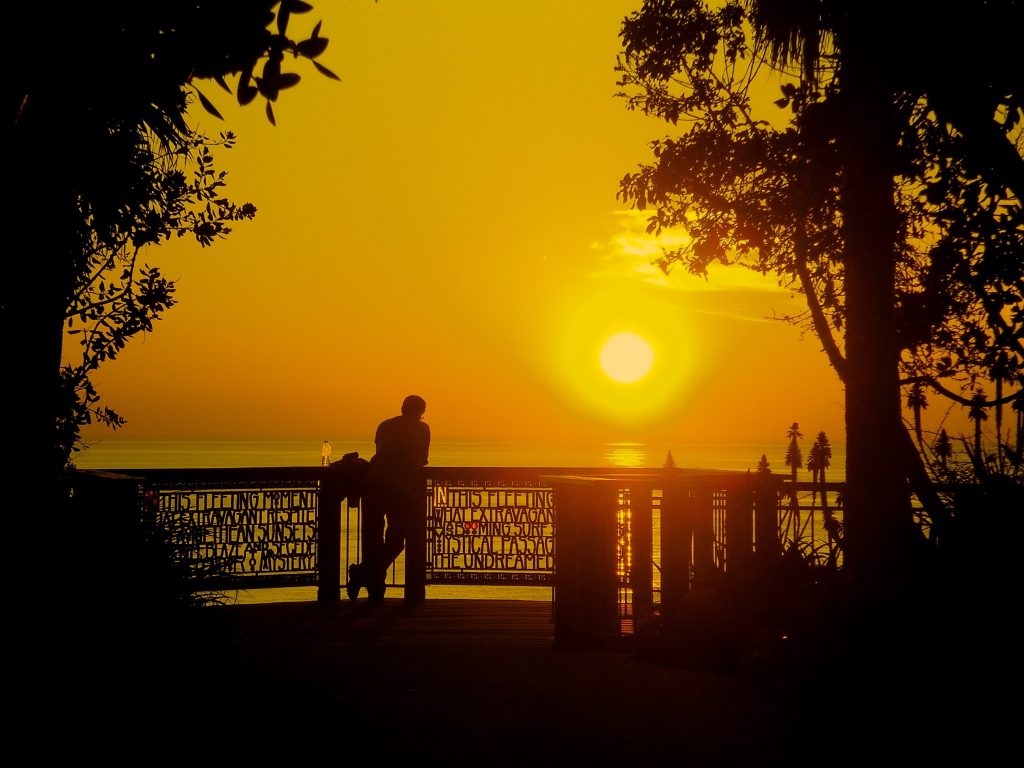
This dude isn’t planning six steps ahead

Since I can remember, I’ve strived to optimize my time. I’ve been using Moleskine Weekly Notebooks for nearly 10 years. Every working day, I write a lengthy checklist of what I want to accomplish. This habit has served me well, keeping me organized and on-track in both my professional and personal lives. Since I work from home, I’m able to alternate my assignments and errands, punctuating the most labor-intensive endeavors (creating a 2020 content calendar) with less-demanding work (writing a letter to my grandparents).

I notice this tendency even when I’m away from my desk—a constant Mental Planner that applauds me for a day well-executed and rebukes me for suboptimal performance. 

For example, I live in a bike-friendly small city and I try and minimize how often I drive. If I set out to go to the dentist, my Planner ensures I make the most of the trip. It reminds me that I have clothes to donate to St. Vinnie’s; a birthday gift to pick up from Passionflower; and a leather purse to retrieve from the repair shop. I’ll set out in my car, optimize my route, and realize I forgot to grab a package for the post office. Dammnit. Despite the relative success of the day—dentist appointment attended, clothes donated, birthday gift purchased, leather purse retrieved—I’ll feel a twinge of regret that I didn’t score 100 percent on today’s drive.

My Mental Planner even lords over trips up and down my house’s stairs, making me more efficient. Full hands up (toilet paper refills, my new canvas and paints), full hands down (empty glasses, fresh dishtowels, the letter I wrote for my grandparents). Again, I’ll suffer a mild internal rebuke if I forget one of these items, even if it “throws off my day” by less than a minute. 

Is this a mundane mental illness—the constant configuring and optimizing of everything I do? Or is it a product of an educational system and country that values me for my ability to be productive? 

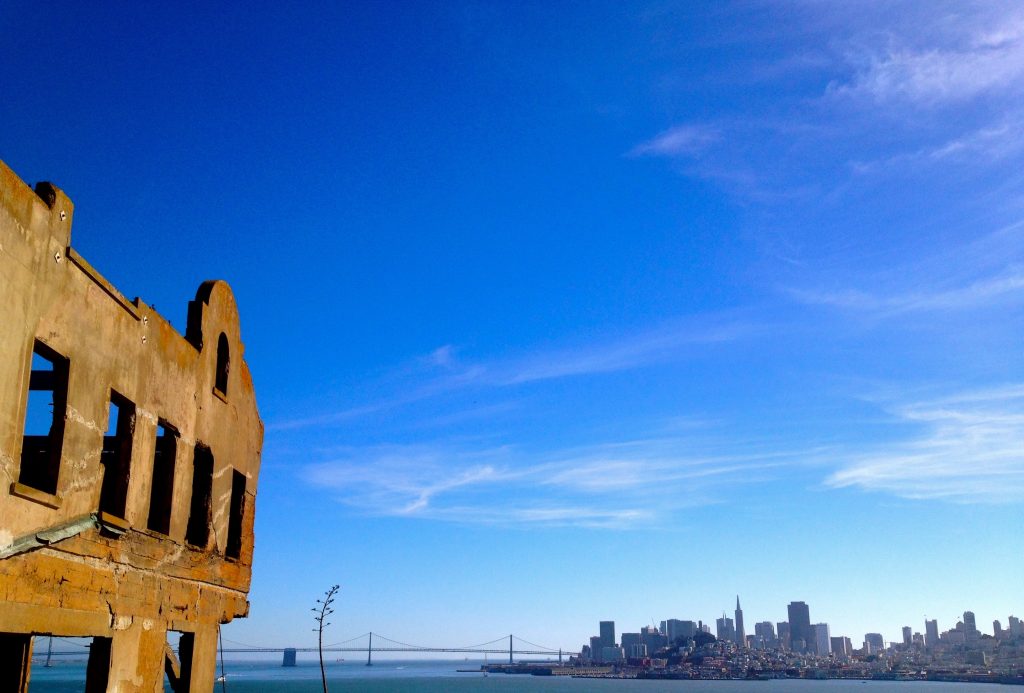
View of San Francisco from Alcatraz

In American culture, being productive is considered paramount to all other qualities. We are workers first, humans next. The success of the U.S. is measured by its economic growth, employment figures, inflation rates, stock indexes, and other metrics that reduce citizens to their ability to make money. We may hear murmurs about public health and quality of life, but these are eclipsed by financial considerations.

By illustration, our public education system is designed to build future workers. My mother and other school teachers have confirmed this. Common Core Standards and “No Child Left Behind” were drafted not to create civic-minded, well-rounded individuals, but rather to churn out a productive and unquestioning citizenry. Math, science, reading, and patriotism are the foundations of future cogs in our economic wheel. Art, music, civics, philosophy, and other courses have all but disappeared in cash-strapped schools across the country.

I was the valedictorian of my high school class. This didn’t mean that I was brilliant; this meant I was the most disciplined, the most obedient. I organized my time well and deferred gratification to do exactly what my teachers asked of me. Kids smarter than I was tended to color outside the lines because that’s what it takes to be extraordinary.

This emphasis on American productivity may have an even darker component. Some argue that the conservative push to control women’s reproduction is to create more fodder for the economy. Cynics in right-wing think tanks are looking at China’s large supply of disposable workers and realizing that our birth-rates just aren’t going to cut it. What better way to make more disenfranchised proles than forcing women to give birth to as many unwanted babies as possible?

And consider this: the social safety net—a given in most industrialized countries—is one of the most controversial issues in our society. Needing help just doesn’t jive with the American mindset. Here, you’re either financially independent or you’re ashamed, no matter what life throws at you. This is especially brutal considering that between 500,000 and 1,000,000 Americans go bankrupt every year due to medical issues—not to mention the skyrocketing costs of higher education and housing, two of our basic necessities.

Being a chronic taskmaster has its upsides, sure: I am a productive person because I set clear daily, weekly, monthly, and yearly goals. But as I mentioned before, this nagging orientation toward planning also can turn enjoyable tasks into chores. In other words, by reducing my hobbies—blogging, painting, reading, hiking, spending time with friends—to items on my checklist, everything begins to feel like work. 

This has some basis in psych research as well. My social psychology professor taught me that if a child likes doing a chore—let’s say she enjoys vacuuming—it would be very unwise to pay her. Because she is fond of vacuuming, she makes an internal attribution to justify her behavior (i.e., she does it because she likes it). If she begins to receive money for the same chore, she begins to make an external attribution. So when she subconsciously processes her reasons for vacuuming, she sees that she does it for the money, which dilutes her internal enjoyment of the task.

To avoid making everything feel like work, I’m learning to control that tyrannical Mental Planner and stop being so hard on myself. Despite my American upbringing, life is not a productivity competition or a race. It’s more of a steady hike up a tall mountain with incremental gains and occasional setbacks. I might sprain my ankle, but it will heal with time and patience. 

And on that mountain—with its gorgeous vistas and valleys, false summits and winding trails—I’ll acknowledge the fault-finding Mental Planner, let her pass by, and just feel present. Because in the immortal words of Ferris Bueller, “If I don’t stop and look around once in a while, I might miss it.”

The Beauty of Asking Your Enemy For a Favor

Do you remember your most stressful, thankless, low-paying job? The type of miserable work that felt as useless as polishing firewood and made you drink way too much cheap wine? I do. I worked as an addiction specialist in a San Francisco methadone clinic for two years.

When I first moved to the city, I was in my 20s, fresh out of four sublime years living abroad. I’d studied psychology and sociology and was interested in putting my education and international experience to good use. I had no idea that these weren’t the tools I needed to help people struggling with addictions.

I worked from 7:00 am to 3:30 pm on weekdays. Since the pay was low, the staff all clamored to work holidays and weekends for time-and-a-half. I had a caseload of over 50 clients. It was excruciating trying to get each of them to sit down for the state-mandated 90 minutes of counseling per month. 

“What do you know, blondie? You aint never been no addict,” an older client barked.

“My wife is jealous that I get to talk to you every month,” another sneered, licking his lips.

Of the 50, I had about 10 who were interested in detoxing. They would ask for city resources or want to talk about their difficult childhood, their service in Vietnam, or even Carlos Castaneda books. Others were still actively using and would sometimes come into my office completely out of their minds. 

One morning, my client—let’s call him Danny—came roaring into the clinic screaming obscenities and throwing whatever he could get his hands on. Other clients scattered as chairs, pamphlets, and our main bulletin board went flying. Dr. K (my boss) tried to calm Danny down. I was watching from my office doorway and could smell Danny’s soiled clothes from 15 feet away. His pupils had completely consumed his irises and his wild-eyes darted around the clinic. My knees began to shake and I avoided eye-contact.

Since we drug-tested clients regularly, I knew Danny was quite fond of speed, but it could have been any combination of drugs coursing through his veins, making him psychotic.

Dr. K and our security guard finally got Danny to leave, who bellowed his garbled intentions to exact revenge on us all. The staff and I breathed a sigh of relief and laughed uncomfortably at the lunacy of this job.

A couple of hours later, I took my lunch break and was walking north on quiet Steiner Street, trying to avoid the rush on Fillmore. Suddenly, I heard someone running up behind me with clumsy heavy steps.

Oh fuck, I thought. I know exactly who this is. Danny jogged up beside me, looking me up and down with his wild eyes. He had an open can of SpaghettiOs in his hand and was shoveling finger gouges of the thick red sauce into his mouth, which dribbled down his chin onto the front of his soiled jacket.

To my own surprise, I smiled at him and said, “Danny! Oh my God, thank you. I’m so grateful you’re here. This isn’t the best part of town. It’s kind of dangerous actually. Would you mind escorting me to the Walgreens on Fillmore?”

His eyes widened and he smiled with delight, putting down the half-empty can on the curb and licking his fingers.

He took his new security job very seriously. As we crossed Post Street, Danny sprinted out 20 feet in front of me, swiveling his head in search of cars and spreading his arms wide, shielding me from traffic.

“Come on, Jocelyn! It’s safe!”

As we got closer to our destination, he kicked some broken glass out of my footpath and indicated I should walk around it. When we got to Walgreens, I told him, “Danny, thank you so much. I was really worried about that stretch of Steiner and you made me feel safe. I’ll see you tomorrow?”

The beauty of this story is that even when we’re enraged or out of our minds, at our core, we just want to feel useful, loved, and connected to others. 

This reminds me of a theory I learned in one of my psychology classes: the “Benjamin Franklin Effect.” The basic idea is that if you want your enemy or opponent to like you, ask them for a favor. 

The story goes that Franklin had some political rival and wanted to thaw the relationship, so he asked the man if he could borrow a book. When the rival granted that favor, he felt a sense of usefulness and connection.  Although they’d been fierce opponents, after asking for a favor, the tension melted and they became friendly. 

Also, the rival’s kind behavior toward Franklin, a political enemy, produced cognitive dissonance—a mismatch between one’s behavior and emotions. The theory goes that it’s very uncomfortable to have a mismatch between one’s external and internal worlds, so we change one to fit the other. For the sake of internal harmony,  the man ditched his negative emotions toward Franklin to align with his positive prosocial behavior. 

Overall, when we treat people well and rely on them, they feel good about being needed and connected. 

So ask a favor of that awful coworker or your judgmental mother-in-law! You might develop a closer relationship. And at the very least, you’ll give them a raging case of cognitive dissonance.  

Not a Missile, Just a Zealous Kiss

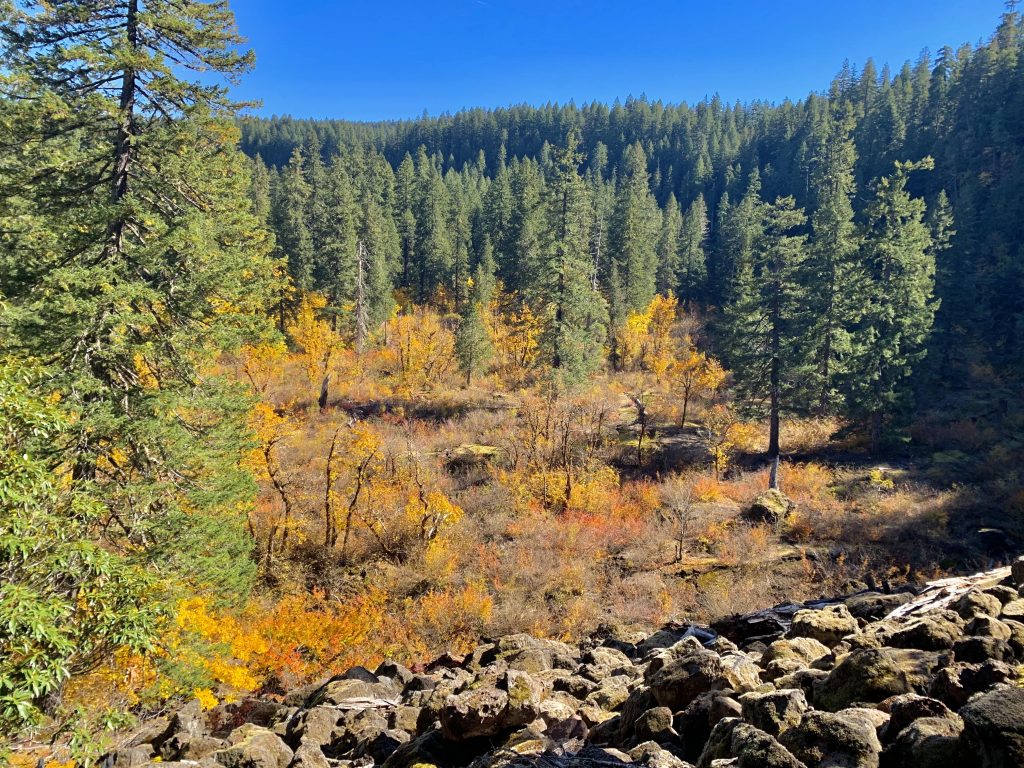
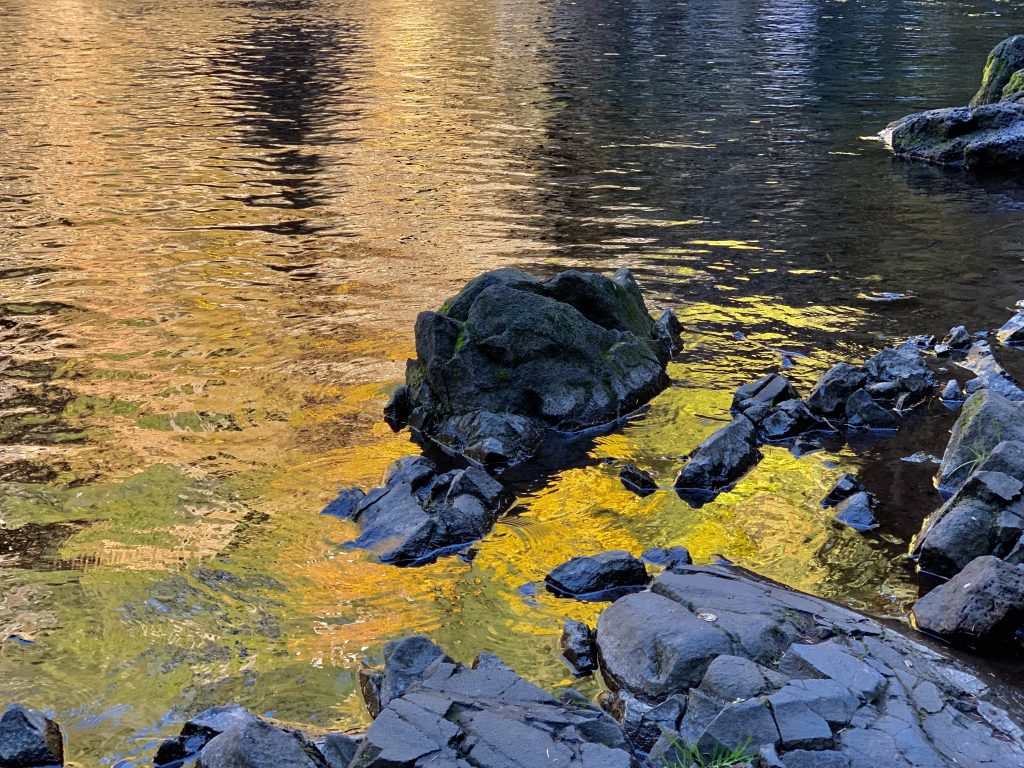
Tamolitch Blue Pool (Central Oregon)

When I decided to get married, I wanted to ensure I was bringing the best version of myself into the partnership. During my bachelorette party, I asked my closest friends what personal flaws I should keep an eye on and try to improve. One of them pulled me aside and revealed that sometimes I take things too personally. I grimaced and recoiled from this revelation. I absolutely do take things personally and although I knew it, having one of my best friends point it out in a loving way helped to diminish my defensive impulses.

I grew up with a single mom school teacher and modeled myself after her diligence, conscientiousness, and a borderline-perfectionist orientation to detail. (Let me put it this way: if God Herself had a font, She would model it after the flawless lettering of Mary Minerman—both printing and cursive.) 

My desire to excel and improve myself was mainly good, but it did have its drawbacks; I once revealed to my fourth-grade teacher that my greatest fear was getting bad grades. I even remember the moment when I started thinking of myself as “the smart kid.” It was a year after we’d moved to Laguna Beach and we were learning fractions in Mrs. Clapp’s third-grade class. She wrote three figures on the board: 1/2, 2/3, and 3/4. Without sketching any handy pie charts, she asked us which of these was the largest.

The most popular girl in the class raised her hand and said one-half was the largest because halves were bigger than quarters or thirds. I raised my hand and said three-quarters was the largest, reasoning that while each fraction was missing only one of its pieces, a quarter was the smallest piece missing, and therefore it was a more complete pie. 

The teacher wrote our names next to our guesses and took a poll. Most of the class believed that the popular girl had the correct response. After all, a half is larger than a quarter. A few brave souls raised their hands in support of my reasoning. When Mrs. Clapp revealed that I—the new kid—had the correct response, I beamed with pride. More important than having the right answer was the fact that I’d finally found my place in the social hierarchy at Top of the World Elementary School: I would be “the smart kid” and I would work very hard to maintain that status.

I always thought I was pretty good at hiding my insecurities as a child, but I had my perfectionist tells. If I said something socially awkward, I would ball my fists and buckle my knees, as if this internal pressure would help diffuse the external tension. I usually would think of something more clever to say later and repeat it over and over to myself to ensure I wouldn’t make the same social miscalculation. Should that topic of conversation arise again, I would be ready with my immaculate line.

I think my tendency to take things personally arises from my self-imposed quest for perfection. If someone offers criticism, it makes me feel further away from my (admittedly impossible) ideal, but this is the wrong way to receive information from the world. Why can’t I accept legitimate feedback as a learning opportunity instead? 

When my friend told me I took things too personally, something changed. Now when I feel the sting of defensiveness rising in my throat or bringing a flush to my cheeks, I put my impulses in check.

Last week, I even came up with a little mantra. I was on a hike to Tamolitch Blue Pool along central Oregon’s McKenzie River. It was a clear fall day and the valleys were bursting into vibrant fiery shades of yellow, orange, and red. Although I normally hike with podcasts, the environment demanded the undivided attention of my senses and I went without headphones. As I rounded the corner toward the turquoise pool, a large insect flew hard straight into my face. 

“What the fuck? Why did that insect just try to kamikaze me?” I said indignantly, totally breaking my zen. I stewed for 30 seconds as I rounded the trail along the cliffs, climbing down toward the water’s edge. 

I sat down on a cool boulder and looked up at an amphitheater of fall color and down into the cerulean depths, where yellow reflections gently swayed. I thought to myself, Wait a second. What if that insect was just trying to give me a hello? Slamming into my face is its only way to get my attention. It wasn’t a missile; it was just a zealous kiss.

This new perspective has implications beyond the aggressive insect, of course. What if I viewed all of life’s misgivings, errors, and difficult lessons as zealous kisses rather than missiles? I no longer have to take something personally if I assume the best intentions of others or accept the message as a benign teaching moment.

Thinking that my new mantra was brilliant, I shared the story with my husband.

He asked me earnestly, “Don’t you think that mantra is a little rapey? I mean, a zealous kiss?” 

Ugh, “rapey?” What the fuck. Why can’t he just appreciate my mantra? I took his feedback as a benign teaching moment and laughed to myself: I like the way “zealous kiss” rolls of the tongue, even in this post-#MeToo world. Bless his heart for having that reaction.

After all, my husband’s perspective wasn’t a missile; it just was a zealous kiss.

My Broody Little Doughboy Just Wasn’t That Into Me

I was dumped several times while I was living in San Francisco. To heal, I’d typically enjoy a few wine-drenched nights with friends and leap back into the dating scene with gusto. I’ve only suffered one real broken heart in my life.

It started with OkCupid. For those of you unfamiliar with the service, it beats the hell out of locking eyes with a stranger at the bar and taking several months to realize that the hottie you’re dating is an angry alcoholic or worse—a closeted Trump admirer.

OkCupid boasts several advantages over Tinder, which I hear is popular with the lusty kids these days. Both services offer several user pictures—Joe with arms outspread in the Grand Canyon (OUTDOORSY), Joe reading “War and Peace” under a tree (INTELLIGENT), Joe riding a four-by-four during a friend’s bachelor party (ADVENTUROUS), Joe in his hilarious Miley Cyrus “Wrecking Ball” costume (FUNNY), Joe holding a baby human with the word “niece” or “nephew” in bold (NURTURING), Joe with a coterie of ethnic children where he volunteered for five days to build a school and get drunk with other do-gooders (SELFLESS), etc.—but OkCupid has the advantage of featuring lengthy profiles and questions which gauge people’s compatibility on multiple levels. In other words, the more questions someone answers, the more likely it is that they’ll get matched with people with similar morals, political leanings, personalities, interests, and other ingredients in the secret sauce of relationships.

In February 2011, I’d just been broken up with by a 23-year-old with the self-described “Belgian gift” (i.e., well-endowed), but I’d gotten back onto OkCupid within the week. Little did I know, user SFZinfandel would reach out and delight me with his wit. SFZinfandel had contacted me before I deactivated my account to enjoy the aforementioned Belgian gift, and apparently he’d held a candle for SFSwampDonkey (me) for all of that time! Let’s call my ex Richard, or “Dick” for short.

Dick and I agreed to meet at the Cafe Soleil in the Lower Haight. He chose the cafe because it was across one of the best Thai food joints in town—my favorite cuisine!—and he thought that if things were going well over beers, we could scoot over there for dinner. It was also just around the corner from his place, which accommodated his (initially endearing) lack of athleticism.

He worked DreamWorks—swoon circa 2011!—and was incredibly intelligent and funny. In addition to his mad computer engineering chops, he explored his sensitive side by writing songs and playing the guitar. He had blue-green eyes and tousled light brown hair. Apart from some minor tooth discoloration and a rather doughy programmer’s body (i.e, dad bod), he was very good-looking. We couldn’t stop talking and we ended up having a four-hour first date. (Note: If that’s not already a Tim Ferris book, it should be.) After an awesome night and a goodbye smooch, we decided pretty quickly to deactivate our OkCupid accounts and give this thing a shot.

Over the next couple of months, we spent nearly every night together. I lived in a shitty SRO studio in Russian Hill with one room and a small bathroom, which cost $1,200 per month. At least it had an amazing view of the Golden Gate Bridge. I’d usually cruise over his direction into the Lower Haight where he shared an awesome cornflower blue Victorian duplex above a classy marijuana dispensary. As we grew closer and started spending more time together, I grew very fond of watching Dick practice his original songs with a little Death Cab For Cutie thrown in for good measure. I’d lie on my stomach across his bed and stare adoringly into his eyes while he’d sing “I’ll Follow You Into the Dark” or practice Muse’s “Plug In Baby” guitar riff. He’d been in a men’s a cappella comedy troupe at UPenn and he had an incredible voice, although he’d break into a broody, feminine shriek when he’d reach his favorite parts of songs. But that was just his passion! He was an artist, dammit!

We’d attend every Tuesday night open mic at Red Devil Lounge, often staying out until 1:00 or 2:00 in the morning. I was working as an addiction specialist for Westside Community Services, where I started counseling patients at 7:00 am. Let’s just say that on Wednesday mornings in 2011, I wasn’t always at my finest or most attentive, but it was worth it!  I didn’t care. My boyfriend was a performer, and he was amazing! We’d always have a mini-crew of our friends at the RDL and enjoy an awesome night, tossing back cheap beers and well drinks until last call.

Our relationship progressed very quickly. His mom flew us out to Medford, OR where we spent a lovely weekend exploring wine country and kayaking down the Rogue River; we dropped L-bombs within a couple of months; we shared a bag of shrooms in Alamo Square Park and I helped him through a rough trip; I saved up my paltry counselor salary and treated him to a weekend in Carmel for wine-tasting and delicious food; he came to my family Thanksgiving in San Diego where all of my aunts, uncles, cousins, and grandparents were in attendance. His mom and brother even joined us! I also had ditched my overpriced apartment in Russian Hill for an affordable room in the Lower Haight with some amazing roommates. I made the move so I wouldn’t have to traverse the city every evening to see Dick, sure, but I was also much closer to my work in Western Addition.

Things were going great. Romance. Poetry. Music. Watching Arrested Development in bed. At least I thought they were going great. We’d been achieving all of these milestones—plenty of family time, saying “I love you” constantly, spending nearly every day together—but I was in for a horrible awakening.

My mom and I have a tradition of taking an international trip every other Christmas. We’d decided to explore New Zealand for two weeks, and I was ecstatic to finally visit the Real-Life Shire where oenophiles and foodies mingled with marathon hikers and adrenaline junkies. We drank sauvignon blanc, ate green-lipped mussels, and explored the south island’s many lakes and world-class hiking. Halfway into my trip, I noticed that Dick had been weirdly incommunicado. I didn’t want any unsubstantiated worries to kill my NZ sauvignon blanc buzz, so I wrote a witty, affectionate email. His response was strangely detached as if a distant friend had written it.

Uh oh.

I decided to not let it ruin my trip because nothing was for sure, but I wasn’t really feeling myself by the time my mom and I got to Milford Sound. We were indulging in some of the most beautiful scenery in the world, but I couldn’t quell the pit in my stomach and the feeling that something was really wrong in my relationship.

My mom and I flew back to California on December 30th. We had a grueling, multi-stop journey which we rather enjoyed because it was on Virgin. (Fog machines. Purple light. Plenty of movies. They’re the best.) For the last leg of my trip, I had to sprint from LAX’s Terminal 1 to 3 with my massive backpack to make my connecting flight to San Francisco. The Virgin America folks initially told me that I was shit-out-of-luck because the flight was leaving in 15 minutes and there was no way I’d make it through security. With a little smooth talking, I got the clerk’s manager to escort me personally through security to ensure that I could get back to SF and see my boyfriend for the first time in 16 days. Traveling with mom was great, but I was craving some lovemaking with my broody little doughboy. I was especially excited about the New Years Eve party at Dick’s house planned for the following night.

When I arrived in SFO, I turned on my phone and texted Dick immediately, “Hey! Barely made my last flight and can’t wait to see you, love! Where can we meet?” Several minutes later while I was on BART back into the city, I received a curt response: “Hey. Bro-face is in town. We’re hanging tonight.”

I’d been gone for 16 sexless days and he was opting to hang out with his brother during my heralded return to the city from an exotic kiwi adventure? What the fuck, Dick? That night, I spent time with friends who actually wanted to see me and hear about my trip. I began to suspect the worst, but nothing could really prepare me for what happened the following day.

Dick arranged to grab coffee with me on the afternoon of New Year’s Eve. It was sunny and we walked to Duboce Park and watched ecstatic dogs frolic through the grassy knolls. The whole exchange took maybe 20 minutes. He broke up with me without offering a reason and gave me a small box. He was unable to articulate why he took a meat cleaver to my heart that day and left me there to ponder the news. I walked tearfully back to my house which was now three blocks away from his.

I unwrapped the small token of alimony from Dick—a late Christmas gift. It was his old iPhone box with an Apple gift card containing exactly the amount of money I’d need to upgrade my old, janky Blackberry to an iPhone 4S. (Suffice it to say I was a late tech adopter.)

Rather than attending the New Years party in Dick’s Lower Haight Victorian, I went to an awesome soiree with people who would become my best friends in the city. I slipped into the bathroom countless times to cry my eyes out. I looked like a drunk blond raccoon by the end of evening, but I’d survived the insult of a baseless breakup. I was going to move on! It was now 2012 and I was going to turn over a new leaf, recovering with the support of all of these wonderful people. With enough booze, cigarettes, dancing, and kind words from friends, I almost forgot what had happened to me. That was until I was slingshotted into despair the following day.

I woke up utterly hungover in the early afternoon of New Years Day. I started sobbing, remembering that Dick had broken up with me and I’d no longer get to feel his broody little doughboy body against mine. In an act of self-destruction, I decided to check Dick’s Facebook. I’d half-expected that in his abysmal grief, he’d skipped the NYE party at his own house to weep and look at pictures of us, and it comes as no shock that this was not the case. One of his best friends had posted countless pictures of Dick surrounded by beautiful women with a huge smile, looking like he had just won a Grammy or Bachelor of the Year. He looked thrilled and ecstatic, surrounded by the people I’d called friends for the previous ten months. I was absolutely crushed, and after ten days of drunk/stoned anguish, I thought that sending him a sweet, forgiving email would somehow bring me relief:

1/10/12, 8:13 am

Dick,

Your Christmas gift was very generous. The phone will make my life easier, more enjoyable and infinitely more stylish. It’s one of the best presents I’ve ever received and the orange case was a thoughtful touch. Thank you so much.

I’ve put a lot of thought into what happened, and from what I’ve gathered, you need time and space for personal and professional growth, and your decision to change careers in particular has been weighing heavily on you. When you stopped working in July, I was hoping that the fear, negativity and uncertainty wouldn’t spill over into other realms of your life and I wanted to support you through this transition. 

I celebrate many aspects of our time together: creating delectable dinners and brunches; gazing into each other’s dilated eyes; enjoying in-depth conversations; cuddling up and giggling to Arrested Development; toothpasting each other’s toothbrushes; connecting with each other’s friends; and the list goes on. I felt strongly that the relationship was moving in a positive direction since we had so much fun not just together, but also in the company of our family and friends. I reflect back on what I loved about our time and how I grew, all of the things you taught me, the music you played, the trips we took and the feel of your touch.

I know that what we have is real, and I wish with all my heart that our timing and communication could have been better, that we could have slowed things down. Because I love you, I forgive you and want you to know I’m here as a friend if you need anything during this difficult time.

You’re an incredible person. Never forget that.

Hee haw,

Jocelyn

Here’s how he responded:

1/10/12, 9:32 pm

You were endlessly supportive of me, unabashedly loving, unabatedly positive, and I was so confused why, with all the happy moments and all your devotion, I should continually feel lacking — not undeserving of your love, just… lacking, in my own right. It took a while to identify that feeling, and to understand why I felt it. Without the self actualization of identifying myself with a true occupation, I felt like I had no personal foundation on which to support my own self worth; and with my mind so consistently preoccupied with decidedly unsexy thoughts of bugs, algorithms, and software architecture, I felt incapable of the mental capacity I expect from myself in a meaningful relationship, in the kind of relationship I would want.

That’s what we call a San Francisco dump, engineer-speak for “I’m just not that into you.”

A few months after we broke up, he posted an intimate picture on Facebook. It was of him, his best friend “Ron,” and a fluffy white dog. It’s one of the most adorable and gayest pictures I’ve ever seen. It reminded me of when we were still together and I witnessed Dick and Ron in a playful sexual pantomime in their living room, an act which lingered a little longer than a joke. They enjoyed toeing the line of gay ambiguity, but I don’t think that was really it; he just wasn’t that into me. And that’s cool.

In any case, it was one of the worst experiences of my life. Being dumped hastily and unexpectedly on NYE after a two-week international trip followed by a large FB photo collection of my ex surrounded by gorgeous women at a party I was supposed to attend was CRUSHING. Did I mention that I developed a gnarly lung inflection from a mold in my new Lower Haight house, the one I’d moved into to be closer to Dick? I had a productive cough for months, which was so bad, it caused one of my coworkers at the clinic to complain that I might infect everyone. I was also managing a caseload of nearly 50 clients at various stages of recovery from heroin addiction. It was a supremely stressful, awful time.

So to the women and men out there who are unhappily single or in the midst of an awful breakup: fuuuuuck. I felt that pain for many miserable months. After five years, I’ve finally been able to write about it. And even laugh about it. My friends and I all remember the fateful day that we were playing volleyball in the Panhandle. Dick hit the ball up into his own face, and it was glorious. That’s how I’ll always remember him.

My Home Offline: Could You Live Without Wifi?

Our cottage near Amazon Park in Eugene, OR

[Written two hours ago from my cottage]

I’m sitting in a rocking chair by the glow of the fire, listening to the logs crackle and fingers tap-dancing across my laptop keys.  The living room window is flanked by a towering case of my favorite books and a Taylor guitar. I see thick snow clusters floating down outside into our garden. I sway my head gently to Macy Gray’s new album, her sensual voice an homage to her roots in jazz. I am utterly at peace because when I’m here at home in Eugene, OR, I’m unplugged from the world.

When I say ‘unplugged,’ let me be clear: not only do I lack internet and cable in the cottage, but I also haven’t had a cell phone plan since 2014. I’d dropped my carrier initially to move to Argentina for 10 months and I never found a reason to reactivate. My friends, family, and employer have long-since grown accustomed to not being able to reach me 24/7; they appreciate that I’ll respond once I’m online at a local cafe or a public library. And with wifi now ubiquitous throughout much of the world, it’s not difficult to find a connection when I need one.

From 2010 to 2014, I lived in San Francisco—ground zero for technological innovation. I loved the city, but I felt overwhelmed with my cell phone constantly at my side. Crushed by information and saturated with media. A gnawing feeling that my attention and time were never really mine to control and that I could be thrust forcibly into the infinite at any moment. The same feelings that people try to escape through digital detox camps and the like.

We’ve all been down that rabbit hole: the one that leads us from a text message to a Facebook vacation photo in Cambodia to a Google search for the name of that pink temple in Angkor to a Wikipedia article about the ancient stone making up the walls to a text message response, and so on. Seven minutes gone. With connectivity comes the possibility of continuous distraction—the pestering flak of text messages, pop-up notifications, electronic calendar reminders, and emails. Oh, the emails.

Constantly drowning in information without limits was taking its toll on me. I never seemed to have enough time to do the things I really wanted to do, the things I’d always included in my New Year’s resolutions: reading more books, playing the guitar, gardening, hiking, cooking for my friends, and writing for pleasure. Now when I come home, those are the only things in front of me, the welcome embrace of my chosen pastimes.

Free from text messages.

Free from checking email.

Free from pop-up notifications.

Free from Google news headlines.

Free from Twitter outrage.

Free from self-aggrandizing Instagram posts.

Free from Facebook check-ins.

Free from Netflix binges.

Free from self-promotion and distractions.

I can breathe again.

When people ask for my phone number, I have to explain that I don’t have one, which usually leads to a lengthier discussion about my lifestyle. Here are some answers to common questions I get about my disconnected home life:

How do you keep in touch with people?

The same way most people do: email, iMessage (for my fellow iPhone-users), WhatsApp, Facebook messenger, Skype, Instagram, etc. I even write letters by hand. I learned that our modern means of communication are not only plentiful but redundant. As tech companies compete for greater market share, there’s never a shortage of cheap, convenient ways to communicate with other people. The difference is that I have access when I choose.

What if somebody is running late and needs to contact you?

I deal with this the same way we all did pre-smartphone: I wait, usually with a podcast downloaded for offline listening. I’ve also noticed that people tend to make more of an effort because they know I can’t be reached; in SF, friends would sometimes cancel at the last minute or text about being late, as if the ability to communicate instantly with me diminished their accountability. That never happens anymore.

What if you can’t find an internet connection?

When cafes and libraries can’t be found, there’s always a Starbucks or McDonalds nearby with open wifi access.

What about all of the useful apps?

When traveling, I’ll download offline Google Maps, Yelp recommendations, or Trip Advisor lists prior to setting out for my destination. I spent most of 2015 road-tripping across the US and had no problems with this strategy.

What about emergencies? What if there’s a global disaster?

If it’s something pertinent to my local community, one of my neighbors will certainly knock on my door. If it’s not, there’s probably nothing I can do about it and I’ll find out soon enough. Dwelling on crises doesn’t help anybody. Case in point: one of the best decisions I ever made was to spend the entire 2016 election day hiking to various waterfalls in central Oregon, totally off the grid. Would it have been better for me to watch the ill-fated polls all day? No way.

What about your work?

I’m managing editor of Sechel Ventures LLC under two fantastic mentors. I’m grateful to have worked for this company for two years. My bosses are aware that they can’t always reach me and have faith that my ability to recharge offline at home ultimately improves the quality of my work. Plus, if the French can pass a ‘right to disconnect’ law establishing off-duty employees’ power to ignore work emails, I’m sure a similar rule could benefit many overworked Americans as well. (Not that it would ever pass in this anti-labor/pro-business country which has yet to establish maternity leave protections, a decent minimum wage, or solid PTO laws.)

What about news stories and other online reading? 

I’ll load important reading onto my computer before heading back to the offline sanctuary. On a related note, I’ve always preferred periodicals to newspapers, films to cable TV series. When people take more time to produce something, it broadens the scope and improves the quality. Minute-by-minute media coverage is chewing gum for the brain.

What about Netflix?! What about other great TV shows?!

I get this question a lot, and yes, I’m probably missing out on some popular culture here, although for my must-sees like Samantha Bee, John Oliver, and South Park, I’ll stream them on my computer at the Bier Stein, a local beer bar within walking distance of my cottage with 26 rotating taps, delicious food, and fast wifi. There are worse ways to consume media.

This lifestyle isn’t for everyone, and there are certainly times when I wished I had web or phone access and didn’t. But for me, these sporadic nuisances can’t outweigh the freedom to focus on what’s really important to me: the simplicity and peace of mind at home.