Call-Outs Are Cathartic—But Affirmations Are Persuasive

For much of my life as a writer, I’ve been a fire-and-brimstone critic. My favorite targets these days are elected Republicans, whom I consider to be existential threats to women, people of color, the LGBTQ+ community, immigrants, and non-Americans. It feels as if most conservatives want me to shut up, embrace God, wave my American flag, support the police, submit to my husband, and make lots of white babies

There’s a lot to fight against in those assumptions! And I’m beginning to realize that this flat, simple characterization of my political opposites may be cathartic—but it’s not persuasive or useful. 

Denunciations are black and white—affirmations are more nuanced
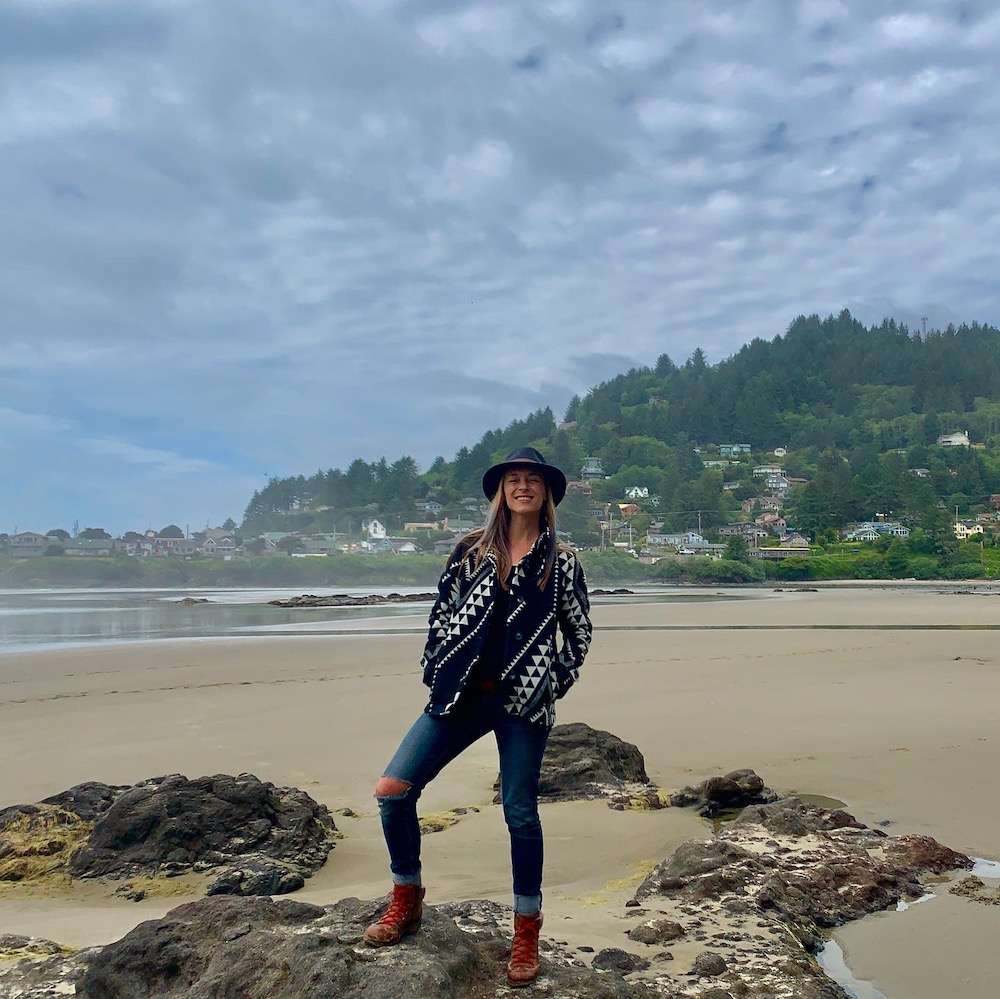
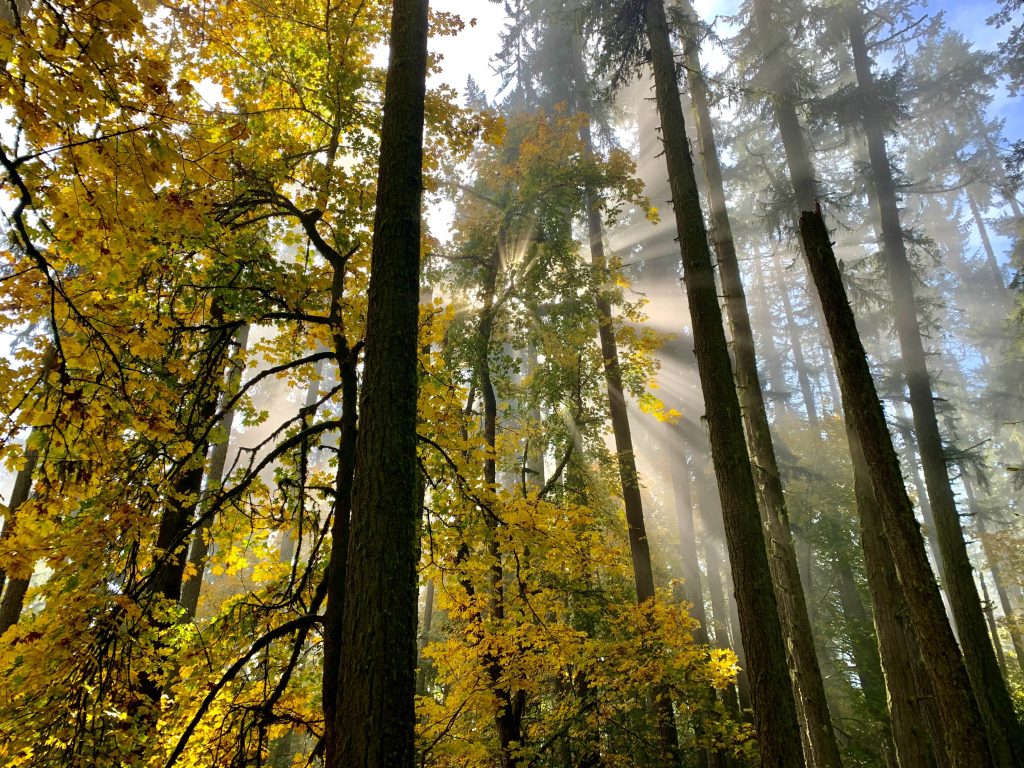
(Yachats, Oregon on 9/11/2021, “Statue of Liberty”)

This toxic polarization of the U.S. is an excruciating cancer within our society. We suffer a media landscape that thrives on feelings of indignation. As Facebook’s research has shown, angry clicks are the key to engaging our attention. And with so many local networks failing or being gobbled up by conglomerates such as Gannett or Sinclair, struggling outlets are left with little choice than to go for someone’s jugular. There are no repercussions for stirring Americans into a fevered frenzy on the right or the left—and if news organizations don’t get people’s attention, they’re outperformed and they die.

None of this is conducive to civil society, which is built on discourse, empathy, honesty, compromise, and non-judgment. Our collective condemnation of leftists or right-wingers stultifies the soul of our country—and I want to change that within myself. 

Here’s the thing: Every denunciation can be expressed affirmatively, painting a picture of my ideals rather than shooting down their antitheses. It’s more difficult to build a vision than it is to knock someone else’s down, but it’s much more effective.

Criticism makes folks clam up, retreat, withdraw, and prepare their defenses. Calling people out doesn’t change hearts and minds but it causes them to dig in their heels and bite back. I may think that someone’s views are reprehensible, but unless I present a positive alternative with room for discussion, we remain at a hardened impasse with mutual animosity.

The most powerful progressives throughout history have mastered this technique: Mahatma Gandhi, Ruth Bader Ginsberg, Martin Luther King Jr., Barack Obama, and others have a gift for expressing the world they’re trying to create rather than simply denouncing their opponents. They have more universal appeal than figures I also admire such as Malcolm X, Gloria Steinem, and Alexandria Ocasio Cortez—folks who are known for attacking racism and misogyny head-on. 

Don’t get me wrong: I adore leaders known for their eloquent take-downs of autocrats, bigots, and liars, and I believe their statements will age well because they’re on the right side of history. But in day-to-day dealings with those with whom I disagree, embracing a firm, positive expression of my ideals is more compelling. 

As an exercise, here are some of my beliefs expressed as prickly call-outs and reframed as affirmations:

My call-out: “Elected Republicans are racists. Just look at their virulent attacks on Black Lives Matter.”

My affirmation: “The economic prosperity of the United States was built on the institution of slavery. We’re only a few generations removed from that inhumanity and we still live with the noxious effects throughout our systems and society. Harvard’s School of Public Health found that Black folks are three times as likely to be killed by police than whites. Black Lives Matter is a necessary response to these inequities and injustices. It’s not an anti-white movement—it’s anti-racism, and I support that.”

My call-out: “Elected Republicans are racists. Just look at their defense of Confederate monuments.”

My affirmation: “Many Confederate statues in the United States were built during the Jim Crow era to reassert white supremacy. We don’t need public sculptures of incendiary figures to remember their place in history. The South has many people more deserving of public monuments. For example, Robert Smalls from Beaufort, SC was born into slavery. He stole the Confederate ship CSS Planter, freeing his family and crew. He eventually founded the Republican Party of SC and was elected to the U.S. House of Representatives during the Reconstruction era. He’s a hero we all should know and celebrate.”

My call-out: “Elected Republicans are cheaters. Just look at their targeted voter suppression tactics.”

My affirmation: “We need to support making voting easier because everyone’s voice is important. The International Institute of Democracy and Electoral Assistance just added the U.S. to its annual list of backsliding democracies. We need to turn that around. It’s unfair that some folks—especially in predominantly Black areas such as Union City, Georgia—have to wait in line for hours because there are too few polling places. My state Oregon has automatic voter registration at the DMV and universal vote-by-mail. As a result, we have one of the highest voter turn-outs in the nation. Implementing that model across the country would facilitate access to the ballot—a right enshrined in the American Constitution.” 

My call-out: “Elected Republicans are misogynists. Just look at their anti-abortion views.”

My affirmation: “Forcing a woman to be pregnant against her will is an assault on her rights. We should all be able to determine our individual reproductive and medical choices without the intervention of any government, court, or church. Bodily autonomy is the foundation of liberty. ”

My call-out: “Elected Republicans are anti-science morons. Just look at their refusal to support any climate change legislation.”

My affirmation: “Reducing the consumption of fossil fuels will benefit our people and planet. Just as Nixon’s EPA helped to clear the smog from America’s skies and litter from her streets in the 70s, we can lay the foundation for a healthier global future. It also presents a unique economic opportunity as we transition to more sustainable forms of energy, such as wind, solar, and nuclear.”

You get the picture. It’s always easier to say “Fuck those guys,” but in talking to folks about any issue, it’s more convincing to give an impartial assessment, planting seeds in people’s minds about how to create another way. Drawing a vibrant picture of how we can improve upon the society and institutions we inherited is the way forward. 

Also, we must leave the door open for folks to evolve, giving a clear path to redemption for those who have strayed. Rage hardens conflicts and polarizes opponents—dialogue helps to bridge divides and chart the best path for the future.

I’m going to do my best at softening my criticisms and sharpening my affirmations. The clearer I can express my ideals without judging others, the more persuasive I can be.

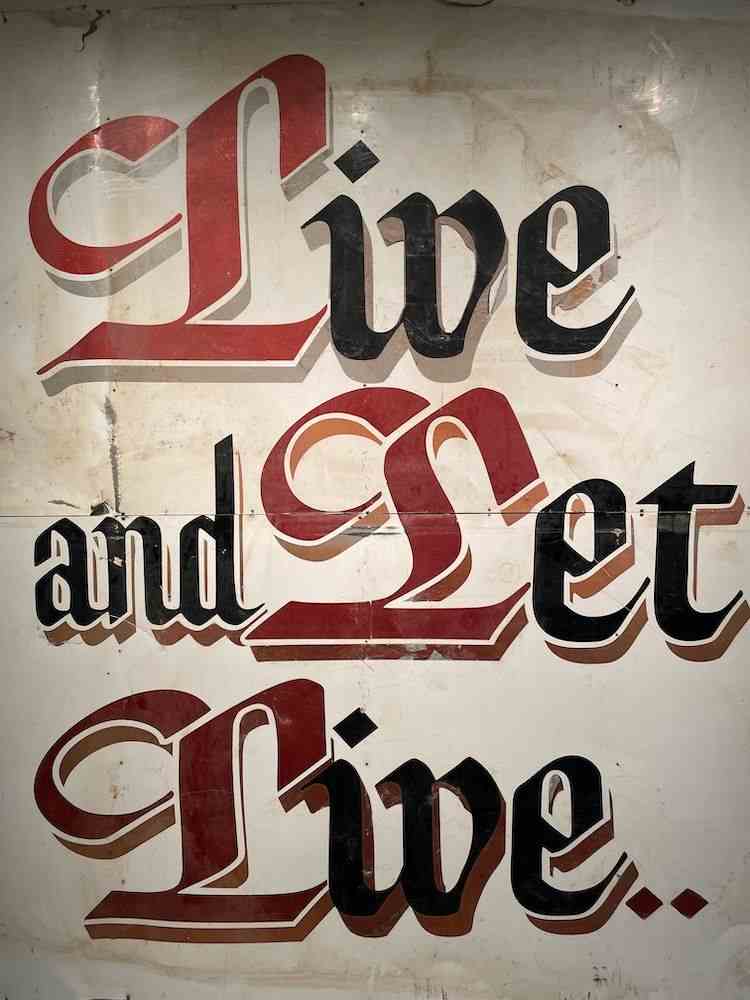
Reno, Nevada (2021). Artist unknown.

Creative Expression or Cultural Appropriation?

Even the most dedicated liberals have an issue that reveals to them the limits of their progressive views. For me, that issue is cultural appropriation, especially with my clothes, jewelry, and art.

Some folks believe that everyone should be free to wear what they’d like. They think that white women can wear box braids or large feathered headdresses at Coachella. Others believe that people should be more considerate with their style, especially when wearing items from cultures decimated by white colonizers, slaveholders, industrialists, and gentrifying yuppies. I’m in the second camp, but I still struggle to define what’s appropriate and what’s inappropriate in practice.

The problem is that white Americans are the apex predators in the hierarchy of capitalism. White culture vultures have gobbled up and commercialized every element of other traditions while actively killing or excluding those who don’t speak like them or look like them. Even as I decry those injustices, however, sometimes I get into trouble for my fashion.

A few months ago, I was wearing my favorite jacket when a white woman approached me in downtown Eugene. She asked if the garment was Pendleton and then proceeded to berate me because the designs had been “stolen from Native Americans.” (Pendleton actually employs Native artists and supports those communities through various funds and initiatives, although it’s true the company isn’t owned by Indigenous folks and has profited immensely off of their designs.) 

My beloved and notorious Pendleton garment

Even though it’s my favorite jacket, I haven’t worn it as much recently. It feels tarnished by that woman’s judgment and a reminder of this country’s ruthless persecution of non-whites. 

Then again, there’s something odd about this dynamic: I’ve noticed that the most ardent gatekeepers of what’s cultural appropriation often are woke whites. I appreciate that woman’s intentions, but I consider her criticism a catharsis of her own guilt. It’s easier to perform a disparaging call-out on a stranger than it is to examine what constitutes respectful creative expression. Or, you know, to actually do something that helps marginalized folks.

The United States is unique in that we are people from all across the globe. We have different levels of remove from our ancestral lands and cultures. We’re all immigrants (or their descendants) on a long enough timeline. That aspect of our country makes me proud—at our best, we’re a microcosm of the world.

Of course, this kumbaya sentiment doesn’t make defining cultural appropriation any easier. Dr. Kelly Chong, a University of Kansas professor, was quoted in Bustle with the most succinct explanation I’ve found:“[Cultural appropriation] is the adoption, often unacknowledged or inappropriate, of the ideas, practices, customs, and cultural identity markers of one society or group by members of another group or society that typically has greater privilege or power.”

But what is the “unacknowledged” or “inappropriate” use of another culture? Sometimes it’s obvious. For example, if a behavior is reinforcing stereotypes or turning a profit for a non-member of that group, that’s inappropriate. So if a white woman travels to Mexico City to learn traditional dishes and then publishes a book of recipes, many would consider that an inappropriate use. 

What if she had lived in CDMX for 15 years? Or 20? Or what about if a Filipino man did the same thing? Or a Black woman? Would it be different since they’re also members of oppressed groups? And what happens when the folks in CDMX  have varying opinions about what constitutes respectful use? Who gets to be the arbiter? 

There are other more cut-and-dry situations that are patently absurd. Anecdotally, I’ve heard of white women with curly or kinky hair being accused of cultural appropriation because they go to Black salons or use Black hair products. Where are they supposed to turn when white stylists don’t know how to deal with their hair or when certain products aren’t up to task? Abusing the term “cultural appropriation” in cases like this is divisive and counterproductive.

And sometimes, art gets swallowed by the flames of these disagreements. Here in Eugene, that’s what happened to the Ritz Story Pole at the Oregon Country Fair. 

Here’s some background: OCF is a 52-year-old annual festival with food stalls, art installations, costumes, music, and other performances. It’s held along “the 8”—a forested infinity path in Veneta, Oregon. It’s colorful, playful, nature-inspired, and mostly a celebration of the Pacific Northwest.

The Ritz Sauna & Showers are where you can bathe nude, enjoying live music next to a large bonfire and vibrant wood carvings. Recently, they hired Pattrick Price, a Tlingit Native from Alaska, to create art for the main space. And every year, the  Ritz “Flamingo Clan” builds and runs the day-and-night spa that keeps OCF folks clean and happy throughout the sweaty, dusty weekend.

Photo Credit: Pattrick Price

In 2012, Ritz director George Braddock and artist Brad Bolton were talking about how to tell the long history of the Ritz through art. Bolton had been practicing formline art for 25 years—a style created by North Coast Indigenous groups.

It took three years of back and forth, but the Ritz finally got the First Nations and the Canadian Provincial Government of British Columbia to select and ship an 8,000-lb. Alaskan Yellow Cedar log to the OCF for carving. The Ritz got the log (and approval) from our northern neighbors because the Haida—the Natives from whom the Story Pole tradition comes—are based off the northern coast of British Columbia. And for several years, hundreds (perhaps thousands) of Fairgoers assisted in the carving of the Ritz Story Pole.

Before approving the raising of the Pole, Oregon Country Fair reached out to several local tribal governments (including the Grand Ronde) but did not receive position statements from any of them. 

The Pole was first mentioned in an OCF Board meeting in July 2012. There was no further mention (according to the publicly available minutes) until September 2014 when logistics were discussed. For several months, the comments about the Pole were unremarkable, apart from an archeological survey that redirected the planned location away from a “sensitive” area.

In December 2015, the OCF Diversity Task Force contacted two local tribe members about the Story Pole project: David Lewis, a cultural anthropologist and member of the Confederated Tribes of the Grand Ronde, and Esther Stutzman, a storyteller and member of the Kalapuya and Coos. Their main criticism was that the placement of the Haida-style Pole was not only cultural appropriation but it was especially offensive to place it on ancestral Kalapuya lands.

Despite these objections, the Story Pole was formally approved by the OCF Board in April 2016. One of the conditions of its future installation was the following: “An informational display addressing the issues concerning the ‘Story Pole’ as Culturally Inspired Art or Cultural Appropriation shall be developed and placed by Fair Operations in the vicinity of the ‘Story Pole’…This display shall have a component whereby people may give feedback concerning the issues pertaining to the ‘Story Pole.’” 

Fairgoers Carving the Ritz Story Pole

The communal carving continued at OCF 2016, but about a year later, the public reception of the Pole had soured. In May 2017, several local Indigenous members had spoken up against the project and the Board hastily rescinded its approval. I recommend reading all of the minutes from that Board meeting, but the following statements illustrate the diverging sentiments on the matter:

Statements in support of the Story Pole:

  • Paul: “When does art not challenge some culture?…This Pole has stainless steel and lights on it. If we are going to respect cultural purity in art, then no Native American or any other culture should have art sold at the Oregon Country Fair.”
  • George Braddock (Ritz Director): “I truly apologize that people were offended by the art we have made for the last 27 years. We celebrate it for its beauty, strength, and its story…The Haida carvers of the Pacific Northwest are without question the best. Why would you not want to learn from the best carvers? Why would you not want to emulate and celebrate the art?”
  • Brad Bolton (Main Story Pole Artist): “I’ve been studying the formline style for the last 27 years. Both Natives and Anglos alike have said they like the art. I have [meant] no disrespect by these carvings. It tells the story of the sauna. We are not claiming we are Natives…The Fair is of the ‘60s and it was about cultural sharing. We reached across lines of race and culture and became brothers and sisters. To see this divisiveness makes me really sad.”

Statements against the Story Pole:

  • Erika: “I am an Indigenous woman from South America…what we see is that the Board and the family at the Fair need an emergency cultural competency class. There is the need to understand white privilege. It is not our job to come and teach you.”
  • NisaJo: “[White supremacy] is an institutional view that white people have by their birth some kind of privilege and rights, and experience the law differently than others. . .This time, this place, we stand on the side of our Indigenous brothers and sisters.”
  • Ada (Siletz Member): “I want to say thank you so much for listening to your Indigenous community members who drew a boundary and were firm about the distinction [between] creative expression and cultural appropriation.” 

This story highlights the tension inherent in the space between culturally inspired art and cultural appropriation. Both sides have legitimate positions. On the one hand, the Ritz should have done more due diligence before the project had been nearly completed—especially by enlisting at least one Haida carver to lead the work. 

Then again, even this wouldn’t have solved the main contention of the Pole’s local Indigenous opponents: they argued that it was an abomination to have Haida-inspired art on ancestral Kalapuya lands. 

This is a difficult standard, and perhaps reveals to my readers the limits of my progressive views. Here’s the thing: there are also gas stations, shopping malls, grocery chains, sex shops, and McDonald’s on these lands. Why would the presence of other Indigenous art be a particular insult? It is important to preserve the heritage of local groups, but excluding other forms of expression isn’t a realistic requirement when the land has already been privatized and irrevocably transformed.

These are uncomfortable questions for me. Like most progressives, I want to do right by those crushed under history’s yokes of slavery, genocide, and colonialism. I also want to do the difficult work of listening and reckoning with the shame, pain, and injustices of the past. And one important part of shaping a more just future is understanding cultural appropriation. What’s the best way for us to acknowledge and celebrate another culture when we want to share in their art or customs? 

Where these lines are drawn is far from a settled issue. If we try to appease the most sensitive extremists—those who believe white people can’t respectfully engage with any elements of non-white cultures—everything is subject to criticism, artistic expression becomes siloed by race, and nothing is shared. And if we take a free-market approach where folks choose and use the cultures of others, then disrespect, theft, and exploitation are inevitable. 

The Pole could have served as an opportunity to explore this thorny issue, but instead, it sits in storage collecting dust and nobody is satisfied. 

I’m hoping others can share their thoughts. Thanks for reading.

Embracing Our Differences For Prosperity and Peace

When I traveled to Oaxaca last year, I met man named Armando. Like me, he was visiting Puerto Escondido and dining alone at Almoraduz, one of the best restaurants in town. He’d been working in Humboldt County on a farm for several years, was a photographer, and was very in touch with the earth. 

Photo by Armando, Playa Carrizalillo in Puerto Escondido, Oaxaca (March 2020)

Armando and I hit it off immediately. He asked me a question I’ll never forget: How would the world have developed differently if colonialists had embraced the knowledge of the natives rather than seizing their land, pillaging their communities, and slaughtering them? What wisdom and cultures have been lost to greed throughout history? And how would the world look today if our ancestors had all worked together?

This question is especially haunting for an American. Our thriving economy—perhaps more than any other—was built on the backs of slaves who were stolen from their ancestral lands and brought here by force. Without the theft of people from Africa, the theft of land from Native Americans, and the theft of resources from all over the world (usually under the guise of “development” or “protection”), the United States wouldn’t exist.

I think about Armando’s question often and I have a related one: How would the U.S. be improved if we all embraced and respected differences rather than fearing or suppressing them? 

To me, this is the root of so much violence and injustice. Whether it’s different skin colors, cultures, religions, genders, abilities, political leanings, or sexual proclivities, the knee-jerk reaction is fear. If everyone could develop a healthy curiosity for difference rather than seeking to establish a hierarchy, we’d all be better off.

I’ve heard the tired argument that countries with strong social safety nets  (e.g., Sweden) only succeed because of their homogenous populations. Why would trivial cultural or phenotypical differences be more impactful than the common desires of humanity? The desire for connection, for love, for acceptance, for dignity, for meaning and purpose? 

Just like our genetics, we share so much more than what differentiates us. Arguments to the contrary are deployed to dehumanize other groups and justify cruel or selfish behavior.

The need to dominate, discriminate, and oppress is childish. Stealing land and resources, opposing feminism and LGBTQIA+ rights, banning Muslims, and so many other modern American realities are the work of inordinately powerful man-babies, not informed citizens. There’s no justification for any of this. It’s rooted in ignorance—and there’s a better way.

The United States is special because you can look into the face of any person here and see the face of the world: the full gamut of humanity’s features are here in our mixed society, and that’s something to cherish. There’s no reason to fear or suppress those differences.

If dumb cruel schoolchildren ran the country, it would look a lot like the modern Republican Party’s leadership: exclusionary, dishonest, conniving, change-averse, and terrified. The biggest man-baby of them all, Donald Trump, is still the most powerful GOP leader and holds the party’s nuts within his tiny fist!

There’s nothing natural about a fear of difference. In fact, the nice kids—the ones who haven’t yet learned their prejudices—approach novelty with curiosity and kindness. Why can’t the most powerful Americans be this way: benevolent, inquisitive, and non-judgmental?

One large problem is the misuse of American Christian doctrines. I know there are some good Christians out there, but so many sham justifications for hate and exclusion are rooted in this belief system, especially these days with white supremacist groups, the anti-trans movement, and even American imperialism. Many of these fringe ideologies misuse Christian tenets to justify their hateful beliefs. 

Who cares if someone identifies as another gender than the one on their birth certificate? Who cares what color a person’s skin is? Who cares whether a person likes men, women, both, or neither? What bearing does any of this have on another person’s life? How much violence stems from our intolerance? And what energy is lost fighting differences?  How could all of this energy be better spent? 

Although we’ll never know how the world would look if colonialists hadn’t felt the need to steal, dominate, and kill, we can choose to make our country and our modern global society better than that of our ancestors.

Let people be themselves. Approach differences with openness rather than aversion. Audre Lorde, a brilliant social theorist, poet, and Black lesbian, put it this way: “It is not our differences that divide us. It is our inability to recognize, accept, and celebrate those differences…In our work and in our living, we must recognize that difference is a reason for celebration and growth, rather than a reason for destruction.”

I’m so damn proud to be an American because we have people and cultures from all over the planet. This diversity of beliefs, religions, languages, and ethnic backgrounds comprise our unique strength—and once we realize that, we’ll not only be in prosperity, but also at peace.

A 4/20 PSA From a Stoner Valedictorian

Hey you! Yes, you: the one holding the bong. And especially you there smoking that blunt in the South. 

I see you. 

I get you. 

And I reckon there are folks in your life who have no clue you enjoy a little cannabis. 

Keeping it quiet from your employer is one thing (at least until it becomes federally legal), but what about your friends and family? Are you open with those closest to you? How many among your kith and kin would be surprised that you smoke weed? Or disappointed? Or delighted?

Part of destigmatizing marijuana-use is becoming aware of how widespread its enthusiasts are. You know lots of stoners. And if you are one, I want you to think about from whom you’re hiding it—and come out to them this 4/20. 

Mural by Rachel Wolfe-Goldsmith (Eugene, OR)

Although recreational use laws are changing attitudes in progressive states such as Oregon, Washington, and California, there are others lagging far behind in their inevitable embrace of the devil’s lettuce.

Texas and Lousiana, for example, seem very comfortable with booze consumption but have proven hostile ground for the legalization of the righteous bush! (Hey, ya’ll: how about altering your mood and mind without the liver disease, car wrecks, cancer, and domestic violence?)

In fact, this liquor alternative can have positive health effects. While funding for U.S. studies has been limited, the sticky icky has been used to treat a wide range of conditions such as: 

And we’re just scratching the surface of the benefits of a plant that’s been used for thousands of years. The racist War on Drugs has been an abject failure, expensive and devastating for communities. The American government’s anti-kush stance has needlessly filled our prisons and courtrooms, disproportionately with people of color. And that puritan attitude has also robbed us of a valuable medicine that should be available over the counter to adults. 

We’re sandwiched between two countries where the green goddess is more-or-less legal for recreational use: Canada has already legalized ganja, and Mexico is poised to do so this month.

As a recreational user, I can tell you what I love about Aunt Mary: in the right dose during my leisure time, she makes me feel like the best version of myself. If I have 2.5 mg of THC (a microdose, even for a newbie), I get motivated to paint, ride my bike, read, write, eat, clean the house, socialize, attend concerts, etc. I end up enjoying all of those activities more and feel much more present while participating. 

A microdose of THC helps to calm my inner chatter—what I call “my internal achievement dictator.” Normally, it’s easy for my brain to be three steps ahead of where I am: 

Jocelyn, double-check the expiration date on that Alaska Airlines certificate. 

Jocelyn, put “Detransition, Baby” on hold at the library. 

Jocelyn, clean those nasty baseboards, NOW. 

I’m a planner and a doer, always trying to maximize my daily output—it’s tough for me to turn this voice off even when I want to chill, but I’ve found that a left-handed cigarette shuts up this internal achievement dictator and lets me marinate in the moment. It’s nice, and I daresay it’s healthy for me.

I realize there are skeptics out there. Among them is (unfortunately) President Biden, who recently dismissed five White House staffers for past use of the whacky tabacky. (Come on, man! Your former boss was the leader of the Choom Gang!)

The bottom line is this: If alcohol use doesn’t compromise someone’s ability to get the federal government’s highest security clearance, then homegrown shouldn’t either. And let’s face it: the myth of the lazy stoner—even if taken at face value—is still better than the violent alcoholic. Cannabis should absolutely be legal at the federal level, and we’re getting there. 

And it starts with being honest with people closest to us. Need some famous names to to convince your family that smoking a doob isn’t unusual or demotivating? Here’s a list of high-achieving stoners—folks who currently attend (or have attended) the Holy Church of Reverend Green:

  • Carl Sagan
  • Lady Gaga
  • Morgan Freeman
  • Barack Obama
  • Brad Pitt
  • Bill Gates
  • Whoopi Goldberg
  • Kareem Abdul-Jabbar
  • Bill Clinton
  • Arnold Schwarzenegger
  • The Beatles
  • Jennifer Lawrence
  • Al Gore
  • Stephen King
  • Martha Stewart
  • Steve Jobs
  • Ben and Jerry
  • Rihanna
  • Michael Phelps

If it’s good enough for entrepreneurs, astronomers, musicians, writers, athletes, and former presidents, it’s good enough to be available to Americans 21 and older. 

Floating on Tenas Lake, OR

So let’s embrace the medical, social, and economic benefits, as well as the much-needed criminal justice reform, that will result from the legalization of cannabis.

Want to help speed this up? Come out to your friends and family this 4/20. 

A Report from the Trenches of Sober January 2021: Making This My Last Dry Month Ever

Every January 1, I join thousands of hungover Americans in drying out. Around the holidays, near-daily intoxication gives way to a few weeks of reflection on the role of alcohol in our lives. 

I used to get annoyed by the self-righteous sober crusaders and their unpolluted minds. There seemed to be an arrogance in sobriety—it was as if they’d cracked some code to live booze-free and float proudly above the drunken ditches where my friends and I swilled with abandon. 

Since being a non-drinker is the exception rather than the rule, it’s often assumed that teetotalers are recovering alcoholics, barely able to control themselves around the stuff. They must have had a life-changing bender where they were forced to forswear drinking forever, right? What other explanation could there be? Booze is too delicious and too fun.

That way of thinking stemmed from my own discomfort around folks who exhibited such self-control. Who cares whether or not someone else drinks? I’m sure some folks reading this right now are annoyed that I’m even writing about being sober. That’s fine. I feel you. And trust me: I’m still of the mind that, “[Wo]man, being reasonable, must get drunk. The best of life is but intoxication.” Lord Byron was onto something. 

But for now, I can examine how this dry January has changed my thinking about drinking. It’s been easier since I haven’t had much to miss: the pandemic has all but destroyed everyone’s social lives. Attending concerts, dinner parties, and bars isn’t an option when people are confined to their homes. 

But this year has also been more difficult. I wanted to drink during the Racist Republican Riot on January 6; I wanted to drink when the House voted to impeach Trump for the second time; and I wanted to drink to celebrate Biden’s inauguration. I also had a death in my family—my 25-year-old cousin was taken from us too soon. That made me want to drink more than anything else.

I love drinking beer, so I hate to admit how much more productive I am when I cut alcohol from my life. I’ve been more efficient at work; I’ve written four blog posts (and published three); I’ve nearly finished a painting; and I’m reading my seventh book. My dreams have been more vivid and I’ve reset my tolerance, so when I do reintroduce beer, I will especially enjoy it.

Some effects haven’t been as great. I eat more sugar when I abstain from alcohol, so my skin is a mess. I’ve probably gained weight, too. 

My goal this time around is this: in 2021, I want to drink in a way where I never have to stop again. I want this to be my last dry January. It’s only when drinking becomes habitual—as it has for people across the world during this pandemic—that it becomes an issue. It’s drained of its pleasure if it’s simply part of an adult routine. 

It’s also costly. In December, I could drink a few beers with barely a buzz. I am my own most expensive date.

One of my favorite things about January is that it always pushes me to find new things to do and new beverages to drink. Some years it’s a matter of replacing one bad habit with another slightly less-bad habit. One year I drank 3-4 kombuchas a day. Another year, I just got stoned every evening. Both were effective in my month-long abstinence, but this year, I feel I’ve rediscovered the joy of totally sober days. It throws the non-sober days into the realm of celebration, where they should be. The balance is everything.

In the past few years, I’ve found a couple of tricks that have helped me during dry January:

1) Have specific pleasurable activities that you can reach for instead of a drink. For me, this is reading. At the end of the day, I grab my Kindle, which I pre-loaded in December with dozens of books I’ve always wanted to read. In the first 5-10 minutes of indulging in a book, I forget about beer. I’m also a walking addict. I take long hikes through the woods or urban strolls listening to podcasts. Whatever the activity is, it needs to have a low threshold for participation. It needs to be easy to reach for and something you can do on your own.

2) Come up with tasty replacements for your beverage-of-choice. I’m an Oregonian through and through—totally obsessed with beer—and this month, I’ve finally found a non-alcoholic craft beer I enjoy. It’s from Athletic Brewing. Their golden and dark beers scratch that itch for me. This month, I’ve also made a variety of mocktails, mixing flavors of sparkling water with kombucha, lime juice, and cardamom bitters. 

3) Try cannabis. On weekends, I’m Eugene-sober. I have a vaporizer and an assortment of gummies. I typically microdose—2.5-5 mg is enough for me to feel just swell. 

4) Plan your first weekend reintroducing alcohol. Another thing that’s gotten me through this month is planning a trip to the Oregon Coast to celebrate the conclusion of dry January. I’m hoping this will help me keep alcohol in the realm of weekends and holidays rather than a part of the everyday wind-down.

5) Don’t beat yourself up if you slip. It’s better to have a dry January minus a few days than it is to give up entirely after the first illicit gulp.

I don’t think I’ll ever give up alcohol—I’ve visited 350+ breweries around the country and that’s one of my favorite activities—but like millions of people around the world, I’m eager to develop a healthier relationship with it. 

If I succeed in controlling my consumption this year, this will be my last dry January.  Drinking in a way that I never have to stop will be liberating. I don’t want to deny myself my favorite vice because life’s too short to never indulge in what we enjoy. I just need to continue seeing the role of beer in my life differently: it’s a treat and a sporadic hobby—not an expected close to my day.

How to Plan an Air-Tight Super Secret Surprise Party

There are precious moments in life when a person’s raw happiness overwhelms them. Weddings, childbirth, and important ceremonies can have this effect. But we needn’t wait for these milestones to give those we love unforgettable feelings—a well-executed surprise party for the right person can inspire tears of unbridled joy. In December, I made my partner cry with sheer delight. 

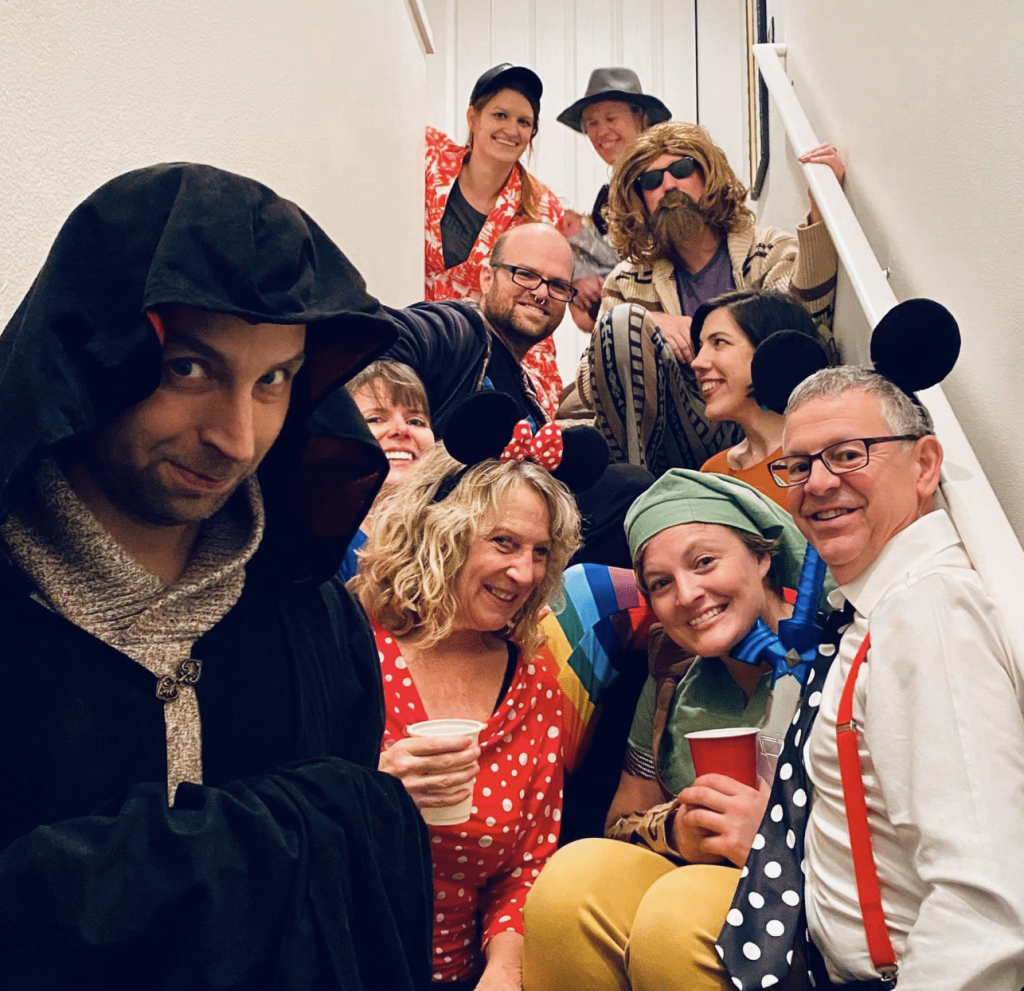
The theme was “characters” (since Jon is such a character). Moments before Jon arrived, 25 of us crowded on the stairs and in the hallway.

In his 40th trip around the sun, this was Jon’s first real birthday party in decades. As any end-of-the-year baby can attest, Jesus’ day casts a formidable shadow—especially for Jon, who was born not only a twin but also on Christmas Eve. Not even his technicolor personality can outshine billions of twinkle-lights, indulgent feasts, and presents for all.

A few months ago, I decided I wasn’t going to let this birthday pass without a celebration worthy of Jon’s big-hearted exuberance. He’s a natural-born extrovert who relishes in the company of others. I knew there would be no greater gift than an unexpected night full of the people he loves.

This was the third surprise party I’ve planned, and I’ve even had two thrown for me over the years. All five were successful in the sense that the guest of honor had no clue. 

I cried on my 23rd birthday when my boyfriend and friends in Japan got me good. My student Yuri had decorated the facade of her apartment like a hole-in-the-wall restaurant. As a newbie to Niigata City, I legitimately thought it was an izakaya, complete with a cute “Open” sign and a full menu, until I saw the large table full of familiar faces and heard their cheers. 

I was overcome with love for several days and couldn’t believe everyone had gone to such lengths to create something special for me. It hits in layers when you realize everything that people do in order to orchestrate that perfect moment for you. 

Years later after I’d moved to San Francisco, I decided to throw a surprise party for my best friend and future bridesman Murray, who was turning 30. He was definitely surprised—but I wouldn’t say he was delighted. He took a full 45 minutes to recover from the shock of having everyone gathered for him at our friend Pat’s apartment. At one point, I thought Murray was going to throw up from astonishment. He had to step outside several times to get some air (and to text his future wife, Jamie, whom he’d just started dating).

I learned that there is a certain type of personality that responds well to a surprise party: a person who doesn’t mind being the center of attention. Although Murray eventually settled into it, we didn’t get the “unbridled joy” we were going for. Jon, on the other hand, enjoys the spotlight and was the perfect candidate for my schemings.  

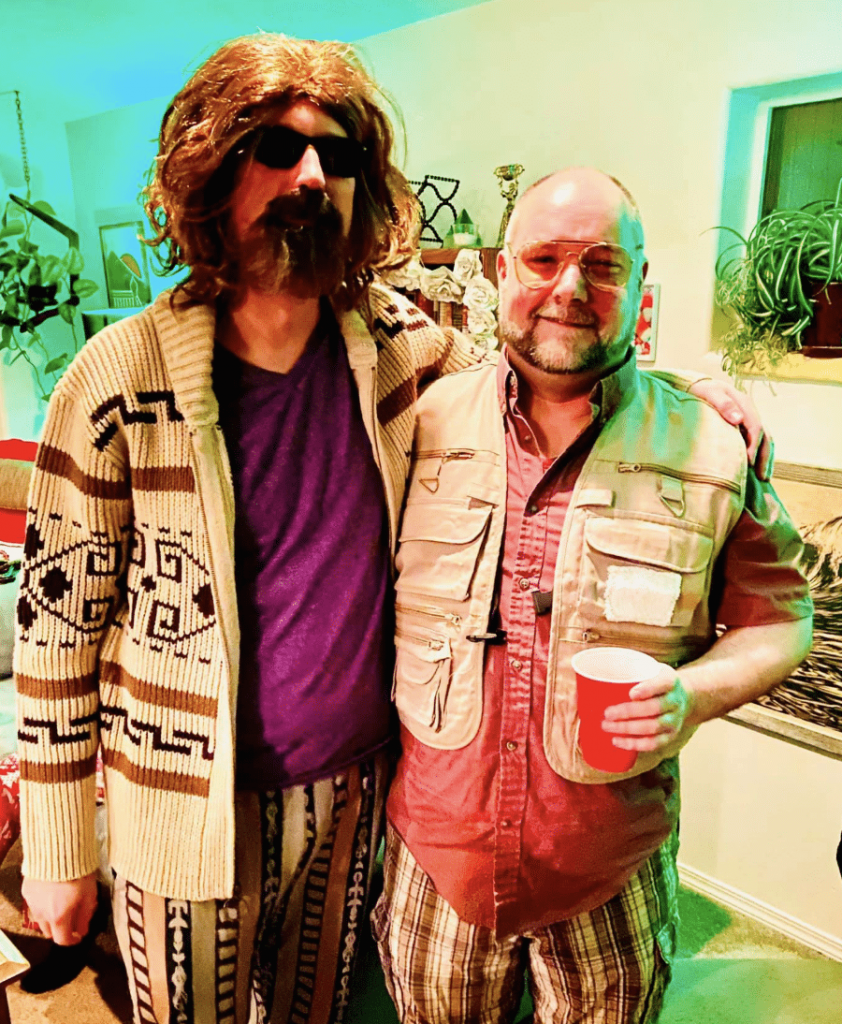
Although it was a costume party, this fan-favorite duo wasn’t planned.

In addition to selecting an appropriate target, here are a few things to keep in mind:

Capitalize SURPRISE in all communications—and give all of your guests a ready-made ruse if they fuck up. Many a surprise party has been ruined by someone’s slip of the tongue, so you have to plan for it. Not only should “SURPRISE” be written in all-caps for any invitations, texts, and other messages about the event, but also ask guests to generate a ready-made ruse if they do accidentally mention the day (e.g., “Oh, I’m talking about your work/friend’s/family party.”) This ploy should be tailored to their level of intel since the target’s social or professional circles won’t totally overlap. A target might be confused, for example, if a distant acquaintance knew about a pre-planned work celebration which happens to fall close to the date of the surprise.

Plan more than a month in advance. People are busy, so if you want them to show up, plan accordingly. I started a month before the event, which is appropriate to people’s social calendars in Eugene. The bigger the city, the busier your guests—and the further in advance you need to send your invitations. 

The day-of maneuver: know your target. One of the trickiest parts of planning a surprise is getting your target to be at the right location within the timeframe your guests expect. If the person is a planner, it’s best to have that time blocked out with a specific occasion close to your party’s location (dinner with neighbors, attending a play, etc).

Jon is not a planner, so I left this part up to the end. Fortunately, I had the help of his childhood friends (Phil and Jenna) who had flown in from the Bay Area for the occasion. They claimed they were here to visit an aunt and to work in Portland the following week. Over lunch, Jenna mentioned casually she was interested in seeing the movie “Knives Out.” Later, after exploring Eugene’s Holiday Market—movie seed planted—we started looking at showtimes. 

I also asked Phil and Jenna (within earshot of Jon) if they’d rather go out for dinner or come over to our house later. When they intentionally stated the latter, I offered to “make everyone dinner” while they enjoyed the movie. I had bought myself a few hours to decorate our house and prepare.

Ask for help. People love to be in on a surprise party and a guest’s experience will be even more special if they contribute in some way. (You’ll notice everyone sharing their perspectives later with the target and each other.) 

I had a lot of help. My friend Olivia picked up the catering; Jody and Kyle brought a keg; Kathie and Eric picked up the pies and offered to help decorate; and of course, we couldn’t have pulled this off without Phil and Jenna visiting from out of state. 

Expect that things will go wrong. Like a wedding, not everything goes smoothly. For example, on the day of the party, Jon was insisting (rather aggressively) that we ride bikes to meet Phil and Jenna at their hotel. This would have made it more difficult to coordinate for the Holiday Market and movie later. (We’d loosely planned for Jon, Phil, and Jenna to arrive in a Lyft.) 

Jenna reached out to Jon and mentioned she was interested in Christmas shopping and might have several bags, which made Jon back off his insistence we ride bikes.

If your target is being an asshole, keep the long game in mind. When my mom planned a surprise party for me when I was a teenager, I’d been especially nasty the week before because I thought we weren’t doing anything for my birthday. She thought about ruining (or canceling) the surprise, but I’m so happy she didn’t. Everything becomes clear to targets later, so have patience if they’re being difficult. Chances are they’re just feeling ignored because you’re busy behind the scenes.

Details, details, details. In the weeks leading up to the party, I stored decorations, beverages, snacks, and other celebratory accoutrements in our empty suitcases in the garage. I threw money at roadblocks and ordered catering since cooking for 30+ people was a tall order in a few short hours. I found that I was so prepared the day of and had asked for so much help that it took me less than 45 minutes to set up.

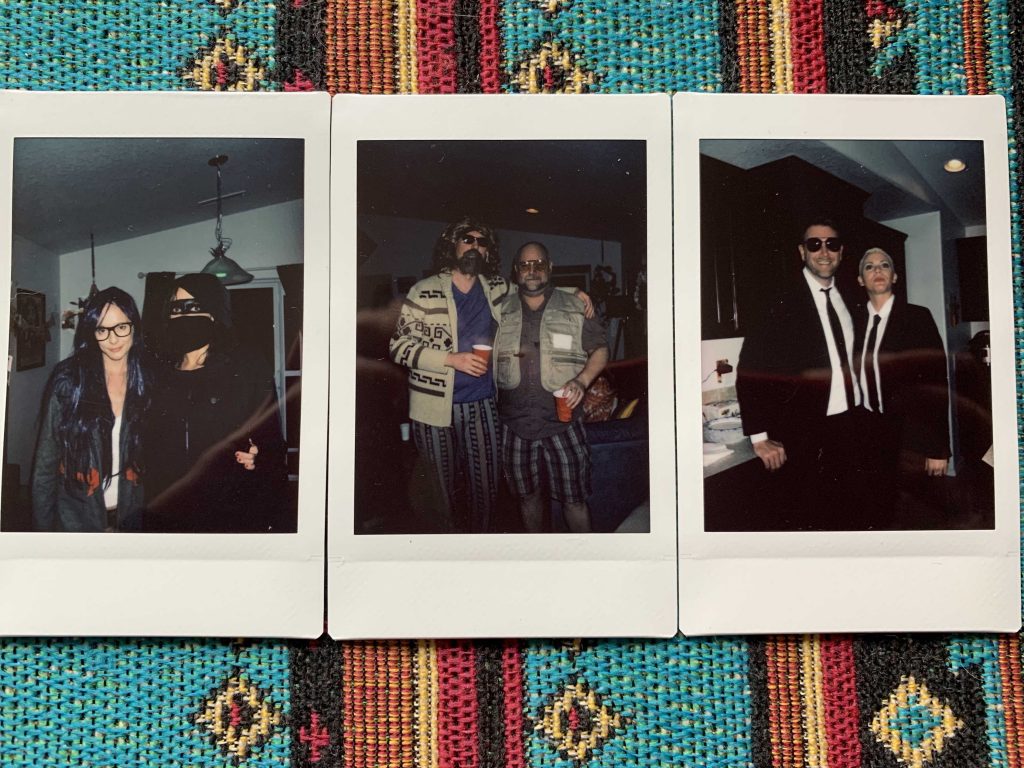
Extra photos from the birthday book: Diane Nguyen (Me) & Sister Night, The Dude & Walter, The Eurythmics

Enjoy the drumroll toward the moment. On the day of Jon’s party, I woke up and told myself I was as prepared as I was ever going to be. I decided to relax and relish in the unfolding day, not worrying about how much more I could have done. Being on-edge would have been suspicious and I credit Phil and Jenna for also keeping their cool.

I’ve learned that there’s a special kind of community that emerges from a well-executed surprise party. You get a front-row seat to a lightening-strike moment in a person’s life where they realize just how adored they are. Overall, the big-hearted deception takes more energy to plan than a normal party, but it’s absolutely worth it.

Thank you, Jody, for this awesome capture.

The Eco-Marm in My Head

With the smartest people sounding the alarm

We are wise to heed the sage Eco-Marm

With irreversible climate change on the horizon, I feel guilty every day. I can’t go to the grocery store, travel, have a meal, flush a toilet, or flip on a light switch without the sense that I’m aiding and abetting the imminent destruction of our planet. Does anyone else have an Eco-Marm* living in their heads?

Shopping for food, I bring my own bags and do my best to avoid plastic. The Eco-Marm is quick to point out that excessive packaging is central to our product distribution. She decries the microplastics in our oceans and coursing through our bodies—materials forged long before I was born and will be present long after I die. She adds that my diapers from 1984 are still decomposing in some distant trash heap—and they will need another 465 years to do so. How many more diapers there will be to decompose in the coming centuries?

I turn on my car and the Eco-Marm reminds me what was done to secure the oil and gas that makes it run—the violent extractions, the endless wars in the Middle East—not to mention where the exhaust ends up and how it affects the health of people and our planet.

Food has always been a great pleasure to me, but the Eco-Marm frequently joins me for meals. She asks whether pesticides were used in growing the vegetables. She reminds me of how much misshapen (but perfectly good) produce never made it into people’s bodies because it was too ugly to sell in stores. She begs me to give up meat every time I lick the barbecue sauce from my fingers, and she scolds me for eating sushi when the global fish population has plunged to the brink of ecological collapse.

Flushing a toilet has become a mini existential crisis—and I wonder how much longer our planet can survive droughts and the wasteful consumption of fresh water.

Leaving on a light in an empty room is an indulgence, and I feel a gentle sting for any lapse in my own conservation of electricity. The Eco-Marm wags a finger at the office buildings glowing through the night, the cooling apparatuses for vast networks of electronics, and other energy-ravenous systems.

I know that overall I’m a conscientious citizen and a good steward of our planet for future generations. I also know that I owe the Eco-Marm my gratitude for her mildly irritating voice pushing me to always be environmentally aware. She’s a product of my understanding of how human systems of production and consumption have affected our planet. 

In the abstract, humanity’s goal was to increase people’s quality of life. At least in material terms, we have no doubt succeeded. More people than ever have access to the bare necessities and technologies that power civilization: water treatment plants, medicine, electrical grids, communication networks, etc. The global average lifespan and years of education have increased, while extreme poverty and rates of violent death have decreased. (Hans Rosling’s book Factfulness is an eye-opening account of the widespread improvements for humankind this past century.)

As much as I was heartened to learn how much better life has gotten for our species, environmental destruction could swallow it all. With scientific predictions of devastating natural disasters and the vast displacement of millions of people, will our unchecked economic growth have been worth the chaos for our children?  Is it really too late? What does “too late” even mean? Can our awareness and ingenuity—powered in part by these incredible advancements—help make us a less greedy species? Can it save us?

Nobody has the answers, but for now, the more people who embrace their own Eco-Marm—that constant voice of conservation and sustainability—the better.  

*Yes, the voice of environmental justice is proudly female, which is probably why so many arrogant self-serving men like Trump have chosen to ignore it.

Winter Survival Skills for Sun-Loving Softies

All winter-lovers are alike—but each person who is unhappy during winter is unhappy in their own way. 

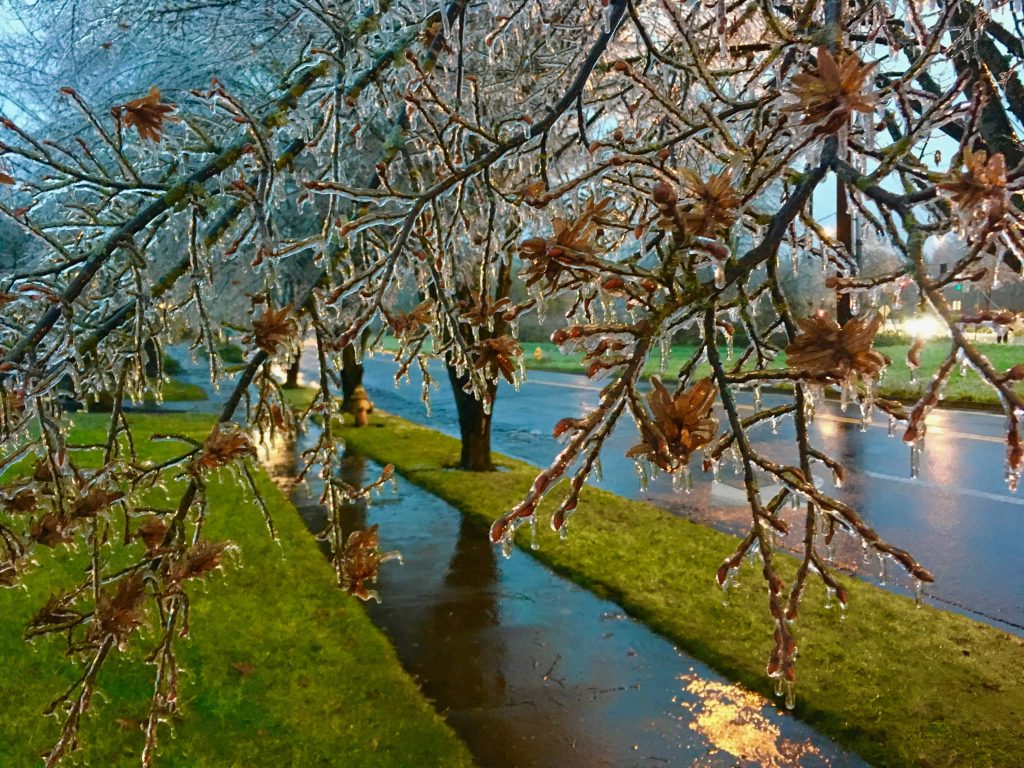
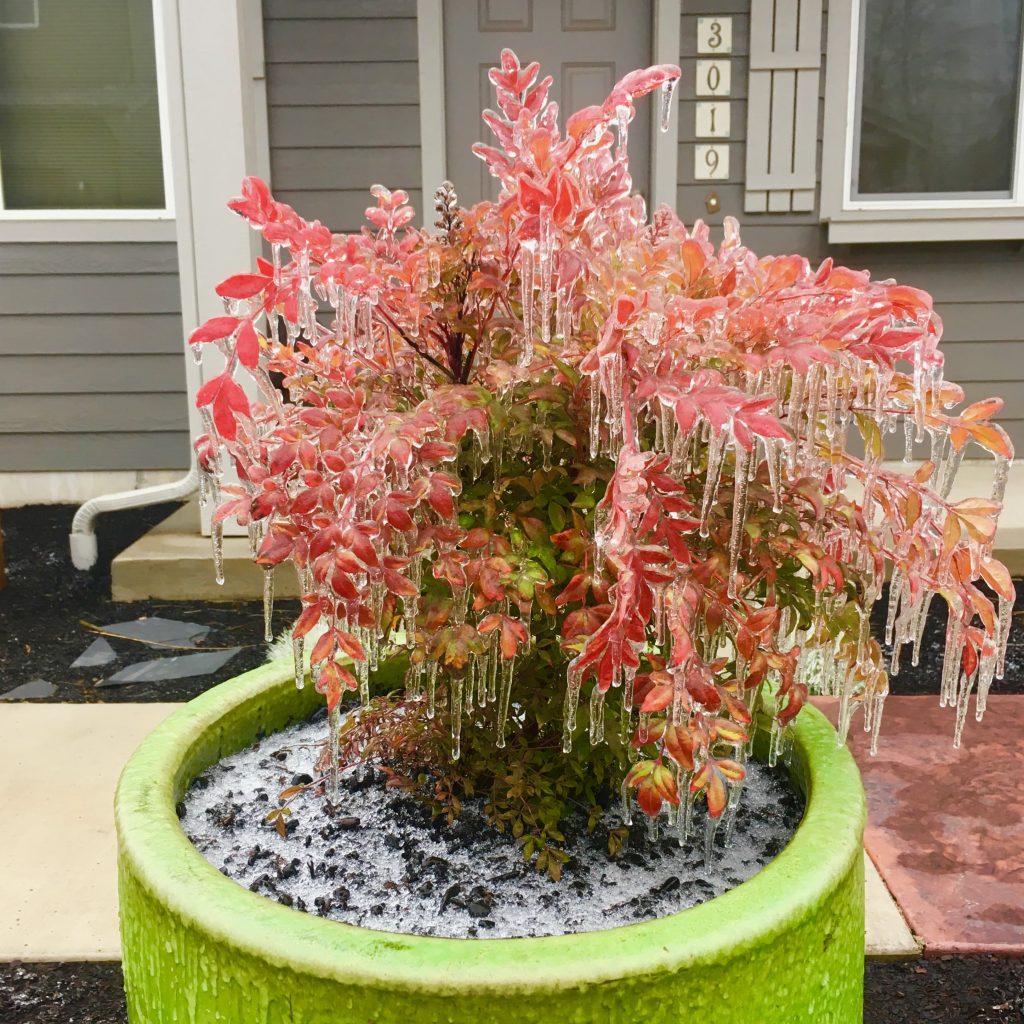
Eugene, OR ice storm in 2016. It made the trees look gorgeous—as if they were encased in glass—but as the boughs broke under the weight onto power lines, it sounded like bombs were going off.

I’m not built to withstand extended periods of cold darkness. I grew up in Laguna Beach, where temperatures and daylight hours varied little throughout the year. Even in winter, beach days were abundant and apart from the gossamer marine layer, the sun kissed everything in its wake throughout the year. 

In 2016, however, I fell hard for an artistic city that didn’t have an endless summer. Eugene, Oregon, just west of the Cascade Mountains, welcomed us our first year with ice storms, unplowed roads, and power outages. Although the snow we receive is adorable by midwestern standards, the perennial gloom late October through April got under my skin. 

The drumroll toward the holidays isn’t bad—everyone is in high spirits despite the unfriendly chill and unending rain. But now that we’re sweeping up the New Years’ confetti, the realization sets in: we still have several more months of cold rain and wind before the tulips and fruiting trees burst into bloom.

Since I moved to Oregon, this time of year has always been rough for me. People retreat indoors and the sun rarely shines. I realize a little glacial rain and gloom would constitute a mild winter for many Americans, but my background made me cold-averse. I needed to develop a system that made me look forward to these days.

Like many others, I admire the Danes and read up on “hygge”—their sense of coziness, familiarity, and togetherness, embodied in a warm pair of socks or candlelit dinner of hearty stew. I also took stock of my cute coats and indoor hobbies (reading, writing, painting), hoping to unlock a routine. This winter has been much easier than in years past, helped in part by a few axioms and tricks I’ve picked up over my years in my new (often sun-starved) home:

There is no bad weather—just insufficient dress. My friend Justin shared that this is similar to a Norwegian proverb—and it’s spot on. It took me a while for me to find the right coat and hat for icy, angled rain (among other conditions), but once I did, winter could no longer keep me inside. I was never much of a clothes horse growing up—I lived in my more stylish friend Alexis’ hand-me-downs for most of my 20s—but having well-made Patagonia and Pendleton jackets has saved my ass. I even found some of them second-hand at Plato’s Closet, so there’s no need to break the bank. 

Candles slay the gloom. There’s something primordial about our love of a blaze. Who among my readers hasn’t been captivated by a bonfire? I have candles all over our living room and bedroom and I only light them when it’s cold. This simple ritual—inspired in part by my readings on hygge—lifts my spirits every time. 

Invest time in making your space welcoming to you. Whether you’re a garage sale aficionado or a modern minimalist, take pride in where you live since you spend so much time there. It will make it that much easier on the day you don’t feel like facing the blizzard. 

Slate specific winter hobbies and events. Every Tuesday, I play indoor volleyball with an awesome group of girls. I typically read 25 percent of my books for the year in January and finish at least two acrylic canvasses. My partner and I also love hosting parties. I did none of these things (apart from reading) when I first moved to Oregon—and I suffered for it. Growing up in southern California, I’d never divided my interests into seasons, recognizing that I can foster different parts of myself depending on the time of year. Recognizing this fact—likely obvious to people who didn’t grow up in sunny beach cities—catapulted my winter serotonin to new highs.

Am I soft? Absolutely. But if there’s a desert-dweller out there who needs to relocate to Minneapolis, they will be grateful for my superficial insights.

The Most Popular (and Universally Despised) New Year’s Resolution

Across the United States, the gyms are packed. It’s early January—that great time of abundance when waistlines have expanded with holiday cheer. And as divided as we are in 2020, the majority of Americans share one New Year’s resolution: lose weight and get into shape. 

My gym (Fox Hollow Trail up to Spencer Butte, the highest point in Eugene, OR)

When I was a teenager, I used to flip through Woman’s World, Prevention, and other garbage magazines at supermarket check-stands in search of tips to slim down. Those rags traffic in making women feel terrible about their bodies. I was a healthy size 9, but there was nothing I wanted more in the world than to be a petite size 0 or 3 like some of the other girls at Laguna Beach High School—a physiological impossibility for my frame. 

I used to stare at the young women with lithe limbs and flowing clothing, especially when they seemed not to care what they ate. What is their goddamn secret? I played sports; I ate healthy; and I obsessed over my body, but I simply couldn’t lose any weight.

A healthy size 9 during the college years (2008)

By the time I got to college, my size 9 was thrown into relief by Berkeley’s demographics—a far cry from Laguna’s supermodel standards—and I stopped caring quite so much. But echoes of that pining to be more slender endured. I even wrote my sociology honors thesis on the disordered eating behaviors of young American women. 

There is an entire range of methods to control one’s food intake apart from severe restriction (anorexia) and purging (bulimia). There are emotional and behavioral manipulations and nearly all of the 30 girls I spoke to had her unique techniques to placate her carnal obsession. 

Some women put bright-colored stickers on “off-limit” foods in their fridges and cabinets; one wore a rubber band around her wrist to snap it in punishment if she reached for the wrong thing to eat; others chewed up massive quantities of junk food and spit it into a vessel like wine-tasting—the satisfaction of taste without the threat of digestion. 

Young women in particular labor under a yoke of bodily shame and anxiety. What I realize now in my mid-30s is that what prevented me from achieving my ideal body wasn’t really grounded in what I ate or how I exercised. It was more psychological—my constant fixation on the issue was my biggest problem. Counterintuitively, the more I focused on it, the more difficult it became to get thinner. Sure, good habits are a foundation, but disabusing myself of the obsession was even more important.

These days, people sometimes ask me now how I stay in shape. I’m a size 4 or 6 and I no longer watch what I eat. I’ve developed habits that mitigated my old preoccupation with size—and most have nothing to do with diet or exercise.

Since thinking about my weight consumed so much of my youth and it’s a popular New Year’s resolution, I wanted to share what I’ve learned. Keep in mind that I’m 35, have no kids, and work from home. I also happen to love vegetables and proteins more than pasta and dairy. I realize that not everyone has the same freedom or flexibility in their schedules as I do. The underlying principles, however, can be adapted to scheduling constraints with some effort and planning:

Find a job that doesn’t make you count the hours until lunch. Too many employers in the U.S. tell people when they can eat. School is also like this. You have to abide by your teacher’s or boss’s schedule, whether or not your body craves fuel. This makes us associate food with a break from a grueling activity. It also makes us eat at times we might not be hungry and forgo food when we need it. I believe that this rigidity and the subsequent association of food with a reward is partially responsible for the obesity epidemic in this country. Now that I work from home, I eat when I’m hungry—not when someone tells me I can.

Get as much sleep as you need. In school and at all of my jobs in San Francisco, I was sleep-deprived. The benefits of getting enough sleep are well-documented. As WebMD puts it, “Skimping on sleep sets your brain up to make bad decisions.” Not getting enough sleep also affects our metabolism and elevates our cortisol—a stress hormone that makes our bodies hang onto more fat. 

Develop your hobbies. Another difference between now and when I was in school is that I’ve had sufficient time to figure out how I enjoy spending time. When I was younger, I never understood how people could “forget to eat” because at that time, thinking of my weight and food was unrelenting. I also hadn’t enjoyed the luxury of figuring out who I am and what I like to do—the activities which now occasionally make me forget to eat. I read, write, paint, travel, hike, and catch up on award-winning films and TV series that I never watched. (I’m in the middle of Mad Men right now and just finished the Sopranos last year.)

Cook most of your own meals, but treat yourself to good restaurants. I didn’t grow up cooking (and my single mom rarely had time), but I started to take pleasure in culinary creativity and the way it shows love to others. I’m lucky my partner also enjoys cooking (so it’s not all on me) and we have friends over for dinner frequently. I’ve also learned a lot from dining at well-reviewed restaurants. I treat going out as a learning experience and try to recreate my favorite dishes at home. For example, my favorite cuisine is Thai. I took classes in Bangkok and I now grow my own chili peppers to make prik nam pla, the fish sauce and chili condiment you’ve probably seen. From eating at so many different Thai places, I’ve improved upon my old recipe, adding lime juice, fresh-grated galangal (Thai ginger), and garlic. Also, as much as I like to cook, I don’t like following recipes. I cook by taste, which for me is more fun and creative.

If you dislike the gym, find a different activity. I’ve always hated gyms and I wonder what our calorically-challenged ancestors would think of them. You can’t imagine a 17th-century farmer—much less a cave dweller—running a track or lifting weights to try and maintain their figure. It turns out that a lot of people don’t like the gym. They go because it’s the most time-efficient way to burn some calories. Once my schedule became more flexible, I started taking the same 7-mile hike up Spencer Butte—the highest point in Eugene—a few times per week. I ride my bike to the trailhead and listen to podcasts while walking through a lush forest. I look forward to these two-hour outings and now realize that I don’t like to exercise indoors (unless it’s for a sport like volleyball). I also rarely use a car and walk or bike nearly everywhere in town. Rather than treating my body’s work as a chore or task of maintenance, I use it to get where I need to go. Everyone has to find something active that works for them and fits seamlessly into their schedules, even if that exercise is carrying trays of food, delivering packages, or chasing down a toddler. 

Beer is not the enemy. People are sometimes surprised that I’m an avid beer-drinker. I’ve visited over 250 breweries across the country and live in Oregon, the state with the highest number of breweries per capita in the country. To me, beer is as variable as food and can play with all of the senses in a way that wine and pure spirits can’t. Each brew is an opportunity for me to try something new, whether its a slightly salty and sour passion fruit gose or a caramel-rich stout on nitro with chocolate notes. 

When it comes to eating, go for quality—not quantity. I look forward to my food. Whether I’m cooking or dining out, I’ll eat anything, but I’m picky about quality. I’ve found that mediocre food makes me want to eat more of it to find satisfaction. Instead, seek out the best culinary experiences possible every time you’re hungry. Sure, it costs more sometimes, but can we put a price on future health and present pleasure? 

Get to know when you’ve had enough. I don’t calorie-count; restrict portions; or have any specific “diet tricks.” I pay attention to when I’m full and because I’ve sought out the best quality food, I leave most meals satisfied.

Overall, my perennial obsession with food and weight began to melt away when I started living the life I chose—working from home in a creative and rewarding job, living in a city that my partner and I selected after a year-long road trip, engaging in all of the activities I’d finally figured out I enjoyed. 

When I was younger,  I didn’t have so many choices and food served as an escape from a schedule I disliked at school or work. After many years of hard work and self-reflection—most of it unrelated to diet or body image—food is now a pleasure to me rather than a forbidden reward. 

I hope others can create the life that works for them because once this happens, they might find that weight and body goals no longer dominate their New Year’s resolutions.

J Blo costume (Halloween 2019)

’Tis the Season to Sling Your Jollies!

Doesn’t work rhetorically, but still cute AF

Yippee ki yay, motherfuckers! It’s that magical time of year where we massacre some trees! And not just the ones in our living rooms that we festoon with lights, colorful glass, and pre-school paper-crafts. I’m talking about the 1.6 billion Christmas cards that Americans send annually.

Your Millennial friends—especially the ones with babies—check their address books once and check them twice to decide who is worthy of murdering a small forest with Minted or Shutterstock. 

It’s tough picking the best pictures of their two children, ages 2 and 4, because to the parents, each cherubic photo is a precious gift to the universe.  Jessica, the proud working mom, pours herself a generous glass of pinot grigio and types up a double-sided, four-page update on their family’s activities, including gems such as:

Mason will play ‘townsperson’ and ‘third sheep’ in our church nativity play. He’s such a talented actor! His daddy predicts that he will attend USC’s theater program. Fight on for ‘ol SC, Mason, class of 2038!

… Arya picked up a green cube and placed it into the square-shaped hole. Our nanny says she has never seen such a brilliant child! We believe that our budding genius is on the path to becoming an engineer or a tech entrepreneur. Watch out world!

“And me? I’m just happy with my pilates, açaí bowls, crafting, church volunteer activities, and gorgeous children. #Blessed!

After typing up the letter, Jessica wonders why she never sees her friends anymore, quietly resents her husband for gaining 50 lbs. since their wedding, and pours herself another glass of pinot to prepare for an epic Amazon gift-shopping sesh. Her husband is too busy “managing” his four Fantasy Football teams—it’s the playoffs, babe!—but he promises to take her to a fancy dinner if he wins all of his leagues.

Gen X parents are having an even tougher time with holiday missives. After a grueling day of work, the couple sits down with double martinis and wonders how to best cover their family’s 2019: 

“Honey, should we include that Nick now goes by ‘Nichola?’ Will that freak out Grandpa Pete?”

“I wouldn’t risk it. We don’t want to be thrown out of our church or worse, out of our inheritance.”

 “Shit, ok. And I couldn’t find a recent picture of Nick without a dress on so I used the one from two years ago. Dad won’t know the difference.”

“Gotcha. What about Em? I feel like we’ve barely talked since we dropped her off at Pepperdine. Except when she needs money, of course…”  *labored parental sigh*

Of course, sending greeting cards isn’t the only way Americans peacock this time of year. There are also these jolly assholes: the Instagram influencers with bells on their bobtails. 

@kweilz account is endearing enough to vomit

For example, Kate Weiland’s photos incite equal parts envy and disgust. Not only is she gorgeous and fit (strike one), but she has three adorable children and a hot husband who happily play supporting cast in her social media photo flurries (strikes two through five). 

She posts captions such as “Someone doesn’t want to GIFT it a rest! 🎁” and “Talk turkey to me 🍗” which makes me throw up in my mouth a little. 

The Instagram content Krampus is always hungry, always feeding—and Kate fears drifting into irrelevance if she doesn’t keep him satisfied. I wonder how many hours per week her family poses and smiles when they’d rather be doing something else. And with 354,000 followers, have they already quit their jobs to live off sponsored posts for Old Navy and L.L. Bean? I want details on their cookie-cutter cuteness, dammit!

The reality is that a lot of Americans feel the need to flex this time of year, whether it’s through the mass-produced holiday letter or immaculate family photos. It’s stressful to project unending jollies, especially for mothers and wives who are typically tasked with buying gifts, sending cards, and maintaining the family social media presence—not to mention the holiday cooking and thank-you writing. 

Why do men feign incompetence over innocuous tasks like writing letters or wrapping presents? My partner recently fixed our washing machine using only the manual but plays dead if I ask him to take the initiative in buying his mother a gift or fold some wrapping paper around a box. 

I suppose holidays are tied up with the idea of “home”—that most stubborn of womanly spheres. And rather than admit that carrying the emotional labor of the holidays is suffocating, women (myself included) put on a brave face, snap some cute photos for Instagram, and slog on through.

Be extra kind to the ladies in your life this season. Slinging holiday jollies is much harder than managing an imaginary football team (or four).