You Become Where You Live

The best decision I ever made was not where I went to college, the career I pursued, or whom I married—it was the one-year roadtrip my spouse and I took to figure out where to buy a house.

This dream was brewed in 2015 over many Malbec-drenched nights in San Martin de los Andes, the Patagonian lake town where Jon and I lived for 5 months. Very early on in our relationship, we’d moved from San Francisco to Argentina—the country abroad that was European enough for Jon and Latin American enough for me. 

After a few months in Buenos Aires, we were ready for somewhere cozier and greener. Following a random conversation at a dog park in our Belgrano neighborhood, we were convinced to move to a place we’d never heard of on the border with Chile.

Because San Martin was so friendly and picture-perfect, Jon and I hatched a plan to explore a variety of midsize American cities when we returned to the States. We made a short list of what appealed to us: we wanted a university town with abundant nature, progressive values, kind non-pretentious people, and a solid bike infrastructure.

On our roadtrip, Jon and I stayed with family or in AirBnBs to get a feel for the local hospitality. We especially loved Fort Collins (Colorado), Asheville (North Carolina), and St. Pete/Dunedin (Florida). Those towns spoke to our bike-loving hearts and leftist ideals. They also had excellent breweries.

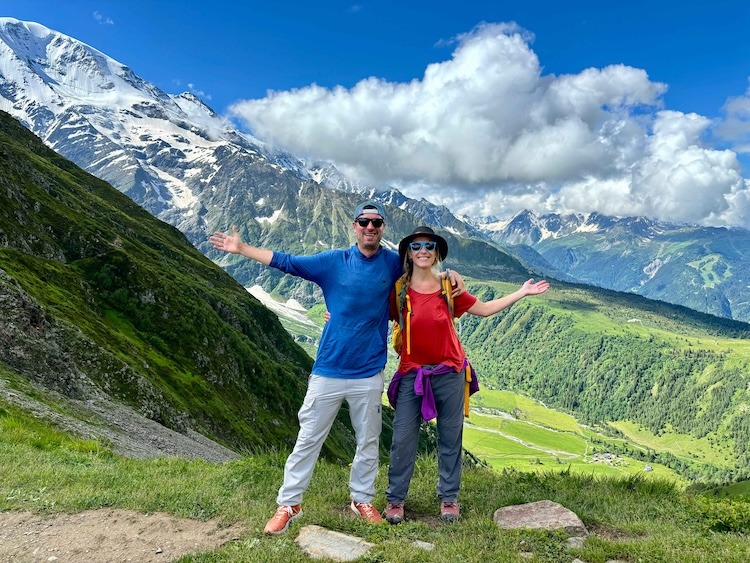
Some people are lucky enough to be born where they belong—Jon and I were born seeking that feeling, living abroad and traveling widely through our 20s. The opportunity to choose Eugene (and now, also Yachats) has allowed me to become who I am. Planted in a east coast soil, I wouldn’t have flourished in quite the same way. I enjoyed a wonderful upbringing in Laguna Beach, California, but the appearance-obsessed culture, traffic, and desert landscape never quite fit me. I’m a hiker attracted to wide open spaces, mossy fern-filled forests, and King Tides. 

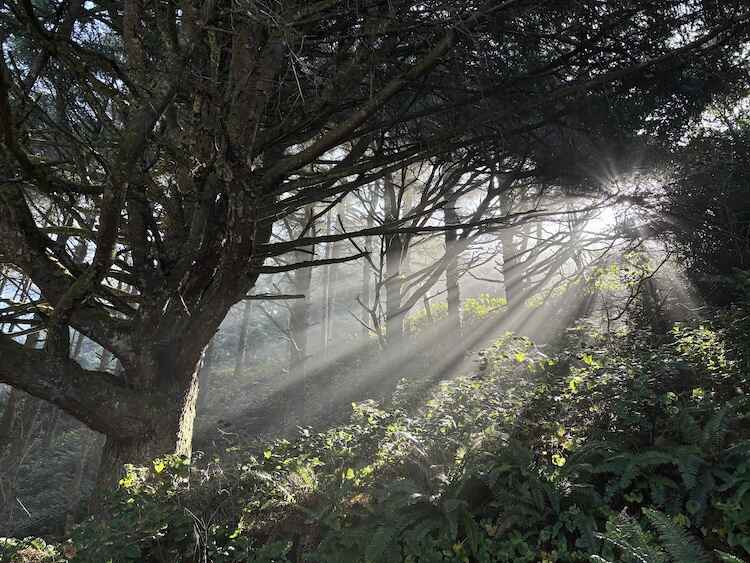
Cape Perpetua, Oregon (October 2025)

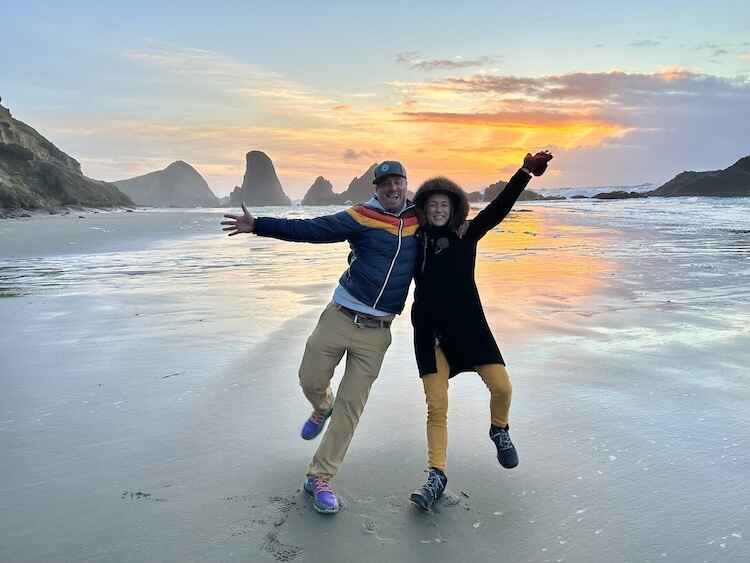
I love the wildness of Oregon, especially on the coast. The surf is powerful and unpredictable, carving lush inlets around capes and natural bridges through lava rock tide pools. Sometimes the rain and wind are so intense they drown out conversation or blow you off your feet. It’s not for everyone, but it’s absolutely the place for me.

For those who have the means, starting with the question where do I want to be? allows everything else to fall into place. I’ve lived in London, Niigata City (Japan), Porto Alegre (Brazil), San Francisco, and many other places along the way. 

When you choose a place, you’re adopting an aesthetic and a group of people with shared values and customs. You get a local government, land-use laws, specific tap water, and seasons. You inherit an area’s decisions about how much public space to protect versus how many “No Trespassing” signs you see. More than any other variable, your environment shapes your opportunities and future.

In my experience, being a small fish in an enormous pond (especially as a young adult) pays off—I had incredible job opportunities in San Francisco for several years. It may be tempting to move to a more affordable state such as Texas or Missouri to afford a 3,000-square-foot house, but with that change comes decreased tax bases and wages. Low local taxes may mean fewer public spaces and vast privatization of the most desirable, beautiful land—the areas along mountain ridge-lines, rivers, and lakes are open only to wealthy landowners and those who can afford private club memberships. If you choose to be the big fish in a cheap state, you may also find your financial situation shrinking relative to the rest of the world. (It’s easier to travel abroad with California wages, for example, rather than those from Oklahoma.) 

I still carry parts of everywhere I’ve lived with me. I adopted the Japanese custom of shoe removal and the Brazilian/Argentinian ritual of drinking maté. I regularly cook Southeast Asian dishes, and for a while, I asked questions with a Londoner’s polite upward inflection. And perhaps no place sticks with me as much as Mexico: I speak the language, spend 4-6 weeks there every year, and my personal style, art, and home decorating have embraced the bright palettes of Chiapas, Oaxaca, and the Yucatan Peninsula. 

Seal Rock, Oregon

In my life, I’ve fallen in love with at least as many places as people. Laguna Beach, Berkeley, San Francisco, San Martin de los Andes, Oaxaca City, Annecy (France), Eugene, and Yachats. Every time it happens, my priorities shift. Everything flows from your surroundings. Don’t let your boss tell you where to live, if you can avoid it. It’s a privilege to choose where you lay your head each night. Find that place you love and see who and what else fall into place. 

Marilyn Monroe on OnlyFans

Sitting down to write this, a dozen other compulsions compete for attention. I adjust my Spotify playlist, blaming the music for throttling my writing mood. I mindlessly refresh my email on my phone. Instagram sings her familiar siren song with the promise of infinite art, hiking, and cat content. 

With easy access to “anything and everything all of the time” (as Bo Burnham put it), my Paleolithic brain struggles to focus. It’s a relatively slow organic machine that predates our modern information, technology, and entertainment landscape. Our tools are quickly outshining our endemic capabilities—and with AI’s imminent takeover of our attention and economy, this will only get worse for us mere mortals.

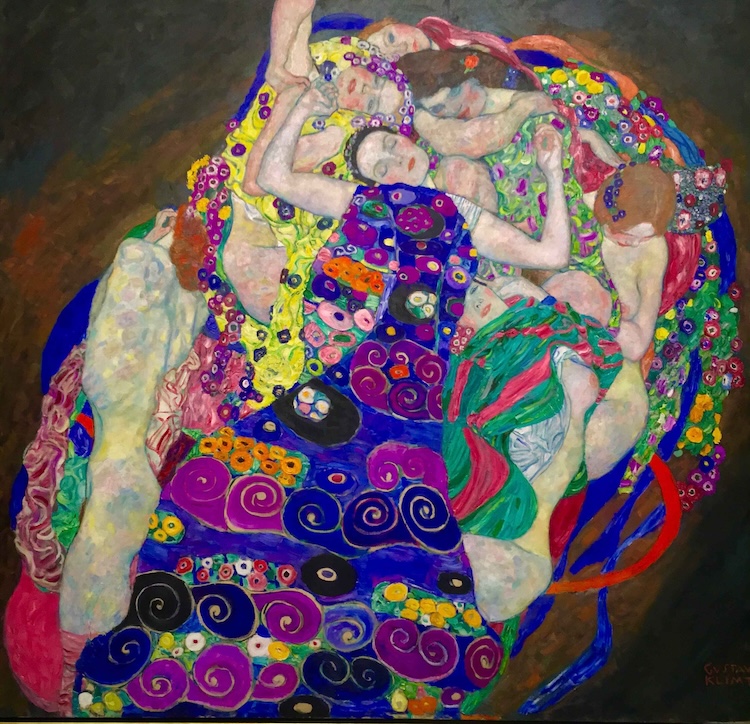
What app would Gustav Klimt have been addicted to?

I’m not blind to the benefits of our current world: I’m still blown away that I have a pocket-sized device serving as my telephone, music player, library of books and magazines, multilingual dictionary, note-taker, ride-hailer, personalized atlas, camera, and so much more.

But it often feels like a Faustian bargain: we reap the benefits of having so many capabilities in one small machine, but we’re forced to ward off the intrusion of time- and dollar-seeking companies who purport to offer their services for “free.” They collect and profit off of observing our behavior. They sell our information to other companies, who use it to power their marketing algorithms or nascent AI technologies. And on social media, influencers do whatever it takes to capture our most precious asset: our attention.

How would our world’s greatest minds have responded to having a smartphone? Would they have been empowered, intoxicated, addicted, or stultified? Is it easier or harder for a genius to emerge in today’s frenetic media landscape? 

I can imagine the favorite apps of some historical figures:

  • Ernest Hemingway – X – Rising star in the manosphere and passionate about keeping trans women out of sports
  • James Baldwin – Reddit – A top contributor known for destroying racist and homophobic trolls 
  • Oscar Wilde – Grindr – Gets busted in Texas under a rarely enforced anti-sodomy law
  • Marilyn Monroe – OnlyFans – Makes more money than Elon Musk
  • Buffalo Bill Cody and Calamity Jane – TikTok – Their cowboy-core videos promote “The Wild West Show,” which routinely sells out in the country’s largest stadiums
  • Abraham Lincoln – Bluesky – Still believes he can create a more perfect union through reasoned discourse
  • Julia Child – YouTube – Shows you how to “make that soufflé your bitch” 
  • Mark Twain – Facebook – Just trying to keep up with his children and grandchildren between writing sessions
  • Eleanor Roosevelt – Instagram – Cats and sapphic art abound while she slips into your wife’s DMs
  • JFK – Ashley Madison, Raya, Tinder – DTF wherever and whenever

To harness the power of all of our modern tools, impulse control and self-discipline are paramount. It’s much easier to spiral down an algorithmic rabbit hole—an addictive short video feed tailored to our specific interests—than it is to use apps intentionally for higher purposes. 

Building community, organizing politically, and producing creative work (rather than derivative AI slop) should be the goals. There’s room to zone out and let the social media feed take the wheel, but too much time ceding control to the machines and our brains get flabby. At least that’s how I feel after an Instagram bender. 

Be conscientious about the time you spend online and “go touch grass,” as the kids say: it will feel much better between your fingers than your phone ever will.

One Nation, Under Influencers

“Things are different online, where I feel like I’m fighting a constant war for your attention. I carefully script all of my videos to maximize the addictiveness of each sentence. Beyond the initial hook, I sneak in little micro-hooks to everything I say, making sure to recapture your attention if it does start to drift.” 

Adam Aleksic (Gen Z content creator) in his 2025 book, Algospeak

At Oregon Country Fair this year, I spotted something unusual. A young blonde in daisy dukes and a crop top was sitting on a painted carousel horse. She stuck her butt out and looked coquettishly at a professional camera while a woman snapped dozens of photos from all the angles. This thirsty ingenue seemed plucked straight from Coachella, Burning Man, or Euphoria—not our humble hippie fest in the forest! The influencers had finally invaded.

A 2023 Morning Consult Poll found that 57 percent of Gen Zers want to be influencers. I can take a charitable interpretation: perhaps a desire to be known is part of our American cultural DNA. We invented Hollywood; we’re fanatics for professional sports; we’re world-renowned for our marketing and propaganda. Even our current president is more of a twisted showman than a real leader. Fame has infiltrated all aspects of our lives.

But the path to becoming a public figure is what has changed. Attention used to be a result of someone’s skillfulness. In the 90s, everyone knew who Leonardo DiCaprio, Michael Jordan, Britney Spears, and Tyra Banks were. And say what you want about their careers, but they all had immense talent. Wide recognition of a name or face would follow one’s athletic or artistic performance. It might occur with an assist from some savvy PR, but there was typically substance behind a celebrity’s stardom. 

These days, why spend time developing your talents when you can simply pay for tens of thousands of Instagram followers? And why do the hard work of finding truth when sensational lies and destructive practical jokes are more likely to go viral? 

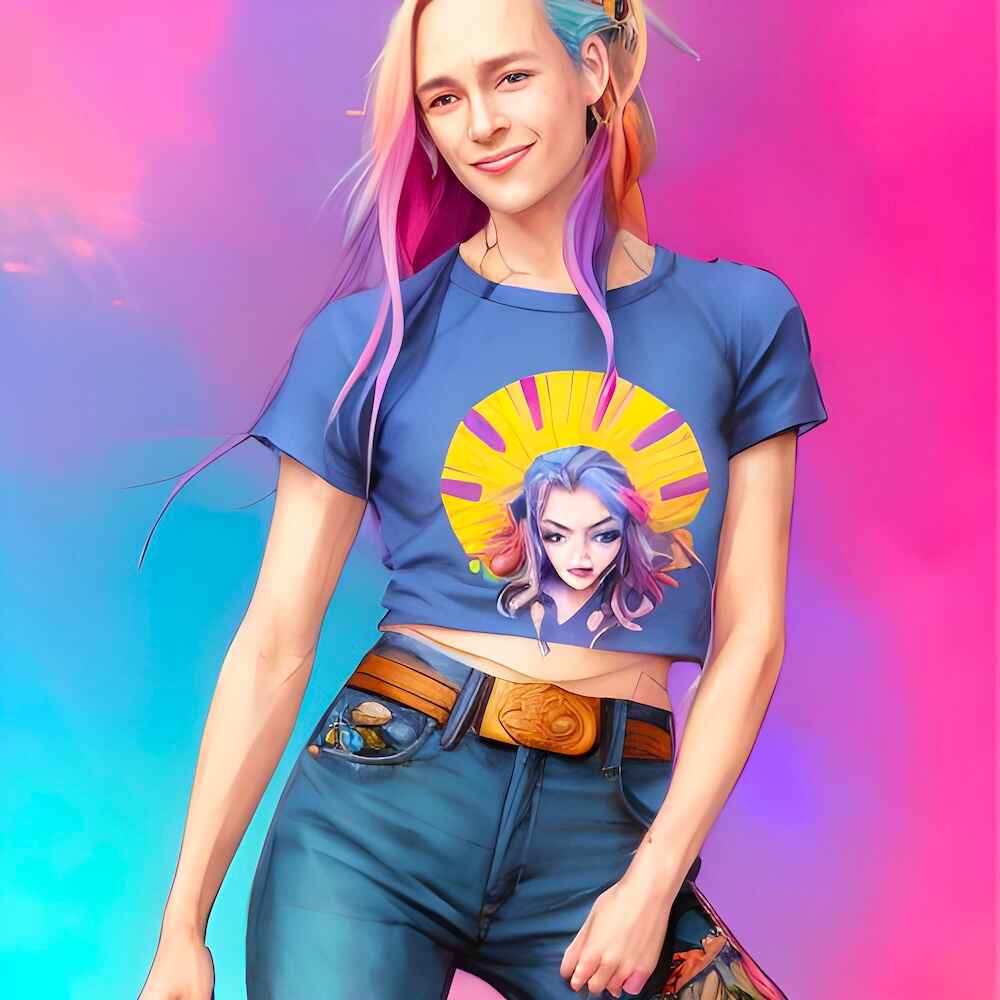
Google Photos thought this image epitomized “influencer”

The primary goal of an influencer is to get your attention. To increase engagement with their content. To amuse, excite, or enrage. To go viral. To gain followers. And to avoid breaking the platform’s rules. In fact, driving engagement is so important that a University of Oxford study found that influencers will minimize their creativity to pander to the algorithm. 

Not all influencers are talentless hacks, of course, but there are quite a few desperate clout-chasers who have no skills beyond self-promotion. It’s not their fault that the algorithm rewards braindead megaphones. They’re conditioned to become thirsty loudmouths with no ears, who shout from the digital rooftops, “LOOK AT ME!!!” 

And don’t get me wrong: there are many popular influencers I enjoy on Instagram—most of them serve content with cats, hiking, or painting (or some combination of the three). I spent an hour sampling videos from popular creators I’d never heard of: Charli D’Amelio, Addison Rae, Emma Chamberlain, Vinnie Hacker, Reagan Yorke, and others. I feel like I have a hangover after a lobotomy. Or perhaps it’s as if I’ve been eating cotton candy all morning: it’s light, fluffy, irresistible, and will give me serious health problems if I don’t stop. Is anyone else allergic to influencer-speak? The constant WORD EMPHASIS and unnatural intonation remind me of how folks talk to toddlers—only much faster

I decided it would be less painful to read a book about the phenomena rather than listen to any more of them. Adam Aleksic, a 24-year-old Harvard graduate and “Etymology Nerd” TikTok star, just published an exceptional book called Algospeak. He presents thoughtful reflections on this era and an admirable self-awareness about the bizarre game of algorithmic attention-seeking: “It’s an unfortunate reality that all influencers somehow manipulate your emotions to go viral, since we’re all competing for your attention and we know that your attention is tied to your emotions.” 

As Aleksic illustrates, there are still many influencers from whom we can learn skills, build community, or enjoy a laugh. But we should all be wary of whom we follow. Just as we are what we eat, our brains are what we watch and hear. A recent NYTimes opinion piece stated, “Social media platforms are designed to be addictive, and the sheer volume of material incentivizes cognitive ‘bites’ of discourse calibrated for maximum compulsiveness over nuance or thoughtful reasoning.” There’s been talk of a “post-literate” generation, which isn’t an exaggeration: fewer Americans these days are even capable of finishing a two-hour film let alone a 150-page novel. Short videos can broaden our familiarity with a range of subjects in relatively little time, but deep thinking is absent. The medium is the message, indeed.

In other words, if we spend too much time consuming content from low-rent pranksters and hollow pretty faces, we will, as a people, get much stupider. Choose your influencers wisely because you become who influences you.

At What Age Do Women Become Invisible?

The first time I noticed myself becoming an invisible woman was in San Cristobal, Mexico. I was at Café Bar Revolución and watching a reggae trio. After the final set, the fetching young bassist came and took a seat next to me at the bar. He was originally from a small village in Chiapas and had been playing music as long as he could remember. We flirted and cracked jokes for 20 minutes until he asked me, “Cuantos años tienes?” I smiled and shared that I was 37. Without another word, this babyfaced motherfucker maintained eye contact, mouth slightly agape, backed slowly off his barstool, and disappeared into the crowd like Homer Simpson into some leafy hedges. I just laughed and pulled out the book I’d brought. 

Campeche, Mexico (2025)

This experience gave me a preview of what 40-something Hollywood starlets and my mom had warned: as women age, they tend to become invisible. And it’s true. Women’s main currency throughout history has been their youthful appearance. Strangers’ eyes used to linger much longer on my face and body. I get fewer free drinks, unsolicited conversations, and catcalls compared to when I had teenage acne. Men will argue, “It’s biology and such.”

Do I miss these parts of being younger? Not really. Dating was fun, but the impossible beauty standards of the 90s only led to eating disorders and cosmetics buyers’ remorse. 

I don’t want to bank my life’s prospects on an asset class with constantly diminishing returns. This obsession with women’s appearance centers the perspective of straight men (and self-comparing women). But here’s the thing: as women’s power and role continue to expand, so too are our ways of being seen.

I admit we aren’t living in the Golden Age for women’s progress in the United States. Roe vs. Wade was overturned; DEI initiatives are under assault; trans women are targeted by cruel people and dumb laws; and we have a thrice-married convicted rapist who calls himself the “fertility president” in the White House. Margaret Atwood couldn’t have dreamt up a worse anti-feminist hellscape. 

But this rampant small dick energy is an expression of misogynist fear—a backlash to women’s recent progress. Social conservatives want to return women to the domestic and economic cages of decades past. They want to preserve a world where men control women’s futures. They want us to begin life as pretty faces, grow into being walking wombs, and finally become unpaid caretakers for everyone else. Their twisted vision depends on women’s subservience—they want us to play a supporting role and exist only in relation to others: sister, daughter, wife, mother.

The good news is that they’re losing. In fact, it’s kind of a blowout, like Caitlin Clark and Angel Reese taking on Trump and Vance in a pickup basketball game. What it means to be an American woman has expanded enormously. Our meal ticket is no longer tied to the options of low-wage work, marriage, or motherhood. In theory, we can become whoever we want to: artist, astronaut, doctor, CEO. Undoing this progress would be very difficult and unpopular. Women have grown accustomed to being considered in ways our mothers and grandmothers never were.

For generations, American men have been seen by dint of their power and wealth. There’s the way a room shifts when an influential man walks in. Eyes drift to him. People subtly turn their heads and bodies, smiling or allowing themselves to be interrupted. Crowds part in anticipation of his movements, and a spotlight seems to follow him. It helps if he’s well-dressed or handsome, but appearance is one factor of many. It’s influenced by the way he carries themself, gestures, or speaks. It’s often preceded by his accomplishments and reputation. 

More and more women are getting this type of respect that runs deeper than our skin. We should not fear becoming invisible as we age. We own merit beyond our looks, and our currency has no expiration date. Our visibility is no longer constricted by youth or beauty. We make ourselves undeniable by our actions, just like men.

Don’t Be So Traumatic

I have two friends: one grew up in a loving, wealthy family with all the opportunities in the world. Another is the son of a serial killer. Which one of these people do you think is “traumatized?” You probably guessed wrong.

Folks can wear their trauma as a shield of armor, a black shroud, a monster mask, a clown costume, a skydiving parachute, or a three-piece business suit. We’ve all got dreadful experiences burrowed into our subconscious. The memories can be triggered by a person’s name, the sound of fireworks, or the smell of a house. Our response varies by how much time has passed and how well we’ve processed our anguish. The recollections can feel like a boiling cauldron, a punch in the gut, or a small cattail in the sock, especially after some time has passed.

We don’t have to be defined by the worst things that have happened to us

America’s Gen Z is our most emotionally expressive generation. They are fluent in setting personal boundaries and continually take stock of their mental health in a way that can feel foreign to older people trained in the ancient School of Suck-it-Up. One of my friends who owns a cannabis company shared that many of her younger employees routinely take days off because they feel “emotionally unprepared” to work. Adolescents speak of “abuse” when they are beset by requests to do simple chores or finish their homework. College students have refused to read books with specific “triggering” language or scenarios. #Traumatok—TikTok’s public forum for trauma-dumping with nearly 420,000 posts—reconstitutes many normal behaviors (e.g., thinking about one’s mortality, overachieving, mindless screen-scrolling) as “trauma responses.”

Look: we should all be grateful that sharing one’s emotions is more common today than in the past—it’s healthy and healing to realize others experience common feelings. I also recognize that there are unique challenges in our time. We’re highly divided as a nation and still processing the collective heartache of the Covid-19 pandemic. Prices are rising for kitchen staples, healthcare, housing, and education. Our government is providing weapons and billions of dollars to Israel that are being used to slaughter Palestinian women and children. Global warming continues to accelerate. Just reading this paragraph makes my blood pressure rise, and yet…

There’s always been scary shit happening in the world. The Great Depression, two World Wars, the threat of nuclear destruction, and the Vietnam draft were all causes for widespread distress. Did earlier generations complain about how much harder everything was for them than their predecessors? I wasn’t there, but I doubt those folks were “triggered” by words in a book or missed work due to being “emotionally unprepared.”

Rather than recognizing with gratitude one’s privileges, many young people are too busy counting everyone else’s blessings through the filters of TikTok or Instagram. There’s a widespread lack of resilience and preparedness for adulthood among teenagers and twenty-somethings. I wonder what role the constant navel-gazing of trauma has played. Why do so many people these days seem to crave feeling damaged, victimized, or oppressed?

The word “trauma” has been overused in recent years, particularly in the wake of the pandemic, which wreaked havoc on our schools and society. I can’t be the arbiter of what anyone else considers to be traumatic, but a tendency to dwell in the worst parts of one’s past can be paralyzing or maladaptive. Engaging in the Martyr Olympics through trauma-dumping can be a total buzzkill in social situations. It might be one of the reasons young people are having less sex.

There have always been forces beyond our control, and there’s only so much we can do to exist happily among so much uncertainty. Life’s routine challenges, such as divorce, imperfect parents, and academic achievement, have created scores of “broken” people. We forget that in the past few centuries, life has improved considerably. Our life expectancies have doubled; infant and maternal mortality have decreased precipitously; far fewer people die violent, agonized deaths in conflict or ravaged by disease; opportunities for education, healthcare, and economic mobility are much more widespread. Almost every realm of life has improved by objective measures. Better isn’t perfect, but it’s still noteworthy.

An individual’s response to violence or tragedy is a choice, at least after one has developed enough knowledge of the world and the self to endure life’s constant churn of crises.

There’s one person I know who’s done this better than anyone: a dear friend of my family, Russ Boston. He was dating my mom for a few years in the 90s and continues to be an important presence in my life. He’s spoken openly about growing up the son of serial killer Silas Boston. After Silas murdered Russ’s mother (which he didn’t find out until later), 12-year-old Russ witnessed the killing of two British tourists in Belize and had his life threatened by his own father. He suffered abuse and was in and out of foster homes. Despite these horrible experiences, he grew into one of the most thoughtful, intelligent people I know. 

When I was a child, Russ always told me, “You’re given life, and everything else is a gift.” He constantly reminded me, “We’ll all be worm food someday,” and encouraged me to seize every moment and be grateful. He always picked up the phone when I was going through any relationship difficulties or breakups, listened patiently, and helped me maintain proper perspective in the face of my mundane problems. 

I wish everyone had a Russ in their lives. He’s taught me so much about staying resilient, kind, and curious no matter what life throws at me. When an incredible person like him can emerge from the most dire, violent circumstances, there’s hope for the rest of us. 

Perhaps part of our pain is the plague of loneliness in American society. We need to increase the volume and duration of our brokenness to feel heard or cared for by others who are consumed by their own struggles. But we don’t have to feel like victims. No matter who or what has injured us, the best revenge is living well and caring for each other.

Addiction: As American as 50 Apple Pies

My first day back in the U.S., a man collapsed on the sidewalk across the street. He’d fallen so suddenly onto his back that his stained sneaker slid into the shoulder of busy W. 11th Street. A ragtag group surrounded the man, laying down their heavy backpacks and tying up their barking dogs. A woman stopped her truck in traffic, dodged several cars, and began to administer chest compressions. The smoke shop clerk threw open his door and unwrapped a canister of NARCAN nasal spray. He did this with a calmness indicating it wasn’t the first overdose he’d witnessed on that corner, or his second, or his third. His face announced that it was another day in America. 

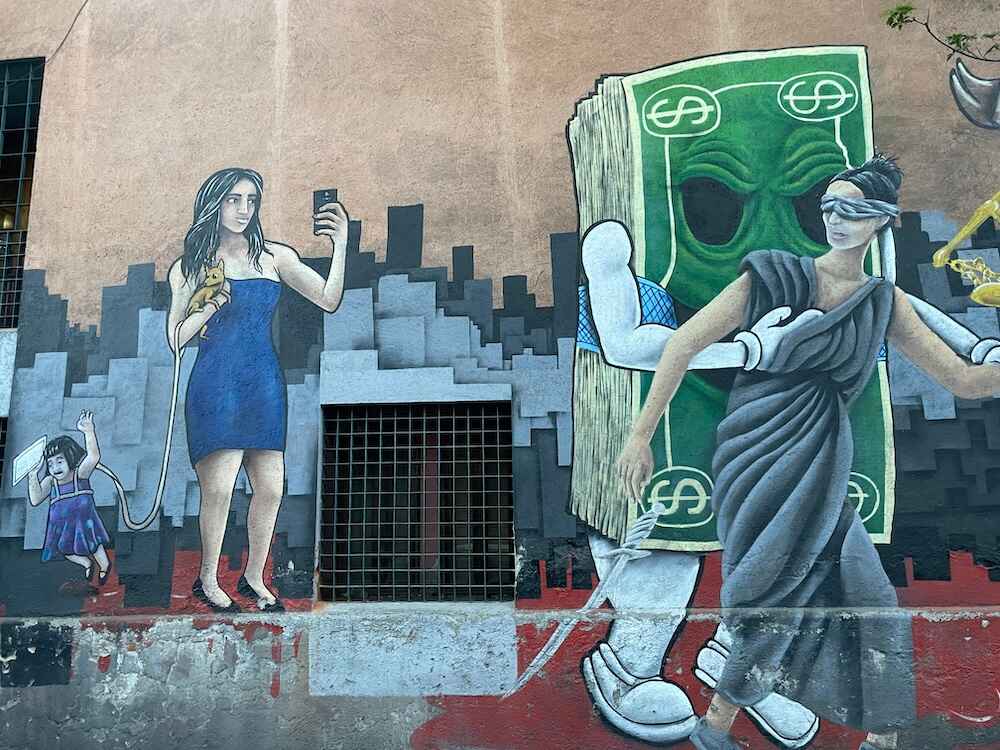
Mural in Coyoacán, CDMX (2023)

With that man on the ground, not breathing, sirens roaring in the distance, I froze with tears dripping onto my collar. I was jolted by the contrast of where I’d been 24 hours earlier: sunny, colorful, jubilant. I had just returned after six weeks on my “Sabaticán”—the annual trip I take to Mexico to escape late winter in Eugene, Oregon. Our southern neighbor has plenty of problems, but widespread drug overdoses aren’t among them. The scale of these human tragedies is unique to the U.S., particularly among countries as rich as ours.

Preventable drug overdose deaths have skyrocketed in recent years. In 2019, 62,172 folks died, compared to 100,105 in 2022—a staggering 797 percent increase since 1999. Opiates such as fentanyl account for the vast majority.

I was an addiction specialist at a methadone clinic in San Francisco from 2010 to 2012. Working in addiction broke me—I was too wet behind the ears to realize that my 50 clients wouldn’t benefit from our underfunded clinic’s treatment model or from my experiences. Some of them openly mocked my “fancy degrees” and accorded more respect to the counselors who’d actually struggled with heroin and gotten clean. I get it. In their shoes, I wouldn’t have wanted to hear a damn word from me either. What the hell did I really know about opiates that didn’t come from a book?

More than a decade later, I’ve realized something about American addiction. Sure, it’s related to the easy availability of everything we could desire—food, drugs, gambling, shopping, video games, etc. But why do so many Americans become addicted to anything in the first place? It’s because we suffer from being lonely, status-driven, and fearful of losing what little we have. The social and economic stresses in the U.S.—especially the exorbitant costs of shelter, education, and healthcare—have devastated people. That pressure breeds an addiction to food, alcohol, drugs, consumerism, and easy entertainment. Without the embrace of a community and a guarantee of what our people need, we’ll continue to withdraw and die by our own hands. 

Mexico, by contrast, has strong communities and families, less emphasis on “what someone does” for work, and a constitutional guarantee to healthcare. There, drug overdoses and homelessness are virtually non-existent. 

Further, in our hyper-individualistic country, when someone fails, there is no social safety net to catch them, and we blame the person’s internal nature. Addiction is viewed as a personal failing that elicits little empathy. Instead, it should be considered a sociocultural disease. It’s distressing that our working and middle classes are one medical emergency away from financial ruin while our richest families accumulate obscene fortunes rather than sweating it out like the rest of us.

We should be sharpening our pitchforks at the injustice of it all, but we get dazzled by cheap technology and easy entertainment. We are each a community of one—and how can one person raise a sword or a pen against the tidal wave of a callous culture, wealth inequality, and crumbling public investments? Without the tools of widespread high-quality education, healthcare, infrastructure, childcare, eldercare, housing, and public trust, we’re left to turn inward to our addictions. The luckiest among us stare at a phone screen for several hours a day—the not-so-lucky collapse on public sidewalks.

That man did live, by the way. I believe that the woman who stopped her truck in traffic saved his life and gave him the heartbeats he needed while the NARCAN took effect. There are good people everywhere—folks who, on instinct, would dodge traffic to give an unkempt, unresponsive man chest compressions. 

But better than counting on heroes like her, we need to shift as a people toward more compassionate, communitarian values in our culture, government, and institutions. Individualism does not make sense for an inherently social species; our “everyone for themselves” ethos is the disease. Without this realignment, we’ll continue to witness Americans dying as we go about the individual business of keeping our own heads barely above water.

Charisma Wears Orange Fur

Readers of Blore’s Razor know that my interests are diverse. I’ll write about Big Pharma, porn stars, social conservatism, the benefits of traveling, and why I’d rather be a dad. But considering what I actually spend most of my time thinking about, it’s shocking that I haven’t written a piece about my absolute favorite topic of conversation: my neighbors’ community cat. 

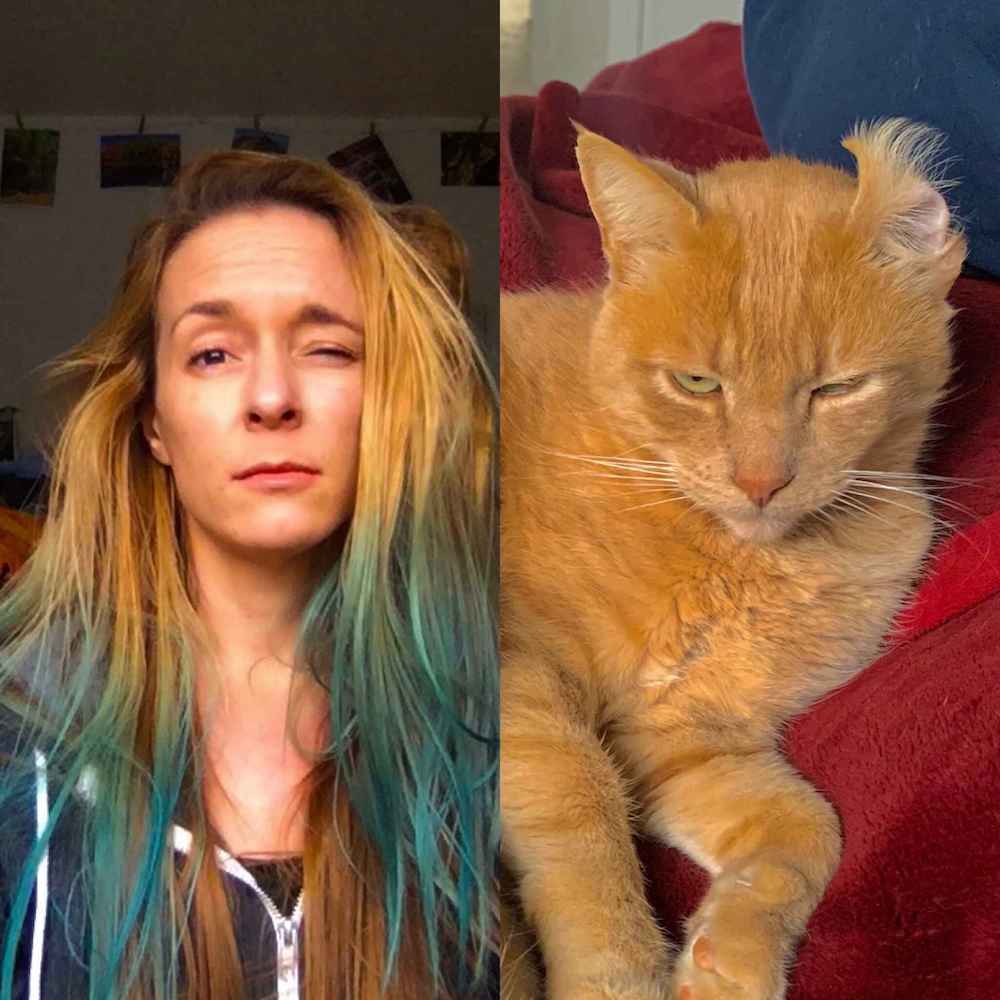
Meet Freak, the charming champagne tabby who visits an untold number of homes on his daily rounds. If you’ve been to my house, chances are not only have you already met His Highness, but you ask me how he is every damn time I see you. He technically belongs to Kathie and Eric Lundberg, our dear friends at the end of Hummingbird Lane, but they have accepted that keeping the Fur Prince happy entails letting him roam. 

I believe this liberty is the root of my Handsome Little Gingersnap’s charisma: his relative freedom makes him a supremely satisfied being. If I were locked in a one-bedroom apartment for my entire life, you’d better believe I’d fuck up your couch and vomit in your shoes. Most cats still have one foot in the savannah and prefer some autonomy. We’re also lucky to live on a cul-de-sac, so traffic is minimal.

My Tangerine Dream has impeccable manners and social skills, particularly when he’s indoors. When he exposes his delicious fuzzy belly for rubs on the carpet, he won’t even think of using his claws. He carries conversations better than many people, altering the cadence, intonation, and frequency of his meows in response to whatever we’re discussing, never interrupting. His cutest meow is his “thank you,” which trills in a low pitch like someone rolling their Rs. This usually occurs at his tuna bowl.

The Sweet Snuggle Muffin has an uncanny sense of who needs his love and affection. My mom was here for her birthday last December, and she adores cats. That evening, she tucked into our guest room, and without any prompting, Freak slept at the foot of her bed all night—perhaps the best gift she received that day. He chose her. And when someone’s sick or sad, he always seems to show up and be there for them. 

He’s so friendly with strangers that we fear he’ll jump in the back of a UPS or gardening truck, never to return. He regularly comes home smelling of wood fire or women’s perfume, and he purrs when people pick him up.

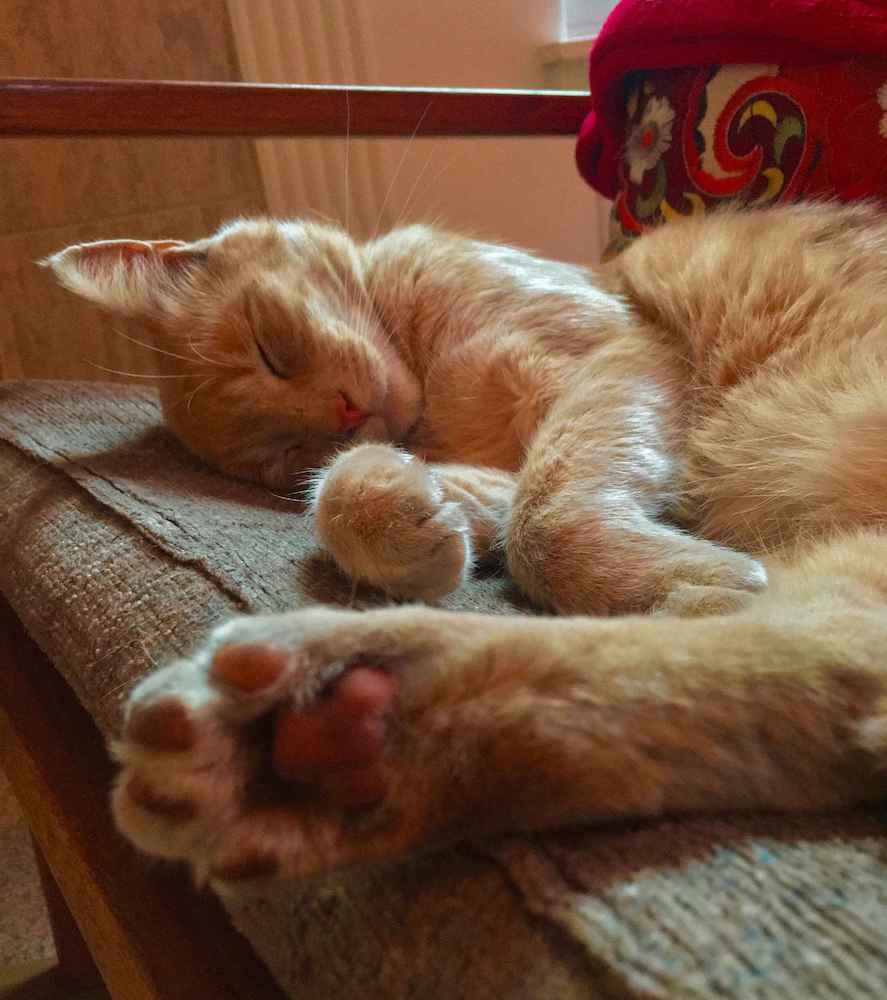
My love for the oranges runs DEEP

Our Bubba Sponge Cake is also very brave. A few summers ago, I was in my backyard when a thunderous boom erupted from our neighbor’s property, which was under construction. You’d expected a cat or dog to hide, but my Darling Bellini came ripping around the side of the house at full speed, sliding all paws on the gravel, standing his ground between me and the threatening sound. I laughed in awe and disbelief.

He even has an adorable routine where he shows off his prize-fighting skills. He’ll sharpen his claws on unpainted wood fences, turning to us at regular intervals to ensure we’re paying attention. When his murder mitts are ready, he’ll crouch down, ears back and looking fierce. He’ll then dart off full speed toward nothing in particular with all his might. 

On our first night in our house, my Little Cornbread Cookie made the death-defying leap from our fence onto our roof, outside our bedroom window. It was around 2:00 am, and he clicked one of his claws against our screen—not ruining it, but letting us know that he’d like to be let inside. He had us so trained that we removed our bathroom screen, and he jumped in, settling at the foot of our bed, uttering his trilling meow of appreciation. 

As a nocturnal dude, he often wanted to go back outside, then inside, and outside again. We were only too happy to be woken up every few hours to cater to his whims. He usually would start by jumping onto the floor and sighing heavily a few times. Then, he would issue a quiet meow, wait patiently for a minute or two, and utter a slightly louder meow. If we were still snoozing, he’d move to the door-stopper and flick it with his paw. Bow-ow-ow-ow-ow-ow. He politely used it as a last resort. 

A year or two after we bought our house, the Lundbergs went to Hawaii for a month, and we were taking care of my Honey Bunches of Oats full-time. After many nights of the door-stopper routine, we finally had the good sense to install a cat door.

In his younger days, he’d present his gifts to us in immaculate condition. We’ve received giant rats on our doorstep that were killed so surgically that I was unable to locate the site of the fatal wound. We’ve never had rodent problems, while our former neighbors and their two useless mongrels struggled with rats and mice.

I inject his name into many songs. One of my favorites is “The Schuyler Sisters” from Hamilton:

He’s the greatest kitty in the world—the greatest kitty in the world!

Joc-e-lyn! 

(Work, work) Jon-a-than! 

And Freakers (work, work)

For all of these reasons and more, I love my Precious Butter Biscuit unconditionally, even when he eats his tuna too fast and needs to hurl, or when he comes home looking like Sylvester Stallone at the end of Rocky 4. On that note, if I had to name a flaw, it would be Freak’s feline bloodlust. He despises all other cats and pretty regularly gets his ass kicked. But even this behavior is understandable: in his mind, he’s defending the neighborhood from interlopers.

I know that just about everyone adores their own pets, and I’m curious how many folks share the experience of spoiling a community cat or dog, or even a raccoon or crow. And how do those animals see us? 

As I write this, I see him running through the rain and darting underneath the south fence of Hummingbird Lane. Whether it’s to visit the house with the wood stove, to chase off that large tuxedo cat, to nuzzle that woman with the floral perfume, or just for the thrill of getting his paws dirty, I’ll never know. He’s simply the best.

Learning How to Walk Again

Imagine waking up tomorrow morning, stretching your legs against your sheets, and feeling a sharp pain deep in the ball of your right foot. You sit up in a slight panic and find yourself unable to stand. Your second toe looks twice its normal size and the bottom of your foot is hot with blood. You hop on your good foot to the bathroom and look at yourself in the mirror. 

Who would you rely on to do your shopping and cook your meals?

What summer trips would you have to cancel?

Would you be able to go to work?

What parts of your life would be on hold until you could walk again?

This happened to me nearly six weeks ago—and I’m still not better. In fact, I’m writing this from bed, my right foot elevated, where I’ve done most of my work since early May. I’ve missed most of my favorite late-spring weather in Oregon. Normally, I’d be hiking every day, watching the wildflowers transition from trilliums to orchids to bright red columbine. 

Some might welcome a couple of months of books, TV, and bed rest, but this period has been devastating for me.

Hiking is my life, my mental health outlet. I was sure-footed, quick, and able to walk without stopping, even on the most rigorous hikes. Last year in Glacier National Park, I hiked 53 challenging miles over three solo days and was barely sore. On a backpacking trip through the Enchantments, a doctor friend said that I was the most physically fit person—man or woman—that he’d ever seen. 

Glacier National Park, August 2021

Just 

Never 

Needed 

To 

Stop

Until now…

Folks ask what happened when they see me limping or wearing a surgical boot. What started as a mild pain in the ball of my foot bloomed into a debilitating, slow-healing injury. 

I have capsulitis—the inflammation of the ligaments beneath my second toe. Even after weeks of icing, elevation, metatarsal pads, expensive orthotics, doctor appointments, prescription-strength anti-inflammatory drugs, meditation, and canceling plans, I still don’t know when I’ll be able to walk again. 

For several weeks, I was depressed and crying, helpless to do anything for my unruly ligaments. I felt cheated and robbed. How could this happen when I’m such a healthy, active person who never wears high heels?

I have a theory, although it’s tough to confirm. My favorite pair of boots—tan Riekers with red laces—are the likely culprit. For years, I bought the same ones over and over, walking five miles or more in them daily.

Two friends of mine bought the same boots. They shared recently that they don’t provide the best support and often hurt their feet after a while. I’d worn them non-stop, never suffering in the moment, but I suspect that my ligaments steadily strained from the lack of cushioning and pressure on the ball of my foot over many miles walked. 

It all snuck up on me. I would have preferred to take this hiatus during the winter months, but we can’t choose when injuries present themselves. In my 20s, I’d even been proud of completing long hikes in ballet flats, traveling through Southeast Asia in flip flops, or traversing 212 kilometers through the Himalayas in cheap sneakers. 

I now regret every step I’ve taken in non-supportive footwear, probably tens of thousands of steps at this point. Being in peak physical shape, I’d assumed I was invincible—and now I begin again.

It’s been easy for me to feel sorry for myself as the sun shines and I’m stuck inside. I am grateful that I’m not a doctor, a server, a teacher, or any other profession that would require me to be on my feet. Working from my bed is a privilege. 

This is also a life stage where I have the financial means to buy six new pairs of shoes, fancy orthotics, and pay the podiatrist $250 to tell me what I already knew from WebMD. If this hit me while I was traveling the world solo on a shoestring budget, I would have had to move back home to recover. 

I have to resist the temptation to assume I will never heal—that life will just be like this moving forward. Those self-destructive thoughts remind me of the hopelessness many of us felt in the middle of 2020 when we weren’t sure how our lives would resume. The Covid-19 total shutdown didn’t last forever—and neither will this injury. 

I get to choose what to take from this difficult experience. Most importantly, I will feel much more empathy for those with mobility issues. Walking is such an integral part of life that most of us take it for granted. Slow walkers used to frustrate me as if they were wasting my time. I see now how selfish my point of view was. 

I’m also hoping that this experience helps me maintain proper perspective with future life challenges, both my own and for those closest to me. I have to be patient and compassionate with myself and others. Anger, irritability, restlessness, self-pity, and distress aren’t the path. 

If you have a moment, please send a healing thought for my busted stomper and be kind to someone today. You never know what they’re going through and how much small affections matter.

How I’m Going to Die (If I’m Lucky)

With every passing year, my mortality creeps steadily more into my thoughts. 

A throbbing ache in one leg—a blood clot? 

Cramping in my intestines—stomach cancer?

A rush of pain to my temples—an aneurysm? 

These discomforts eventually pass and my morbid imagination abates until the next ailment starts the cycle anew.

At 37, I don’t know how I’m going to die. But if I’m lucky, someday, I want to end my own life. 

Don’t get me wrong: I’m far from suicidal. I’m healthy and active. I’m grateful to have an abundance of friends and a wonderful family. I just believe that euthanasia is a human right. I find peace in the idea that I can someday choose to end my life when the suffering becomes too great with no prospect of improvement.

Brittany Diaz (formerly Maynard) was a friend of mine at Berkeley. After being diagnosed with terminal brain cancer, she became an internationally famous activist for the Death With Dignity Movement. She had moved with her husband to Oregon—one of nine states with legalized (and highly regulated) euthanasia. She had recently gotten married and earned a graduate degree, but the disease gave her debilitating pain and seizures. She tried surgery and other medical interventions to no avail. Shortly before her 30th birthday, on November 1, 2014, she ended her own life surrounded by those she loved. 

Brittany (second from right) in 2009, San Francisco

Brittany’s decision to use her tragic diagnosis to educate the world took immense courage, strength, and love. Under the same circumstances, many would despair or withdraw. In her last message to me on October 8, she wrote, “DWD is a healthcare right for the terminally ill that warrants education, advocacy, and discussion.“ I fully agree.

Brittany educated the world about the Death with Dignity Movement (October 2014, The Week Magazine)

I don’t take my support for assisted suicide lightly. I know how it impacts loved ones firsthand. My grandfather killed himself when I was in college. It was a shock because he was relatively healthy and had recently lost a lot of weight. Like many folks left in death’s wake, I asked myself why I didn’t call, write, or visit more—as if there was something I could have done to change his mind. Although I felt undone in those years following his decision, I began to see his actions differently: he chose that day. It was the same day at the same age his father had died. He had been planning his death, and who was I to deny him that right?

I used to believe that taking one’s own life was a supremely selfish act, but is it? Why shouldn’t people of sound minds have control over when they make their Grand Exits? And why do we insist on dragging out people’s lives as long as possible? 

Doctors witness firsthand how excruciating (and expensive) lifesaving interventions can be. It’s not surprising that they are more likely than the general public to request DNR (Do Not Resuscitate) orders in their personal medical care. One’s quality of life can be severely compromised after aggressive end-of-life treatments. Like a majority of physicians, I would opt for a DNR. (That said, those who want to undergo any and all medical treatments should be free to do so. I’m 100 percent in support of bodily autonomy.)

There’s a beauty in choosing when and how to let go. Like abortion, when Death with Dignity is denied to people, suicide doesn’t go away—it just gets pushed into a lonelier, darker underground. Many Americans are surprised to learn, for example, that the leading cause of gun deaths in the U.S. isn’t homicide. It’s suicide

But what if those people had other options? What if they didn’t feel the need to end their lives in the shadows? What if they could speak with counselors and doctors about their feelings? And if they decided to go through with it, what if choosing death were treated differently? 

Dying is inevitable, and having as much control as possible over one’s death is a fundamental human right. I want to embrace death as Brittany did: with open eyes, grace, courage, and love. I want it to be a party. I want to be listening to Nina Simone, Bill Withers, and Allen Toussaint. I want a belly full of Thai food. Perhaps I’ll have someone to assist my transition—a death doula if I can find the right person. 

If it were up to me, my Grand Exit would be 100 years from now. Maybe it will be. My second choice would follow one of my favorite Irish toasts: “May you die warm in your bed at 95, shot by a jealous spouse.” A close third would be at age 107, falling into a volcano while taking a selfie for my mistress. 

Who knows how I’ll go, but I hope more people consider the importance of Death with Dignity. 

What Do Oprah, Leonardo da Vinci, and Jesus Christ Have in Common?

A few months before the pandemic, I published one of my most shared and controversial pieces titled “I’d Rather Be a Dad.” I explained why I was still on the fence about having kids after getting married at 34. After re-reading it, however, it’s pretty clear that I wasn’t fence-sitting at all. The truth is that I’m happily childfree.

What are the stereotypes associated with childfree women?

Becoming a mother—specifically an American mother—seems like an irrational proposition. Aliens might observe that U.S. women trade their bodies, time, money, and identities for a thankless job kept only mildly tolerable by mind-warping hormones. Keep in mind that this was before the Covid-19 pandemic, before the schools and daycares closed, before women (especially mothers) across the country started drinking more heavily than ever. 

Not only are there few institutional and legal support systems in place for U.S. parents compared to other developed countries, but mothers here simply don’t get the credit they deserve. They do most of the work and yet even half-involved dads are likely to receive greater praise and respect.

There’s even evidence that men benefit financially by becoming fathers while women are punished by becoming mothers. On average, men’s wages increased more than 6 percent if they had children, while women’s earnings decreased 4 percent for each child they had. Even more shockingly, childfree married women earned 96 cents for every dollar a man earns, while married mothers were paid 76 cents on the dollar. Women stretch and tear their organs for each new generation and are paid in macaroni portraits. 

Readers who are parents are shaking their heads, thinking, “Jocelyn, you just don’t get it! You can never understand what it feels like to experience pure joy until you have your own child.” 

That’s valid, but if parents are so enamored with rearing their young children, why is childcare typically outsourced by wealthy families? Why do the rich and powerful choose to spend relatively little time with their families? Are they too busy to engage in “the most important job in the world,” or do they simply want to do other things with their time?

Sure, there are some working folks who would prefer to spend more time with their babies, but I suspect that many others recognize how grueling parenting can be. Like cleaning one’s house or doing one’s taxes, those who have the money are inclined to hire a professional to help carry the load. 

When I was 16, I was a full-time nanny for a summer, working for an MTV executive. She was amazing, but her toddler daughter and the two other little ones were all-consuming. Taking care of young kids all day was both challenging and extremely boring, watching fat fingers sort shapes and reading the same books. Observing an entire bookshelf get emptied and putting it back together over and over. The constant stickiness. There were baffling breaches in conduct that even the most cherubic faces couldn’t exculpate. The only children whose company I actually enjoy are the most adult-like ones: those who are mature and intelligent.

Most parents, of course, would insist that their children are much smarter and better behaved than other people’s kids. This mass delusion is propped up by brains drugged by parenting that keep (most) people from murdering the little shits while they sleep.

I’m self-conscious even writing about this because as a woman, I feel social pressure to both have and like children. My partner—a man—is actually much better with kids than I am. He relishes in playing make-believe games and being silly (even if he’s never changed a diaper). 

Being real about my maternal ambivalence makes me uneasy because becoming a mother is presented as part of a complete life. My dear friend (who is also childfree) shared this cringe-worthy quote a therapist posted to social media:  “The value of marriage is not that adults produce children but that children produce adults.” 

I understand the spirit of this sentiment—that parents (in theory) must outgrow childish tendencies to raise kids successfully—but it is irritating on many levels:

  • What about childfree marriages? Are those folks not fully realized adults because they didn’t breed? 
  • Is producing children the only function of (or value in) a marriage?
  • What about parents who aren’t married? Are they not adults because they didn’t register as a couple with the state?
  • And what about shitty parents, who regardless of getting married and having children, continue to be childish people?

I resent that having kids is assumed to be THE way that women fulfill their capacity for love. When I published “I’d Rather Be a Dad,” one of my friends commented: “I know you will do whatever is best for you and Jon, whether it is having kids or growing old together while traveling and sleeping in and doing whatever the fuck you want without anyone else to answer to.” 

The subtext is that childfree adults are selfish—just as Pope Francis recently said. We non-breeders just do “whatever the fuck [we] want without anyone else to answer to.” That also presupposes that the only people in our lives who require our love and attention are our unborn children—to say nothing of our aging parents, family, friends, or other people in need. 

The notion of non-breeders as “selfish” is what really chaps my hide. Perhaps for me, it’s personal. After all, I was an only child and some of the stereotypes ring true within me: I desire a lot of alone time and I like to have things my way. I also have problems sharing my food with my ravenous spouse. Even if being raised by a single mom schoolteacher was largely absent the coddling, I have to acknowledge that my only-child selfishness may be part of my non-maternal nature.

I would counter, however, that not having kids actually enables me to devote my love and time to a broader circle. The demands of early childrearing leave little time for parents to devote to anyone outside of their homes, whether it’s volunteer work or spending time with friends. If I need to call someone in an emergency, I’m not going to call one of my friends with kids who I assume is too busy with their families.

With a growing share of Americans choosing not to have kids, I’d like folks to reconsider their assumptions about being childfree: 

  • We aren’t being deprived of an essential life experience. 
  • We aren’t lesser adults or worse people because we didn’t procreate.
  • We aren’t selfish or unloving.
  • We aren’t jeopardizing the future of our species.

Humanity’s success actually depends on some people choosing to be childfree, especially in Western countries. Without us, the world’s resources would be more rapidly depleted and global warming would be worse than it is. One of the best things a person can do for the environment in a developed economy is to decide not to have children (or have fewer of them). This graphic from The Guardian shows how much CO2 can be saved annually by common solutions to the climate crisis:

The alarmist articles about declining birth rates in Western countries often ignore one simple solution: increase immigration. There are still plenty of babies being born all over the world—many of them into countries lacking economic opportunities. Those who complain that “native-born babies” are more desirable for population growth are being racist. If we’re so concerned about a lopsided age demographic or the collapse of Social Security, admit more young families into our country. Problem solved.

Overall, let everyone decide for themselves their reproductive futures and spare childfree folks the moralizing. For my part, I’ll continue to fight for increasing education budgets, as well as for better legal and institutional protections for parents. It is a tough job and deserves much better from a country as wealthy as ours. 

Just stop assuming that breeding makes a person better or complete. Betty White, Copernicus, Oprah, Louis Armstrong, Jane Austen, Francis Bacon, Simone de Beauvoir, Bob Barker, Coco Chanel, Leonardo da Vinci, Julia Child, Rene Descartes, Virginia Woolf, Benjamin Disraeli, Amelia Earhart, Francis Drake, Katherine Hepburn, Immanuel Kant, Mother Teresa, Dr. Seuss (Theodore Geisel), Grace Hopper, Nikola Tesla, Dolly Parton, Jesus Christ, and many, many other childfree folks serve as evidence to the contrary.